
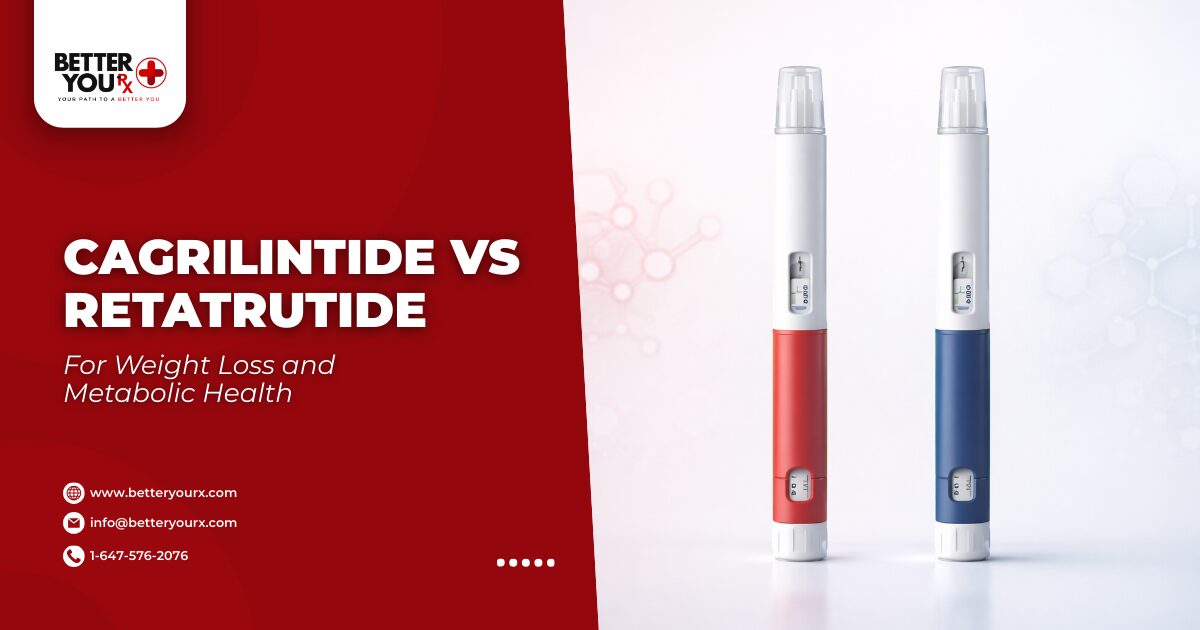
Cagrilintide vs Retatrutide is one of the most talked about comparisons in weight management right now. Cagrilintide is a long-acting amylin analog that promotes fullness and slows digestion, while Retatrutide is a triple-receptor agonist targeting GLP-1, GIP, and glucagon pathways at once. Both peptides aim to reduce body weight and improve metabolic health through completely different biological mechanisms. Retatrutide has shown up to 24% body weight reduction, while Cagrilintide alone demonstrated around 11.8% weight loss over 68 weeks. Each carries its own benefits, side effects, and ideal use cases. Knowing how Cagrilintide vs Retatrutide stacks up can help you and your doctor decide which path works best.
Cagrilintide vs Retatrutide Which One Is Better for Weight Loss
When comparing Cagrilintide vs Retatrutide head to head, the answer depends on what matters most to you. If raw weight loss numbers are the top priority, Retatrutide currently shows stronger results. Research participants using Retatrutide at higher doses lost up to 24.2% of their body weight over 48 weeks. Cagrilintide on its own led to an average of 11.8% body weight reduction over 68 weeks.
However, Cagrilintide tends to come with fewer gastrointestinal side effects. People who struggle with nausea or vomiting on other treatments may tolerate Cagrilintide better. It also works through a unique amylin-based pathway, which may help preserve lean muscle mass during weight loss.
Retatrutide, on the other hand, does not just reduce appetite. It also increases the rate at which the body burns calories through glucagon receptor activity. This dual action of eating less and burning more drives its impressive results.
The best choice between Cagrilintide vs Retatrutide ultimately comes down to individual health needs, tolerance for side effects, and long-term goals. Speaking with a licensed medical doctor is the most reliable way to figure out which option aligns with your situation. If you are also exploring other treatments, you might find it helpful to read about Retatrutide benefits to learn more about what this peptide can do.
How Cagrilintide Works in the Body

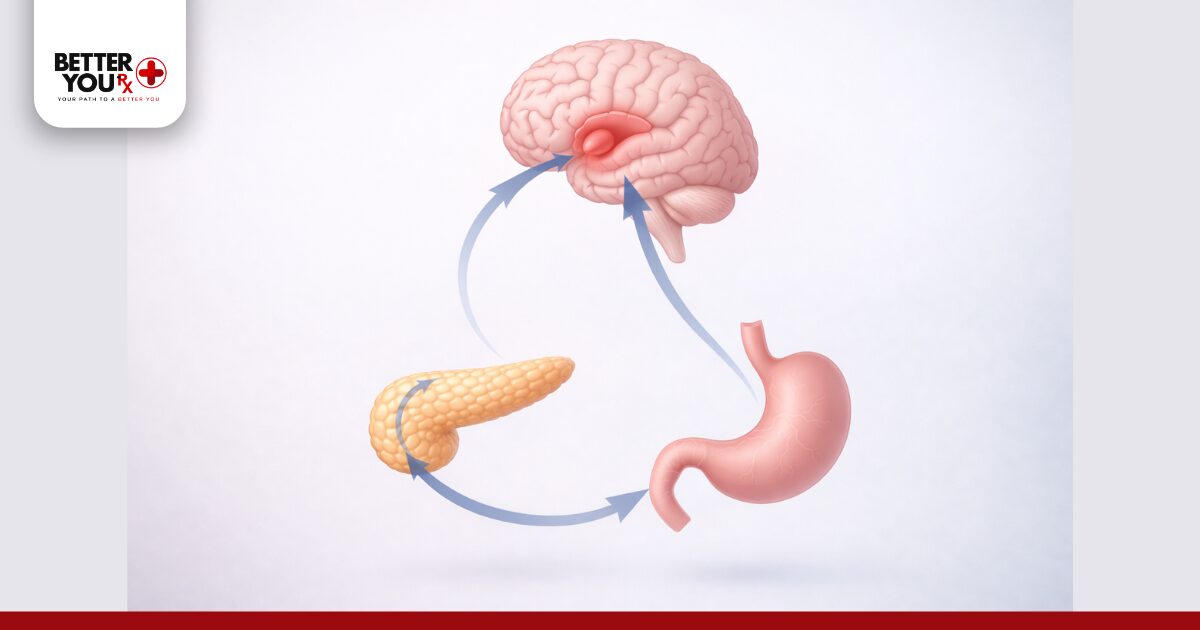
To fully understand the Cagrilintide vs Retatrutide comparison, it helps to know how each one works on its own. Cagrilintide is a synthetic version of the naturally occurring hormone called amylin. Your pancreas releases amylin alongside insulin after meals, and it plays a key role in telling your brain that you are full. Cagrilintide copies and strengthens this effect, making it last much longer than natural amylin does.
Once injected, Cagrilintide activates amylin receptors in the hypothalamus, the part of your brain that controls hunger. This sends strong satiety signals, which means you feel satisfied sooner and eat less throughout the day. It also slows gastric emptying, so food stays in your stomach longer, keeping you fuller between meals. When evaluating Cagrilintide vs Retatrutide, this targeted mechanism is what sets Cagrilintide apart.
Another benefit is that Cagrilintide helps manage post-meal blood sugar spikes by suppressing glucagon release after eating. This makes it useful for people dealing with blood sugar irregularities alongside excess weight.
Because of its extended half-life, Cagrilintide only requires a once-weekly injection. This convenience factor is a major plus for anyone who prefers fewer dosing days. If you are also interested in how other injectable treatments compare, check out the Mounjaro vs Trulicity comparison for more context on weekly injectables.
How Retatrutide Works in the Body
On the other side of the Cagrilintide vs Retatrutide comparison, Retatrutide takes a broader approach by targeting three different hormone receptors at once. It activates GLP-1 receptors, which improve insulin response and suppress appetite. It also stimulates GIP receptors, which enhance how the body processes glucose and supports fat metabolism. The third target, glucagon receptors, is what makes Retatrutide stand apart from most other weight loss peptides.
Glucagon activation helps the body break down stored fat and increases energy expenditure. This means Retatrutide does not rely solely on reducing food intake. It also pushes the body to burn more calories, even at rest. This combination of eating less and burning more is what produces the significant weight loss numbers seen in early research. In the Cagrilintide vs Retatrutide debate, this calorie-burning feature gives Retatrutide a clear edge for total body weight reduction.
Like Cagrilintide, Retatrutide is administered through a once-weekly subcutaneous injection. The dosing is gradually increased over time to reduce the chance of gastrointestinal discomfort, which is common during early weeks of treatment.
For individuals looking into Retatrutide access, Better You Rx can help. You can join the waitlist for Retatrutide and fill out the consultation form on our website. This helps figure out if Retatrutide is a good fit for you and ensures proper guidance on how to use it. Our service simplifies access so you can take the first step toward your health goals with confidence.
Key Differences Between Cagrilintide and Retatrutide
Understanding the core differences in Cagrilintide vs Retatrutide helps you see which peptide aligns with your needs.
| Feature | Cagrilintide | Retatrutide |
| Mechanism | Amylin receptor agonist | Triple agonist (GLP-1, GIP, Glucagon) |
| Primary Action | Promotes satiety, slows gastric emptying | Reduces appetite and increases calorie burning |
| Weight Loss (Solo) | About 11.8% over 68 weeks | Up to 24.2% over 48 weeks |
| Dosing Frequency | Once weekly injection | Once weekly injection |
| Developer | Novo Nordisk | Eli Lilly |
| Calorie Burning | No direct effect on energy use | Yes, via glucagon receptor activation |
| GI Side Effects | Generally milder, lower vomiting | More common at higher doses |
This side-by-side look makes it easier to weigh the pros and cons for your situation.
Side Effects of Cagrilintide vs Retatrutide
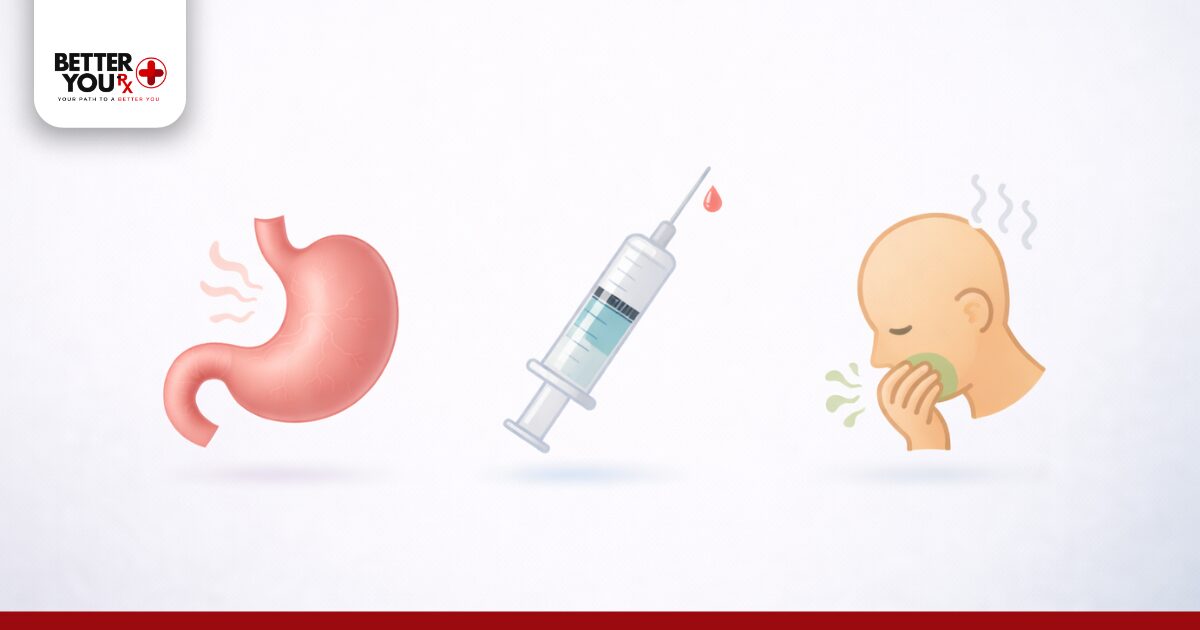
Both Cagrilintide and Retatrutide share some common side effects, mostly related to the digestive system. Nausea, vomiting, diarrhea, and constipation are the most frequently reported issues with both peptides. These effects tend to be temporary and mild to moderate in severity, especially when doses are increased gradually. A closer look at the side effect profiles in the Cagrilintide vs Retatrutide comparison reveals some notable differences worth knowing.
Cagrilintide has shown a favorable tolerability profile. Vomiting rates were significantly lower compared to GLP-1 based treatments like Semaglutide and Liraglutide. Injection site reactions have also been noted but are typically short-lived.
Retatrutide, because it activates three receptor pathways at once, may cause more gastrointestinal discomfort at higher doses. Dose-dependent nausea was the most common complaint. Starting with a lower dose and slowly increasing over several weeks helps most people manage these effects.
Neither peptide has been linked to a higher risk of low blood sugar in people without diabetes. If you are comparing injectable options, our guide on Retatrutide side effects provides a deeper look at what to expect.
Cagrilintide vs Retatrutide in Combination Therapy
One of the most exciting developments in weight management is the idea of combining these peptides with other treatments. Cagrilintide is already being studied in combination with Semaglutide under the name CagriSema. This pairing has shown average weight loss of over 20% in research, which puts it in the same range as Retatrutide used alone.
The logic behind combining Cagrilintide with a GLP-1 agonist is straightforward. Cagrilintide handles appetite suppression through the amylin pathway, while Semaglutide works through GLP-1 receptors. These pathways complement each other, creating a stronger overall effect.
Retatrutide, since it already covers three receptor pathways on its own, has not been formally studied in combination with Cagrilintide. However, researchers have speculated that pairing Retatrutide with an amylin analog like Cagrilintide could potentially target four distinct metabolic pathways simultaneously. This theoretical Cagrilintide vs Retatrutide combination is generating significant interest among the research community.
For now, the available data supports both approaches. Whether Cagrilintide vs Retatrutide works better in combination settings will become clearer as more data emerges. Those interested in similar injectable medications can explore options like Ozempic that are currently accessible.
Things To Know About Cagrilintide vs Retatrutide
Before choosing between Cagrilintide vs Retatrutide, there are some practical details worth keeping in mind.
Both peptides are administered through subcutaneous injection once per week. This means you do not need daily dosing, which improves convenience and long-term adherence.
Dose titration is essential for both options. Starting at a low dose and gradually increasing over weeks helps minimize digestive side effects and gives your body time to adjust. This applies equally in the Cagrilintide vs Retatrutide context, as both peptides require careful ramping.
Cagrilintide may suit people who have had trouble tolerating GLP-1 based medications. Its amylin-based mechanism works through a different brain pathway, which could mean fewer nausea episodes.
Retatrutide may appeal to those who want a more aggressive approach, since it addresses both appetite and energy expenditure. However, this broader action means a higher chance of gastrointestinal side effects early on.
Neither Cagrilintide nor Retatrutide should be used without medical supervision. A prescription from a primary care physician or licensed medical doctor practicing within the USA is required.
If you are taking other medications, let your doctor know before starting either peptide. Your doctor can help identify any potential concerns. For those managing blood sugar alongside weight, products like Trulicity or Metformin may also be part of the conversation.
Who Might Benefit from Each Option
The Cagrilintide vs Retatrutide decision looks different depending on your health profile. Here is a quick breakdown of which type of person may lean toward each option.
| Patient Profile | Cagrilintide | Retatrutide |
| Sensitive to GI side effects | Good fit due to milder GI profile | May need slower dose increases |
| Seeking maximum weight loss | Moderate results alone, stronger with combo | Strong results as a standalone treatment |
| Managing blood sugar levels | Helps with post-meal glucose control | Broad glucose management via 3 pathways |
| Prefer fewer side effects | Lower vomiting rates reported | More GI effects, dose-dependent |
| Want increased calorie burning | Not a primary effect | Yes, through glucagon activation |
How Better You Rx Can Help You Access Retatrutide
At Better You Rx, we know that starting a new treatment can feel overwhelming. As a prescription referral service, we help connect you with access to Retatrutide through our network of licensed contracted professionals. Whether you have been researching Cagrilintide vs Retatrutide or are just starting to learn about these options, we are here to guide you.
You can sign up for the Retatrutide waitlist and complete the consultation form on our website. This step helps determine whether Retatrutide is right for your needs and makes sure you receive the right guidance on dosing and how to use it properly. Our goal is to make the process simple so you can focus on your health goals with support every step of the way.
Prescriptions must be issued by a primary care physician or licensed medical doctor practicing within the USA, and must be written in English. Medications are mailed directly to your residence within 7 to 10 business days from the date shipped. We provide up to a 90-day supply when your prescription allows it.
For additional information on weight management options, you can also read about what Retatrutide does on our blog.
Wrapping Up the Cagrilintide vs Retatrutide Comparison
The comparison of Cagrilintide vs Retatrutide highlights two distinct but promising approaches to weight management. Cagrilintide offers a focused, amylin-based strategy with milder side effects and strong combination therapy potential. Retatrutide delivers broader metabolic coverage and more significant standalone weight loss through its triple-receptor design.
Both peptides represent the next wave of treatments for people who have not found success with older options. The right choice in the Cagrilintide vs Retatrutide conversation depends on your individual health profile, tolerance for side effects, and what your doctor recommends.
If you are ready to explore your options, Better You Rx is here to help. Contact us at 1-647-576-2076 to learn more about accessing Retatrutide and other treatments through our prescription referral service.
Frequently Asked Questions
Is Cagrilintide the same as Retatrutide?
No, Cagrilintide and Retatrutide are different peptides. Cagrilintide is an amylin analog that promotes satiety, while Retatrutide is a triple-receptor agonist targeting GLP-1, GIP, and glucagon. Cagrilintide vs Retatrutide refers to a comparison, not two names for the same drug.
Which causes more weight loss, Cagrilintide or Retatrutide?
Retatrutide has shown greater standalone weight loss. Participants lost up to 24.2% of body weight with Retatrutide over 48 weeks, while Cagrilintide alone achieved about 11.8% over 68 weeks.
Can Cagrilintide and Retatrutide be used together?
No published research exists on this exact combination yet. Researchers believe combining them could target four metabolic pathways, but no formal data confirms its safety or effectiveness.
What are the most common side effects of Cagrilintide vs Retatrutide?
Both commonly cause nausea, vomiting, diarrhea, and constipation. These are typically mild to moderate and improve with gradual dose increases. In the Cagrilintide vs Retatrutide side effect comparison, Cagrilintide generally has lower vomiting rates.
How do I get access to Retatrutide through Better You Rx?
Join the waitlist on the Better You Rx website. Complete the consultation form, and our team will help determine if Retatrutide is suitable for you. A valid prescription from a US-licensed medical doctor is required.