Medically Reviewed by Dr. Michael Reyes, MD | Updated: July 2026
Last Updated: July 27, 2026
A retatrutide alcohol interaction typically shows up as worse nausea, slower digestion, and less predictable blood sugar, rather than a sudden or dangerous reaction. Most people who drink while using Retatrutide notice that side effects they already had, like stomach upset or fatigue, become more noticeable instead of something entirely new appearing.
Retatrutide slows how quickly food and liquid move through the stomach, so alcohol lingers longer than it normally would and its effects can feel stronger and last longer than usual. Blood sugar becomes harder to predict too, since alcohol can push glucose levels in either direction depending on how much is consumed and what else has been eaten. None of this makes an occasional drink automatically off limits, but it does mean the timing, amount, and context matter more than most people assume, especially for anyone still adjusting to treatment.
Key Takeaways
- A retatrutide alcohol interaction is not a dangerous drug interaction in the traditional sense, but drinking can intensify nausea, slow digestion, and make blood sugar swing more than usual.
- Retatrutide is still an investigational compound, so any dosing figures discussed in research settings are reference points requiring provider oversight, not a basis for self-directed use.
- Alcohol and Retatrutide share overlapping side effects, particularly on the stomach and blood sugar, which is why the combination often feels worse than either does alone.
- Dehydration from alcohol can add to the fatigue and lightheadedness some people already notice while their body adjusts to treatment.
- Limiting or timing alcohol carefully, in coordination with a prescribing provider, is generally considered more practical than assuming occasional drinking carries no effect at all.
What Happens Physically During a Retatrutide Alcohol Interaction
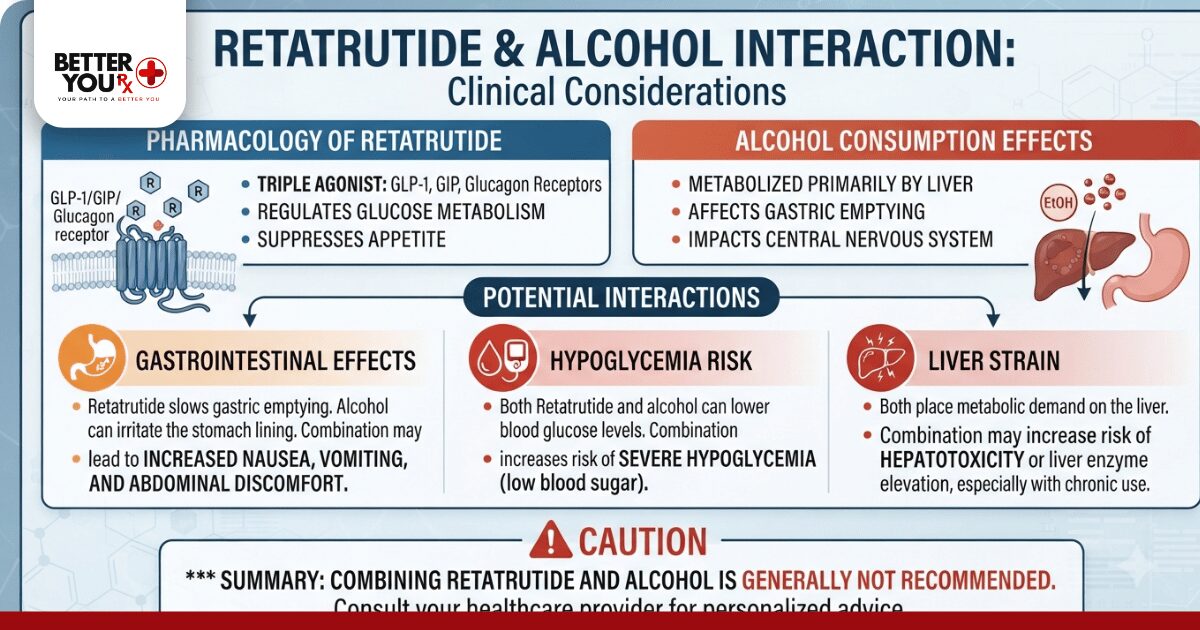
Retatrutide is a triple agonist being studied for its effects on weight and metabolic health, and like other GLP-1 and GIP related compounds, it slows gastric emptying. That single mechanism explains most of what people notice when alcohol enters the picture. Food and liquid sit in the stomach longer, so alcohol is absorbed more slowly but also stays in the system longer once it is absorbed.
This delayed processing can intensify nausea, which is already one of the more common effects reported during Retatrutide research. A stomach that is already slower than usual does not handle carbonation, sugar, or the irritation alcohol causes to the stomach lining particularly well. Some people describe feeling fuller faster after only a drink or two, along with a heavier, more uncomfortable fullness than they experienced before starting treatment.
Alcohol also affects the liver’s ability to regulate blood sugar, which becomes more relevant when a person is also using a compound that influences insulin and glucagon activity. That overlap is part of why a retatrutide alcohol interaction deserves more attention than people typically give it, even though it is not classified as a dangerous mixing of medications the way certain drug combinations are.
How Alcohol Can Worsen Common Retatrutide Side Effects
| Common Side Effect | Why It Happens With Retatrutide | How Alcohol Can Make It Worse |
|---|---|---|
| Nausea | Slower gastric emptying | Alcohol irritates the stomach lining and adds to fullness |
| Fatigue | Body adjusting to reduced appetite and intake | Alcohol is dehydrating and disrupts sleep quality |
| Dizziness or lightheadedness | Lower food intake and shifting blood sugar | Can lower blood sugar further, especially on an empty stomach |
| Constipation or bloating | Slower digestive transit | Worsens dehydration, which affects digestion |
| Heartburn or reflux | Delayed stomach emptying | Relaxes the muscle that normally keeps stomach acid down |
In clinical research settings, participants using Retatrutide are generally advised to moderate alcohol intake rather than eliminate it entirely, since the concern is cumulative discomfort rather than acute danger. Most healthcare providers who work with GLP-1 and GIP related compounds follow established clinical reasoning here: side effects that overlap tend to compound each other, so reducing one variable, in this case alcohol, often makes the other easier to manage.
Things to Know About Retatrutide, Alcohol, and Blood Sugar
- Retatrutide research dosing figures are reference points used under provider supervision, not a guide for self-directed use, since the compound remains investigational.
- Alcohol on an empty stomach affects blood sugar more unpredictably than alcohol consumed with food, regardless of what medication someone is taking.
- People who drink heavily before starting Retatrutide often notice digestive side effects more intensely once treatment begins, since their tolerance baseline shifts.
- Sugary cocktails or mixers combined with alcohol can create a sharper blood sugar swing than alcohol on its own.
- Hydration before and after drinking noticeably reduces the next day fatigue that many people already report during treatment.
The Retatrutide Alcohol Interaction and Blood Sugar Risk
Blood sugar is where a retatrutide alcohol interaction becomes most worth paying attention to, particularly for anyone with existing insulin sensitivity or a history of blood sugar swings. Alcohol can initially raise blood sugar, especially sugary drinks, and then cause a drop several hours later as the liver prioritizes processing the alcohol over releasing stored glucose. That delayed drop is what catches people off guard, sometimes hours after the last drink and sometimes overnight.
| Risk Factor | Why It Increases Blood Sugar Risk |
|---|---|
| Drinking on an empty stomach | Removes the buffering effect food provides against blood sugar swings |
| Combining alcohol with reduced appetite | Less overall food intake means less glucose buffer available |
| Drinking later in the evening | A delayed glucose drop can occur overnight while asleep, when symptoms go unnoticed |
| History of hypoglycemia or insulin sensitivity | Baseline risk is already elevated before alcohol is introduced |
| Frequent or heavier drinking patterns | Cumulative liver strain reduces its glucose regulating efficiency over time |
This is one of the clearer reasons providers ask patients to be specific about drinking habits before starting any GLP-1 or GIP related treatment. It is not about restriction for its own sake, it is about giving a provider the full picture needed to flag risk early. Anyone comparing how Retatrutide behaves against a related compound may find Retatrutide vs Tirzepatide useful, since both affect blood sugar regulation through overlapping but distinct pathways.
Hydration, Sleep, and Timing Matter More Than People Expect
Patients navigating both alcohol and Retatrutide side effects often report that hydration status, more than the alcohol itself, determines how rough the next day feels. Alcohol is a diuretic, and Retatrutide already reduces the drive to eat and drink as much throughout the day, so the two together can leave someone more dehydrated than either would alone. That dehydration shows up as headaches, fatigue, and a kind of grogginess that can be mistaken for a medication side effect when it is really a hydration issue compounding an existing one.
According to the Mayo Clinic, alcohol can disrupt the later stages of sleep even when it initially makes someone feel drowsy, which compounds the fatigue some people already experience while adjusting to a new metabolic treatment. Timing alcohol earlier in the evening, drinking water alongside it, and eating something substantial beforehand are simple habits that meaningfully reduce next day symptoms for most people managing both.
For anyone weighing where Retatrutide fits against other GLP-1 options with a longer track record, Ozempic, Wegovy, and Saxenda are among the treatments available through Better You Rx for patients exploring metabolic and weight management support with a licensed contracted dispensing department.

Which Option Is Best: Avoiding, Limiting, or Timing Alcohol Around Retatrutide
Three approaches come up repeatedly in patient conversations about alcohol and Retatrutide: avoiding it completely, limiting how much and how often, or timing it more carefully around meals and sleep. Each has a different trade off, and the right one depends heavily on individual health history and how someone’s body has responded to treatment so far.
Why avoiding alcohol works best for some people: Complete avoidance removes the variable entirely, which is especially relevant for anyone with a history of blood sugar instability, significant nausea, or someone still in the early weeks of adjusting to treatment when side effects tend to be strongest. It is the most reliable way to isolate whether symptoms are coming from the medication alone.
How limiting alcohol works for others: For people with a stable response to treatment and no history of blood sugar issues, limiting intake to one drink, consumed with food and spaced apart from other drinks, tends to keep the retatrutide alcohol interaction manageable without eliminating alcohol from someone’s life entirely. This middle ground works best when paired with consistent hydration and never drinking on an empty stomach.
Which option applies best comes down to personal risk factors: timing alcohol earlier in the day, avoiding it close to bedtime, and pairing it with a full meal is the least restrictive option, but it is also the least reliable for people with existing blood sugar concerns, since it manages symptoms without addressing the underlying overlap in how alcohol and Retatrutide affect the liver and stomach. For most people navigating early treatment, a combination of limiting intake and timing it carefully, discussed openly with a prescribing provider, tends to be the most sustainable approach.
Anyone curious about the fuller side effect profile beyond alcohol specifically can review Retatrutide side effects for a more complete picture, and those weighing whether the compound is worth exploring at all may find Retatrutide benefits helpful context.
The Bottom Line on Retatrutide and Alcohol
A retatrutide alcohol interaction is less about acute danger and more about compounding discomfort, particularly around digestion and blood sugar stability. The safest path for most people is treating alcohol as a variable worth discussing openly with a prescribing provider rather than something to navigate alone, especially during the early weeks of treatment when the body is still adjusting.
Betteryourx.com connects patients with a licensed contracted dispensing department as part of a prescription referral service, helping people access GLP-1 and GIP related treatment options alongside clear guidance on how everyday factors like alcohol fit into the bigger picture.
Frequently Asked Questions
Can I drink alcohol while using Retatrutide?
Short answer: Occasional, moderate drinking is generally considered lower risk than frequent or heavy drinking, but it should be discussed with a provider first.
Alcohol can intensify nausea, dehydration, and blood sugar swings that already occur with Retatrutide, so most providers recommend caution rather than a complete prohibition for occasional, moderate use.
Does alcohol make Retatrutide side effects worse?
Short answer: Yes, alcohol commonly intensifies nausea, fatigue, and digestive discomfort already associated with Retatrutide.
Both alcohol and Retatrutide slow digestion and affect the stomach lining, so combining them tends to amplify symptoms that are already present rather than introducing new ones.
How long should I wait to drink after a Retatrutide dose?
Short answer: There is no universally set waiting window, since this depends on individual tolerance and provider guidance.
Most providers suggest waiting until digestive side effects from a given dose have settled and prioritizing food and hydration before introducing alcohol.
Can alcohol cause low blood sugar with Retatrutide?
Short answer: Yes, especially when alcohol is consumed on an empty stomach or later in the evening.
The liver prioritizes processing alcohol over releasing stored glucose, which can cause a delayed blood sugar drop hours after drinking, sometimes overnight.
Is it safe to drink alcohol during the early weeks of starting Retatrutide?
Short answer: Many providers recommend added caution during the early adjustment period, when side effects tend to be strongest.
Waiting until the body has adjusted to initial digestive changes before reintroducing regular alcohol intake tends to make the transition more comfortable.
Medical Disclaimer: This article is for informational purposes only and is not a substitute for professional medical advice, diagnosis, or treatment. Retatrutide remains an investigational compound at the time of writing. Always consult a licensed healthcare provider before starting, stopping, or combining any medication or treatment, including questions about alcohol consumption.
Sources
- Mayo Clinic: Overview of how alcohol affects sleep quality and overall health.
- The New England Journal of Medicine: Clinical research on triple agonist compounds and metabolic outcomes.
- Journal of Clinical Endocrinology and Metabolism: Research on GLP-1 and GIP receptor agonists and glucose regulation.
- Diabetes Care: Clinical guidance on alcohol consumption and blood sugar management.
- Obesity Reviews: Research overview on investigational metabolic compounds, including multi-receptor agonists.