
Retatrutide Dosage Calculator
Pick your syringe, enter vial quantity, bacteriostatic water volume, and desired dose — concentration, draw volume, and doses per vial are computed instantly.
10 mg in 1 mL
floor of total ÷ dose
Copy a link to save or share your current calculation.
A retatrutide calculator is a tool that helps you determine the correct dosage and reconstitution ratio when preparing Retatrutide injections. Using this calculator takes the guesswork out of measuring peptide concentrations, units per injection, and the right amount of bacteriostatic water to mix. Whether you are just starting out or adjusting your protocol, knowing how to calculate these numbers correctly is critical for safety and effectiveness.
-
-
Buy Wegovy from Canada
Original price was: $609.99.$596.99Current price is: $596.99. -

What Is a Retatrutide Calculator?
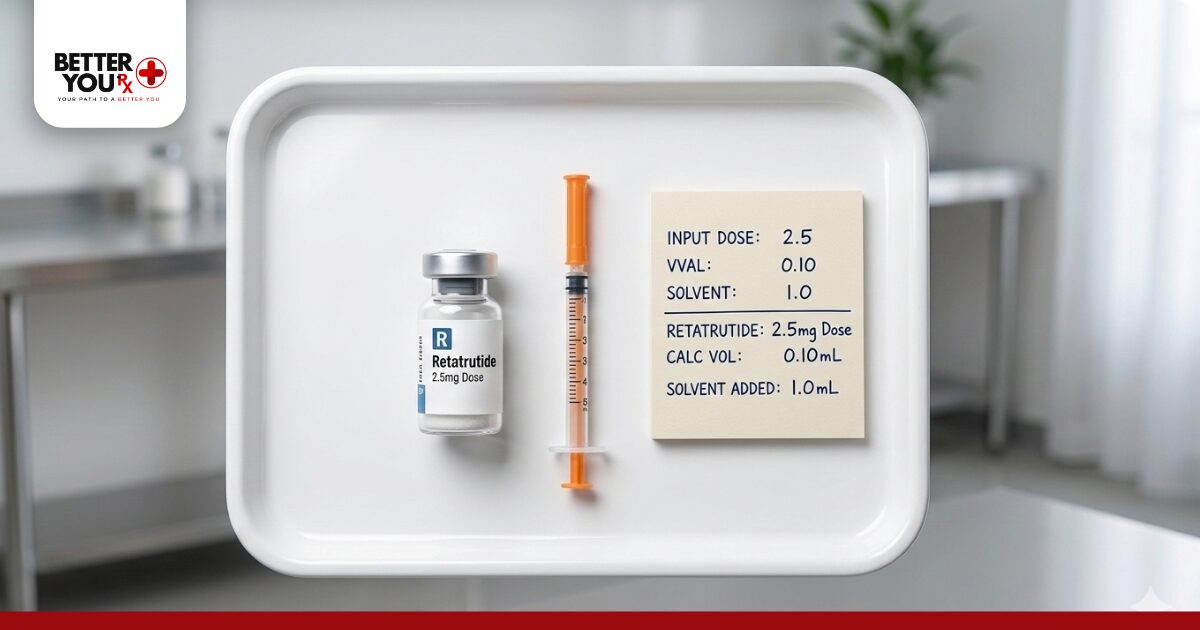
A Retatrutide calculator is a simple dosing tool, either online or manual, that lets you input the total peptide amount in your vial and the volume of bacteriostatic water (BAC water) you plan to add. It then tells you how many units on your syringe equal a specific milligram dose. For example, if you have a 12 mg vial and add 1.2 mL of BAC water, the retatrutide calculator shows that every 10 units on a standard insulin syringe equals 1 mg of Retatrutide.
People use this tool because small measurement errors can lead to taking too much or too little of the peptide. Even a slight miscalculation can affect results or cause unwanted side effects. The calculator removes confusion and gives you a clear number to follow every time you prepare an injection.
Why You Need a Retatrutide Calculator
Peptide dosing is not like taking a standard pill where the amount is pre-measured. With Retatrutide, you work with a lyophilized (freeze-dried) powder that must be reconstituted before each use. The concentration changes based on how much BAC water you add, so the same vial can produce very different doses depending on dilution.
This dosing tool prevents mistakes by doing the math for you. Instead of trying to figure out milligrams, milliliters, and syringe units on your own, you enter two or three values and get your answer. This is especially useful during the early weeks of a protocol when doses are often titrated up gradually.
If you are comparing Retatrutide to other peptide treatments, understanding dosing differences matters. You can read more about what Retatrutide does to see how it works and why precise measurement is so important.
Using a retatrutide calculator is straightforward once you know what numbers to plug in. Here is how it works:
Step 1: Find the total peptide content listed on your vial. Retatrutide commonly comes in 5 mg, 10 mg, or 12 mg vials.
Step 2: Decide how much BAC water you will add. A common choice is 1 mL per 10 mg, but your prescribing doctor may recommend a different dilution.
Step 3: Enter both numbers into the retatrutide calculator. It will output the concentration in mg per mL and tell you how many units on your syringe equal your target dose.
Step 4: Draw your dose using the syringe markings that match the calculator output.
For instance, if you reconstitute a 12 mg vial with 2.4 mL of BAC water, the concentration becomes 5 mg per mL. On a 1 mL insulin syringe (100 units), every 20 units equals 1 mg. The calculator makes this conversion instant.
Retatrutide Calculator Reconstitution Reference Table
| Vial Size | BAC Water Added | Concentration (mg/mL) | Units per 1 mg Dose |
| 5 mg | 0.5 mL | 10 mg/mL | 10 units |
| 5 mg | 1.0 mL | 5 mg/mL | 20 units |
| 10 mg | 1.0 mL | 10 mg/mL | 10 units |
| 10 mg | 2.0 mL | 5 mg/mL | 20 units |
| 12 mg | 1.2 mL | 10 mg/mL | 10 units |
| 12 mg | 2.4 mL | 5 mg/mL | 20 units |
Things To Know About Using a Retatrutide Calculator
Before you start mixing and measuring, there are a few important points to keep in mind when working with this tool and preparing your doses:
Always use bacteriostatic water. Sterile water evaporates faster and does not contain the preservative (benzyl alcohol) that keeps your solution safe for multiple uses. BAC water is the standard for peptide reconstitution.
Store reconstituted Retatrutide in the refrigerator. Once mixed, the solution should be kept between 36 and 46 degrees Fahrenheit. Do not freeze it, and avoid leaving it at room temperature for extended periods.
Use an insulin syringe for accuracy. Standard U-100 insulin syringes (1 mL with 100 unit markings) pair perfectly with the calculator output. They allow you to measure small increments precisely.
Double check your math before injecting. Even with a calculator, take a moment to confirm the numbers. Verify your vial size, BAC water volume, and the syringe units before administering your dose.
Do not shake the vial. When adding BAC water, gently swirl the vial until the powder dissolves. Shaking can damage the peptide structure and reduce effectiveness.
If you want to learn more about the benefits people experience with this peptide, take a look at our post on Retatrutide benefits for a detailed breakdown.
Common Mistakes When Using a Retatrutide Calculator

Even with a retatrutide calculator, mistakes can happen if you are not careful. Here are the most common errors and how to avoid them:
Entering the wrong vial size. If your vial contains 12 mg but you type 10 mg into the calculator, every dose you draw will be off. Always read the label on the vial before entering data.
Using the wrong syringe type. Not all syringes have the same unit markings. A 0.5 mL syringe has 50 units total, while a 1 mL syringe has 100 units. Make sure your syringe matches what the retatrutide calculator assumes.
Adding too much or too little BAC water. Measuring your BAC water carefully matters just as much as measuring the final dose. Use the syringe markings to draw the exact amount before injecting it into the vial.
Forgetting to account for dead space. Some syringes retain a tiny amount of liquid in the hub. While this is usually negligible, it can add up over multiple doses from the same vial.
Managing these medications alongside others requires attention. If you also take blood thinners like Xarelto, always inform your prescribing doctor about all medications you use.
Retatrutide Calculator for Different Dosing Schedules
Most protocols start Retatrutide at a low dose and gradually increase it over several weeks. The calculator is helpful at every stage because the number of syringe units changes as your dose goes up.
A typical titration might start at 0.5 mg per week, increase to 2 mg, and eventually reach doses of 8 mg or 12 mg depending on your provider’s recommendation. Each time the dose changes, you need to recalculate how many units to draw.
Sample Retatrutide Dosing and Syringe Units (12 mg Vial + 1.2 mL BAC Water)
| Week | Weekly Dose | Syringe Units to Draw | Doses per Vial |
| 1 to 4 | 0.5 mg | 5 units | 24 |
| 5 to 8 | 2 mg | 20 units | 6 |
| 9 to 12 | 4 mg | 40 units | 3 |
| 13 to 16 | 8 mg | 80 units | 1.5 |
| 17+ | 12 mg | 120 units (full vial) | 1 |
The table above assumes a concentration of 10 mg/mL. If you use a different dilution, your retatrutide calculator will give different unit values, so always recalculate after changing your reconstitution volume.
How Better You Rx Can Help You Get Started With Retatrutide
At Better You Rx, we know that beginning a new medication can feel like a lot to take in. As a prescription referral service, we help connect you with access to Retatrutide through our licensed contracted network. You can sign up for the Retatrutide waitlist and complete the consultation form on our website. This process helps determine whether Retatrutide fits your needs and ensures you get proper guidance on dosing and administration. Our service simplifies access so you can take the first step toward your health goals with confidence.
Prescriptions must be issued by a primary care physician or licensed medical doctor practicing within the USA only. We mail medications directly to your residence. For questions about our process, call us at 1-647-576-2076.
If you are exploring weight management options, comparing peptides side by side can be useful. Check out our comparison of Retatrutide vs Tirzepatide to see how these treatments differ.
Practical Tips for Getting the Most From Your Retatrutide Calculator
Here are some additional tips to keep your dosing on track:
Keep a dosing log. Write down the date, dose, syringe units drawn, and any notes about how you feel. This helps you and your doctor track progress.
Bookmark your retatrutide calculator. Having it saved on your phone or computer means you can access it quickly without searching every time.
Rotate injection sites. Alternate between your abdomen, thigh, and upper arm to reduce irritation and allow each site to recover.
Label your vials. Write the reconstitution date and BAC water volume on the vial so you always know the concentration without recalculating from scratch.
Managing metabolic health sometimes involves more than one treatment. If you also use Metformin alongside Retatrutide, discuss timing and interactions with your prescribing doctor.
Understanding Peptide Measurement Basics With a Retatrutide Calculator
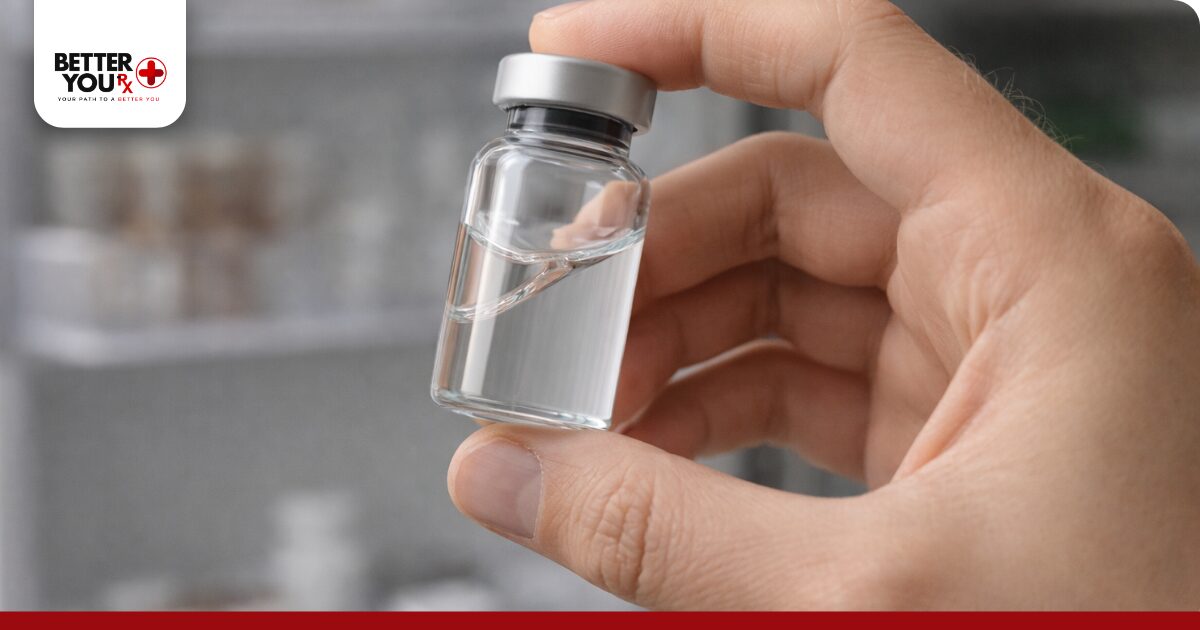
Peptide dosing uses three key measurements: milligrams (mg), milliliters (mL), and syringe units. A retatrutide calculator bridges these so you do not have to convert manually.
For example, 10 mg of Retatrutide dissolved in 1 mL of BAC water gives a concentration of 10 mg/mL. On a 100-unit syringe, each unit equals 0.1 mg. If your target dose is 2 mg, you draw 20 units. The retatrutide calculator does this conversion automatically.
Some people also use weight management medications like Mounjaro Kwikpen, which comes pre-measured. Peptides like Retatrutide require manual preparation, making the calculator essential.
Wrapping Up: Making the Retatrutide Calculator Work for You
A retatrutide calculator is one of the most useful tools for anyone preparing this peptide at home. It simplifies reconstitution math, prevents dosing errors, and gives you confidence that you are measuring correctly. Whether you are on your first week at a low dose or months into a higher protocol, the retatrutide calculator keeps your numbers accurate.
Take the time to understand your vial, your syringe, and the basic math behind concentration. Pair that knowledge with a reliable retatrutide calculator, and you will be set. If you are ready to explore Retatrutide, Better You Rx is here to help. Visit our website, join the waitlist, and take the first step.
Frequently Asked Questions
How to reconstitute Retatrutide 12 mg?
To reconstitute Retatrutide 12 mg, slowly inject 1.2 mL of bacteriostatic water into the vial and gently swirl until the powder fully dissolves. Do not shake the vial. Aim the stream of BAC water against the glass wall of the vial rather than directly onto the powder. Let it sit for a minute if the powder does not dissolve right away. The resulting concentration will be 10 mg per mL, which pairs well with a standard insulin syringe for easy measurement.
How to calculate peptide dosages?
Divide the total peptide content in milligrams by the volume of BAC water in milliliters to get the concentration, then multiply by the desired dose to find syringe units. For example, a 10 mg vial with 1 mL of water gives 10 mg/mL. If your dose is 2 mg, you draw 20 units on a 100-unit syringe. A retatrutide calculator automates this formula so you do not have to do manual math each time.
How to calculate reconstitution?
Reconstitution calculation uses the formula: concentration equals total peptide (mg) divided by total BAC water volume (mL). Once you know the concentration, divide your desired dose by the concentration to find the volume to draw. Multiply that volume by 100 to convert to syringe units on a U-100 insulin syringe. A retatrutide calculator handles these steps instantly.
How do you mix Retatrutide with BAC water?
Draw the desired amount of BAC water into an insulin syringe, insert the needle through the vial’s rubber stopper, and slowly release the water along the inside wall of the vial. Tilt the vial at a slight angle while injecting the water. After adding it, roll the vial gently between your palms. Avoid shaking, as this can break down the peptide. The solution should become clear within a few minutes. For a detailed walkthrough, visit our guide on how to reconstitute Retatrutide.
How long to stay on Retatrutide?
The duration depends on your health goals and your doctor’s recommendation, but many protocols run for 24 to 48 weeks with gradual dose increases. Some individuals stay on it longer based on their progress and medical needs. Regular check-ins with your prescribing physician are important to evaluate results and decide whether to continue, adjust, or stop. Never change the length of your protocol without medical guidance.