
Written by Sarah Mitchell, Health Content Writer | Medically Reviewed by Dr. Amanda Reyes, PharmD | Updated: August 2026
Last Updated: August 18, 2026
Berberine vs Metformin comes down to one core fact: Metformin is a prescription medication with decades of clinical use behind its blood sugar control, while Berberine is a plant-based compound that activates similar metabolic pathways without needing a prescription. Both compounds work partly through AMPK activation, the enzyme that regulates how the body processes glucose, which is why researchers have spent years asking whether Berberine could work as a natural stand-in for Metformin. The honest answer is that Berberine produces measurable, comparable reductions in fasting blood sugar and A1C in several studies, but Metformin remains the more consistent, better-regulated, and more thoroughly studied option for long-term blood sugar management.
Key Takeaways
- Berberine and Metformin both lower blood sugar largely through AMPK activation, the metabolic switch that improves how cells use glucose
- Metformin is a prescription medication with standardized dosing, while Berberine is sold as a supplement, so potency and purity vary between brands
- Several small clinical trials comparing Berberine vs Metformin found similar reductions in fasting glucose and A1C, though study sizes remain limited
- Both compounds share overlapping side effects, particularly gastrointestinal symptoms like bloating, diarrhea, and stomach discomfort
- Combining Berberine and Metformin without medical supervision is not recommended, since both lower blood sugar through related mechanisms
- Metformin continues to be the established first-line option for Type 2 diabetes, while Berberine is better positioned as a supplement discussed with a healthcare provider rather than a replacement
Berberine Vs Metformin: How Each One Works
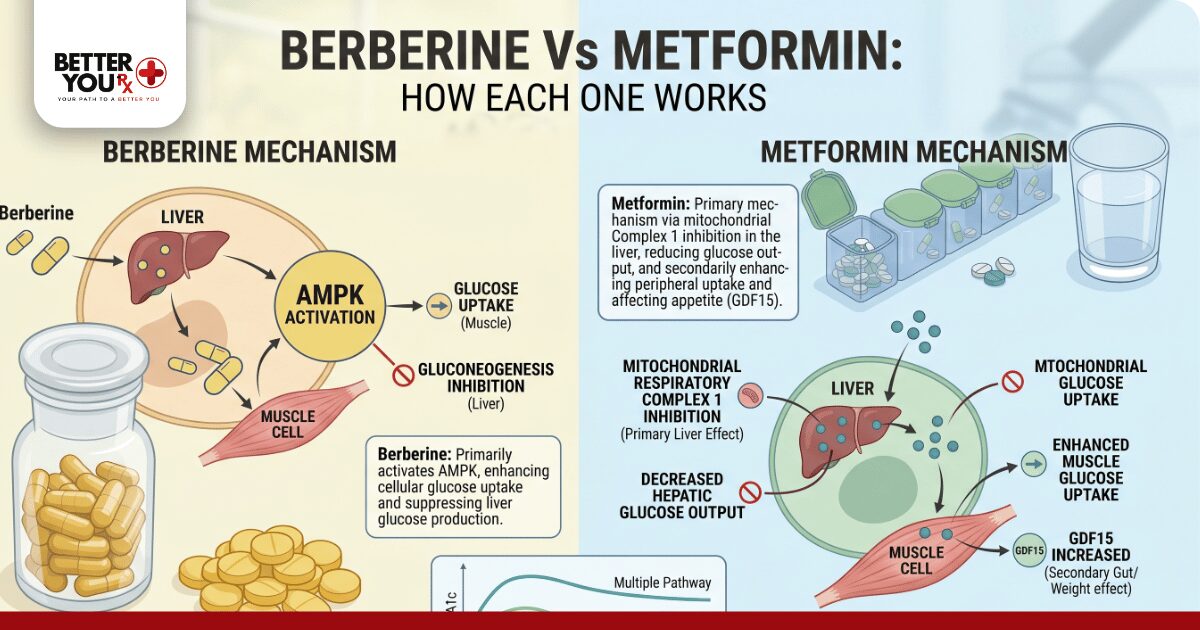
Metformin belongs to a drug class called biguanides. It works primarily by reducing how much glucose the liver releases into the bloodstream and by improving how muscle and fat cells respond to insulin. Doctors have prescribed Metformin for Type 2 diabetes for decades, and it remains one of the most studied medications in modern medicine, with a long track record of predictable dosing and monitoring.
Berberine is a naturally occurring alkaloid found in plants such as barberry, goldenseal, and Oregon grape. It has been used in traditional Chinese and Ayurvedic practices for centuries, though modern interest in Berberine grew once researchers noticed it activates AMPK, the same cellular energy sensor that Metformin influences. This overlap in mechanism is the main reason people search for Berberine vs Metformin comparisons in the first place.
Despite the shared AMPK pathway, the two compounds are not identical in how the body absorbs and processes them. Metformin has a well-mapped pharmacokinetic profile, meaning its absorption, distribution, and clearance are predictable and consistent from dose to dose. Berberine has notably low and variable bioavailability, which is one reason researchers have explored combining it with compounds like milk thistle extract to improve absorption in some formulations.
The table below breaks down the core differences side by side.
| Feature | Metformin | Berberine |
|---|---|---|
| Source | Synthetic prescription drug | Plant-derived alkaloid supplement |
| Prescription Status | Requires a prescription | Sold over the counter |
| Primary Mechanism | Reduces liver glucose output, improves insulin sensitivity | Activates AMPK, similar metabolic pathway |
| Typical Dosing | 500 to 2000 mg daily, provider-directed | 900 to 1500 mg daily, split into 3 doses |
| Monitoring | Regular lab work with a provider | Not routinely monitored |
| Research Depth | Decades of large-scale studies | Smaller, shorter-duration studies |
Berberine Vs Metformin: What Comparative Research Shows
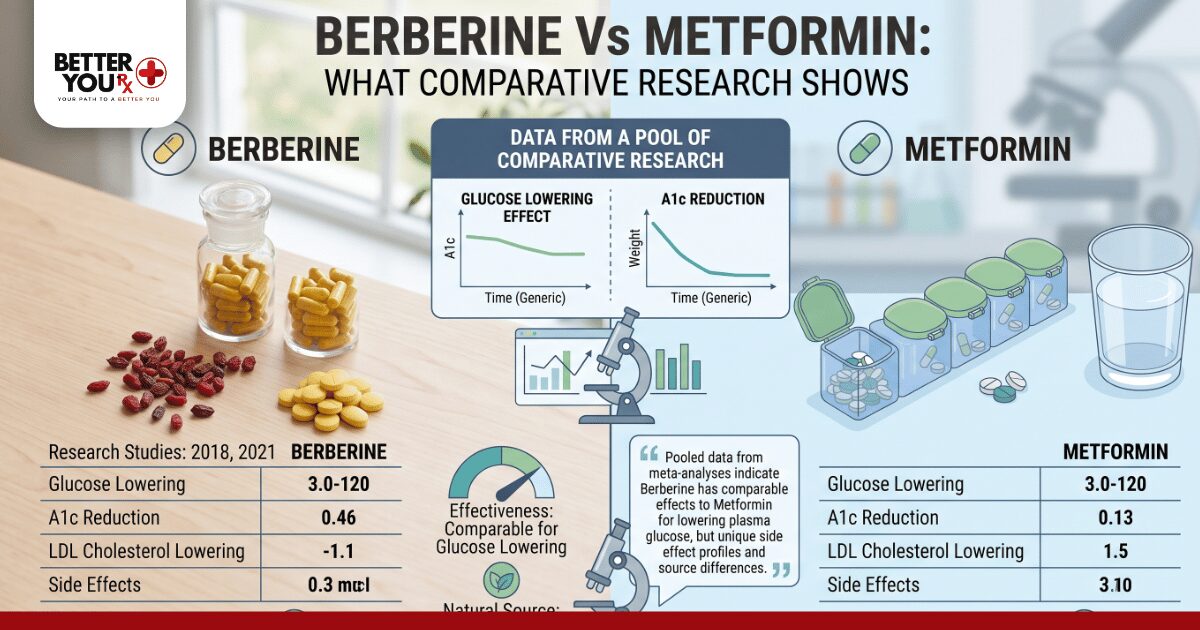
The research comparing Berberine vs Metformin is smaller in scale than the decades of Metformin data, but the existing studies are worth understanding. A frequently cited trial published in the journal Metabolism found that Berberine lowered fasting blood glucose and A1C to a degree statistically similar to Metformin over a three-month period. Smaller follow-up studies have echoed similar findings, generally in people with mild to moderate insulin resistance rather than advanced Type 2 diabetes.
According to the Cleveland Clinic, Berberine has shown promise for blood sugar and cholesterol management, though researchers caution that most trials are short in duration and involve relatively small groups of participants. That distinction matters. Metformin’s effectiveness has been confirmed across large, multi-year studies involving thousands of patients with diverse health profiles, while Berberine research is still catching up in scale and consistency.
Some of the interest in Berberine also comes from its effect on cholesterol and triglycerides, an area where Metformin has a much smaller impact. A handful of trials have reported modest reductions in LDL cholesterol alongside improved fasting glucose when Berberine was taken consistently for several months. This dual effect is part of why Berberine gets discussed as a broader metabolic supplement rather than a narrow blood sugar tool, even though the blood sugar comparison is what drives most Berberine vs Metformin searches.
In everyday clinical practice, healthcare providers often describe a similar pattern: patients who switch from no treatment to Berberine sometimes see modest improvements in fasting glucose within a few weeks, while patients started on Metformin tend to see more predictable and sustained results once the dose is titrated appropriately. Most healthcare providers follow established clinical protocols when prescribing Metformin, which is part of why its effects are easier to predict from one patient to the next. It also means lab monitoring, typically every three to six months, remains a standard part of long-term Metformin management, something that is far less consistent among people using Berberine on their own.
Things To Know
- Berberine typically requires three doses per day due to its short half-life, while Metformin is often taken once or twice daily
- Berberine may lower blood sugar within days for some people, but consistent results usually take four to eight weeks
- Metformin dosing is adjusted gradually by a healthcare provider to reduce gastrointestinal side effects
- Neither Berberine nor Metformin is intended for Type 1 diabetes management
- Berberine supplements are not standardized the way prescription Metformin is, so potency can vary by brand
Side Effects And Safety Considerations
Berberine and Metformin share a notable amount of overlap when it comes to side effects, largely because both affect the digestive system as the body adjusts. Metformin is well known for causing temporary stomach upset, diarrhea, and a metallic taste when treatment begins, though these effects typically fade as the body adapts to a consistent dose. Berberine tends to cause a similar pattern of gastrointestinal discomfort, including bloating, cramping, and loose stools, particularly at higher doses.
The table below compares common safety considerations for each option.
| Consideration | Metformin | Berberine |
|---|---|---|
| Common Side Effects | Stomach upset, diarrhea, metallic taste | Bloating, cramping, loose stools |
| Kidney Concerns | Requires dose adjustment with reduced kidney function | Limited long-term kidney safety data |
| Drug Interactions | Reviewed by provider before starting new medications | Can interact with blood thinners and other diabetes drugs |
| Pregnancy Use | Only under provider direction | Not recommended without provider guidance |
People taking blood pressure medication, other diabetes medications, or blood thinners should talk with a healthcare provider before adding Berberine, since it can interact with several drug classes. Metformin also carries specific precautions, particularly for people with reduced kidney function, since the kidneys are responsible for clearing it from the body.
How Berberine And Metformin Compare For Weight Management
Weight is another reason people bring up Berberine vs Metformin, since both are associated with modest weight changes in some studies. Metformin’s effect on weight is generally mild, with some patients experiencing a small, gradual reduction over several months rather than a dramatic shift. This effect is thought to relate to improved insulin sensitivity and slightly reduced appetite in certain individuals, rather than any direct fat-burning mechanism.
Berberine has shown a similar pattern in smaller studies, with modest reductions in body weight and waist circumference reported over eight to twelve weeks of consistent use. Neither compound is approved or intended as a primary weight-loss treatment, and any weight change should be considered a secondary effect of improved metabolic function rather than the main goal. People focused specifically on weight management are often better served by medications designed for that purpose, discussed directly with a provider, rather than relying on either Berberine or Metformin off-label for weight loss alone.
Who Might Benefit From Each Option
The decision between Berberine and Metformin usually depends on a person’s diagnosis, health history, and how they prefer to manage their care. Someone with a confirmed Type 2 diabetes diagnosis and elevated A1C levels is typically better served by Metformin, since it has a proven track record for reducing long-term complications tied to high blood sugar. A person with mild insulin resistance, prediabetes, or metabolic syndrome who wants to explore a supplement-based approach alongside diet and exercise may be a more reasonable candidate for Berberine, ideally with provider oversight.
In practice, some patients describe starting with lifestyle changes and Berberine before their fasting glucose numbers justify a prescription conversation, while others move directly to Metformin once bloodwork confirms a diagnosis. Neither path is universally right; it depends on where a person’s numbers currently stand and what their provider recommends after reviewing labs. Age, kidney function, other medications, and personal tolerance for gastrointestinal side effects all factor into which option a provider is likely to suggest first.
People managing multiple health conditions at once, such as high cholesterol alongside elevated blood sugar, sometimes find the conversation more complex, since both Berberine and certain prescription medications can influence more than one marker at a time. This is exactly the kind of situation where a structured conversation with a healthcare provider, rather than independent trial and error, produces the clearest path forward.
Berberine Vs Metformin: Which Should You Choose?
There is no single answer that fits everyone, but a few patterns hold up consistently. Metformin is the better-established, more predictable option for anyone with a confirmed Type 2 diabetes diagnosis, largely because its safety profile and long-term outcomes are backed by extensive research. Berberine may be worth discussing with a provider for people who are not yet at the point of needing prescription treatment, or who want an additional supplement alongside their existing care plan, but it should not be treated as a straightforward substitute for Metformin without medical guidance.
For many people already managing their blood sugar with a prescribed medication such as Metformin, Rybelsus, or Ozempic, the more relevant question is not whether to swap in Berberine but how to support the treatment plan already in place through diet, activity, and consistent follow-up with a provider.
Buy Wegovy from Canada
Original price was: $609.99.$596.99Current price is: $596.99.
Wrapping Up: Making Sense Of Berberine Vs Metformin
Choosing between Berberine and Metformin really comes down to where someone is in their blood sugar journey and what their healthcare provider recommends after reviewing bloodwork. Metformin remains the more established, closely monitored option with decades of outcomes data behind it, while Berberine can be a reasonable supplement to discuss for milder cases of insulin resistance. Anyone currently taking a prescription like Metformin should continue following their provider’s guidance rather than replacing it with a supplement on their own.
For related reading, explore our guide on the Trulicity dosage guide, learn more about the side effects of Trulicity, or compare treatment paths in our breakdown of Ozempic vs Trulicity. Whichever path fits a given situation, the most reliable outcomes come from consistent follow-up, routine lab work, and open communication with the provider managing the treatment plan.
Frequently Asked Questions
What organ is metformin hard on?
Short answer: The kidneys are the organ most closely tied to Metformin safety, since they clear the drug from the body and reduced kidney function can raise the risk of side effects.
Is it safe to take berberine instead of metformin?
Short answer: Berberine should not replace Metformin without a healthcare provider’s guidance, since stopping a prescribed medication on your own can leave blood sugar unmanaged.
What cannot be mixed with berberine?
Short answer: Berberine can interact with blood thinners, blood pressure medication, and other diabetes drugs, so any combination should be reviewed by a provider first.
Why am I losing so much weight on berberine?
Short answer: Berberine can influence metabolism and appetite for some people, but unexplained or rapid weight loss should always be discussed with a healthcare provider.
What is the safest alternative to metformin?
Short answer: The safest alternative depends on individual health history, and any switch, including to Berberine, should be evaluated and supervised by a healthcare provider.
Sources
- Cleveland Clinic – Overview of Berberine’s uses, evidence, and safety considerations for blood sugar and cholesterol.
- Mayo Clinic – Patient guidance on Metformin, including dosing, side effects, and monitoring recommendations.
- Journal of Ethnopharmacology – Research on Berberine’s mechanisms of action and metabolic effects.
- American Diabetes Association – Clinical guidance on first-line pharmacologic treatment for Type 2 diabetes.
- National Center for Complementary and Integrative Health – Overview of Berberine research and supplement safety considerations.
Disclaimer: This content is for informational purposes only and is not a substitute for professional medical advice, diagnosis, or treatment. Always consult a licensed healthcare provider before starting, stopping, or combining any medication or supplement, including Berberine or Metformin. Better You Rx is a prescription referral service connected to a licensed contracted dispensing department, and is not a pharmacy.