Does Metformin Dosage for Weight Loss Really Work?
Written by Sarah Mitchell, Health and Wellness Writer | Medically Reviewed by Dr. Amanda Reyes, MD | Last Updated: August 2026
Metformin dosage for weight loss usually begins at a low starting point, often 500 mg taken once or twice daily with food, then increases gradually over several weeks toward a typical maintenance range between 1,500 mg and 2,000 mg per day. The right metformin dosage for weight loss depends heavily on how well a person tolerates the medication, their blood sugar readings, kidney function, and what a prescribing provider determines fits their individual health profile.
Weight loss with Metformin tends to be gradual and modest rather than dramatic, and it is most often discussed as a supporting option for people managing insulin resistance or prediabetes rather than a primary weight loss treatment. Providers generally titrate the dose slowly specifically to reduce digestive discomfort, which is the most commonly reported reason people stop taking it before it has a chance to work. Understanding how the dosing schedule progresses, what actually drives the weight related effects, and how Metformin compares with other medical weight management options can help set realistic expectations before starting treatment.
Key Takeaways
- Metformin dosage for weight loss typically starts at 500 mg once daily and increases slowly over several weeks based on tolerance
- Most providers use standard diabetes dosing frameworks as a starting point, since Metformin is used for weight support on an off label basis
- Weight changes with Metformin are usually modest and gradual, and results differ from person to person
- Extended release Metformin is often chosen for weight management because it tends to cause fewer stomach related side effects
- A licensed healthcare provider should always determine the starting dose, titration pace, and maximum dose based on personal health history
Typical Metformin Dosage for Weight Loss by Stage
Metformin has been used for decades to help manage blood sugar in people with type 2 diabetes, and its connection to weight is largely an observed side effect rather than its original purpose. Many patients notice a modest reduction in appetite and a small amount of weight change after starting the medication, which is why some providers include it as part of a broader weight management plan, particularly for people who also have insulin resistance, prediabetes, or polycystic ovary syndrome.
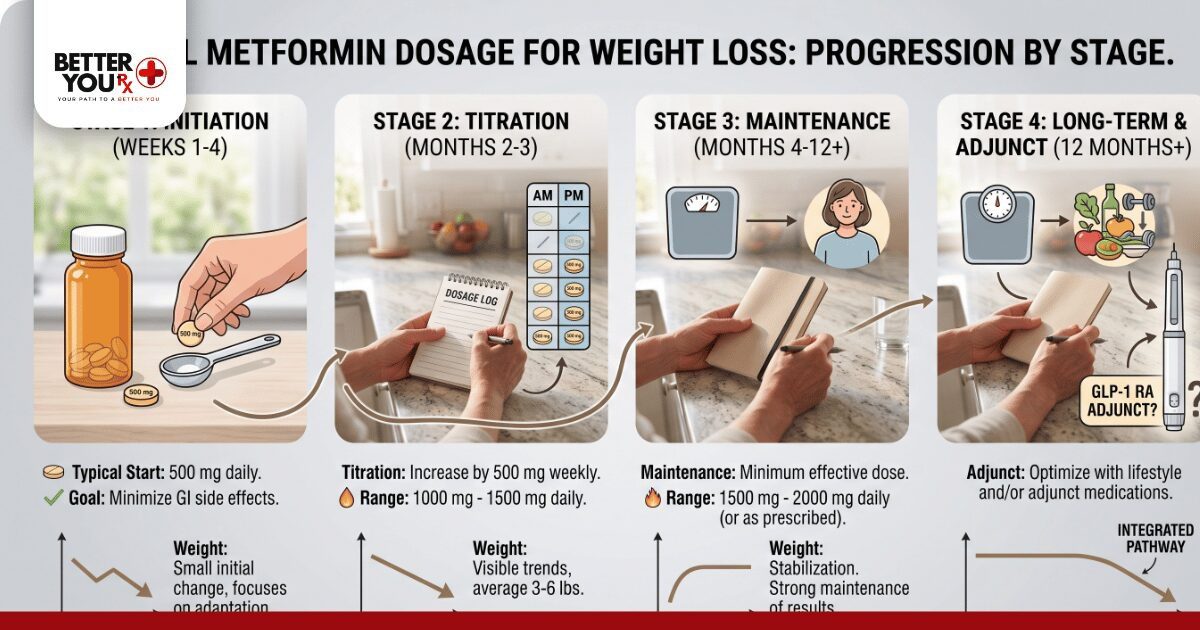
Dosing almost always starts low. A provider will typically begin with 500 mg once daily, taken with a meal to reduce stomach upset. Over the following one to two weeks, if the medication is well tolerated, the dose may increase to 500 mg twice daily. From there, further increases usually happen in 500 mg increments spaced out by at least a week, continuing until the person reaches an effective dose or the maximum amount their provider recommends.
| Titration Stage | Typical Daily Dose | What Usually Happens |
| Week 1 to 2 | 500 mg once daily with a meal | The body adjusts; mild digestive symptoms are common and often temporary |
| Week 3 to 4 | 500 mg twice daily | Dose increases only if the first stage was well tolerated |
| Week 5 to 8 | 1,000 mg to 1,500 mg daily, divided | Provider monitors blood sugar readings and side effects |
| Maintenance | 1,500 mg to 2,000 mg daily | Common long term range for many patients on standard tablets |
Why Metformin Influences Body Weight
Metformin’s effect on weight is thought to come from a few overlapping mechanisms rather than one single pathway. It reduces how much glucose the liver produces, which lowers circulating blood sugar and reduces the amount of insulin the body needs to release. Because high insulin levels can encourage fat storage, this shift plays a role in the modest weight changes some people notice.
Metformin also appears to influence appetite signaling in the gut, and some research points to a mild effect on hormones connected to fullness, similar in direction to pathways targeted by newer weight management medications, though far less pronounced. It can slightly slow how quickly the intestine absorbs glucose, which may reduce overall caloric intake for some individuals over time.
In clinical practice, patients who start Metformin for insulin resistance often describe a gradual decrease in cravings for sugary foods within the first month rather than a dramatic drop in appetite overall. This slow, steady pattern is typical, and it is one reason providers set expectations around gradual progress rather than rapid results.
How Providers Determine Metformin Dosing
Determining the right metformin dosage for weight loss involves several factors beyond a standard chart. Kidney function is one of the most important, since Metformin is processed by the kidneys and reduced function can require a lower dose or a different medication altogether. A provider will also consider current blood sugar or A1C levels, other medications a person takes, and how the digestive system responds during the first few weeks.
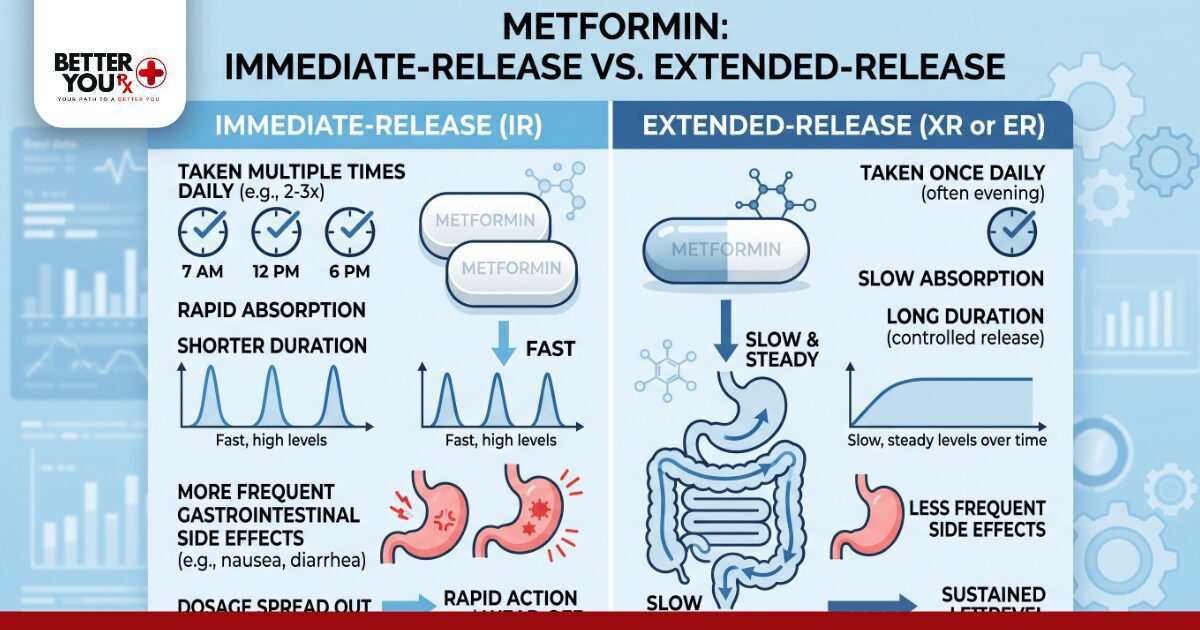
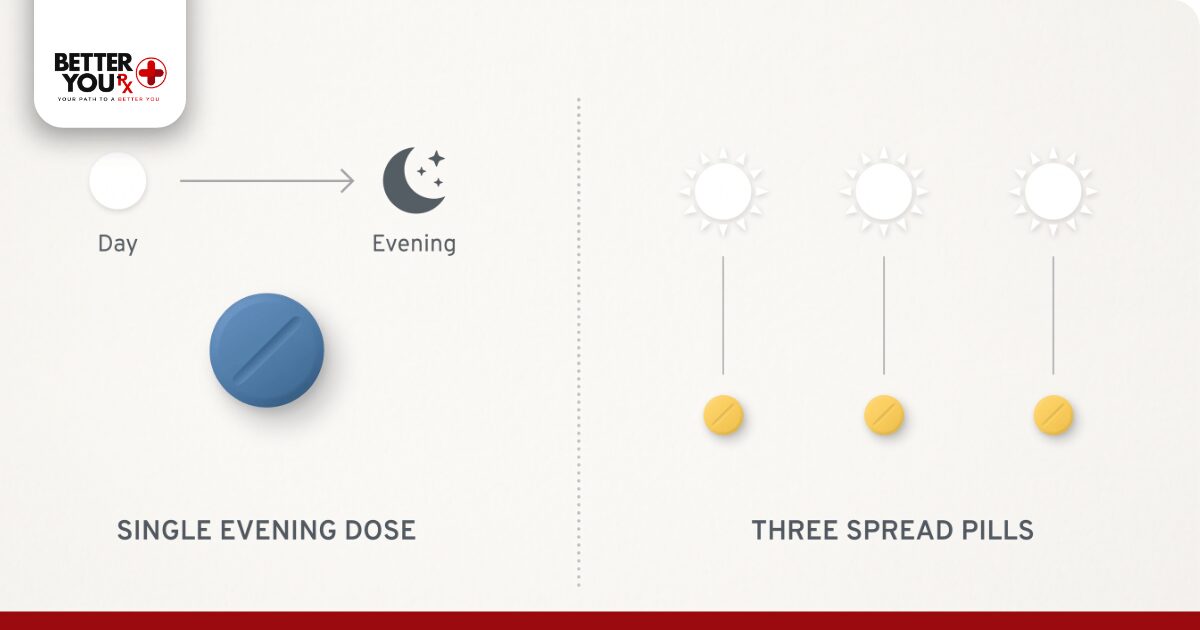
Extended release Metformin, often labeled ER or XR, is frequently preferred for weight management because it releases the medication more slowly, which tends to reduce nausea, diarrhea, and stomach discomfort compared with immediate release tablets. It is also typically taken once daily, usually with the evening meal, which many patients find easier to stick with long term.
Most healthcare providers follow established clinical protocols when building a titration schedule and monitoring kidney function and vitamin B12 levels throughout treatment. According to Cleveland Clinic, Metformin’s primary clinical role remains blood sugar management, with weight related effects generally considered a secondary and variable benefit rather than the medication’s main purpose.
Things To Know
- The metformin dosage for weight loss should never be adjusted without medical guidance, even if early results feel slow
- Extended release tablets are generally taken once daily and should be swallowed whole rather than split or crushed
- Increasing the dose faster than recommended raises the risk of stomach upset and does not speed up weight related results
- Routine blood work is typically ordered to monitor kidney function and vitamin B12 levels during long term use
- Noticeable weight changes usually take several weeks to a few months to appear, not days
Metformin Compared With Other Weight Management Options
For people whose primary goal is significant weight reduction rather than blood sugar support, providers often discuss how Metformin stacks up against other medical options.
| Option | Typical Weight Change | Best Fit For |
| Metformin | Modest and gradual | Insulin resistance, prediabetes, or PCOS related weight concerns |
| GLP-1 medications | More significant | People needing substantial weight loss support alongside metabolic health goals |
| Combination approach | Varies by individual | Patients working closely with a provider on a layered treatment plan |
For patients seeking a more substantial weight change, a provider may discuss options such as Ozempic or Saxenda alongside or in place of Metformin, depending on individual metabolic needs and overall treatment goals. Metformin generally works best as a supporting therapy rather than a stand alone weight loss solution, particularly for people who are already managing blood sugar concerns.
Readers comparing options may also find it useful to look at Ozempic vs Trulicity and Saxenda vs Ozempic for a closer look at how these medications differ from one another.
Getting Started With a Prescription Referral
Better You Rx is a prescription referral service that connects US patients with a licensed contracted dispensing department once a valid prescription from a US based provider has been reviewed. A primary care physician or licensed medical doctor practicing in the United States can evaluate whether Metformin fits a person’s overall health picture and, if appropriate, issue a prescription that outlines the recommended starting dose and titration plan.
Buy Wegovy from Canada
Original price was: $609.99.$596.99Current price is: $596.99.


Patients already using or considering Metformin alongside other treatments sometimes want to understand how it fits with broader diabetes and weight management medications, such as what is Trulicity, which covers a different class of medication used for similar underlying goals.
Common Side Effects and What They Typically Mean
Digestive symptoms are the most frequently reported side effects when starting Metformin, including nausea, mild diarrhea, stomach discomfort, and a metallic taste that some people notice early on. These symptoms are usually most noticeable during the first two to four weeks and often ease once the body adjusts, which is part of why providers favor a slow titration schedule.
A rare but serious risk called lactic acidosis can occur in people with significant kidney impairment, severe dehydration, or certain other health conditions, which is why kidney function is checked before starting treatment and periodically afterward. Anyone experiencing unusual muscle pain, difficulty breathing, or extreme fatigue while taking Metformin should contact their provider promptly rather than waiting for a scheduled visit.
The Bottom Line on Metformin and Weight Management
Metformin dosage for weight loss works best as part of a broader plan built around gradual titration, consistent monitoring, and realistic expectations about the pace of change. Starting low, increasing slowly, and staying in contact with a licensed provider throughout the process gives the medication the best chance to be both tolerable and effective for the person taking it. For many patients, the goal is steady metabolic improvement rather than rapid weight change, and Metformin fits that role well when it is prescribed and monitored appropriately.
Frequently Asked Questions
Is 500 mg of Metformin enough for weight loss?
It can be a reasonable starting dose, but most people need a higher maintenance dose over time. A 500 mg starting dose is designed to test tolerance, not to produce noticeable weight changes on its own, and providers typically increase it gradually.
How long does it take Metformin to start working for weight loss?
Most people notice gradual changes over 8 to 12 weeks, not days. Blood sugar improvements often appear first, with any weight related changes following slowly as the dose reaches an effective level.
What is the maximum Metformin dosage for weight loss?
The commonly used maximum is around 2,000 to 2,550 mg per day, depending on the formulation. A provider determines the exact ceiling based on kidney function, tolerance, and how a person responds to lower doses first.
Can Metformin be combined with other weight loss medications?
Yes, in some cases a provider may combine Metformin with another medication. This decision depends on a person’s full health history, current blood sugar control, and specific weight management goals, and it should only be done under medical supervision.
Does Metformin cause weight loss in people without diabetes?
Some people without diabetes do experience modest weight changes, though results vary widely. It is typically considered for people with insulin resistance or PCOS rather than prescribed purely for weight loss in the general population.
Sources
- Mayo Clinic: Overview of Metformin, its clinical uses, dosing considerations, and common side effects
- Cleveland Clinic: Patient education resource on Metformin’s role in blood sugar management and metabolic health
- Diabetes Care, American Diabetes Association journal: Peer reviewed research on Metformin’s mechanisms and metabolic effects
- Annals of Internal Medicine: Clinical research on Metformin use and body weight outcomes in adults with insulin resistance
This article is for informational purposes only and is not a substitute for professional medical advice, diagnosis, or treatment. Always consult a licensed healthcare provider before starting, stopping, or changing any medication, including Metformin, to determine what is appropriate for your individual health needs.

 Who Might Benefit Most From This Combination