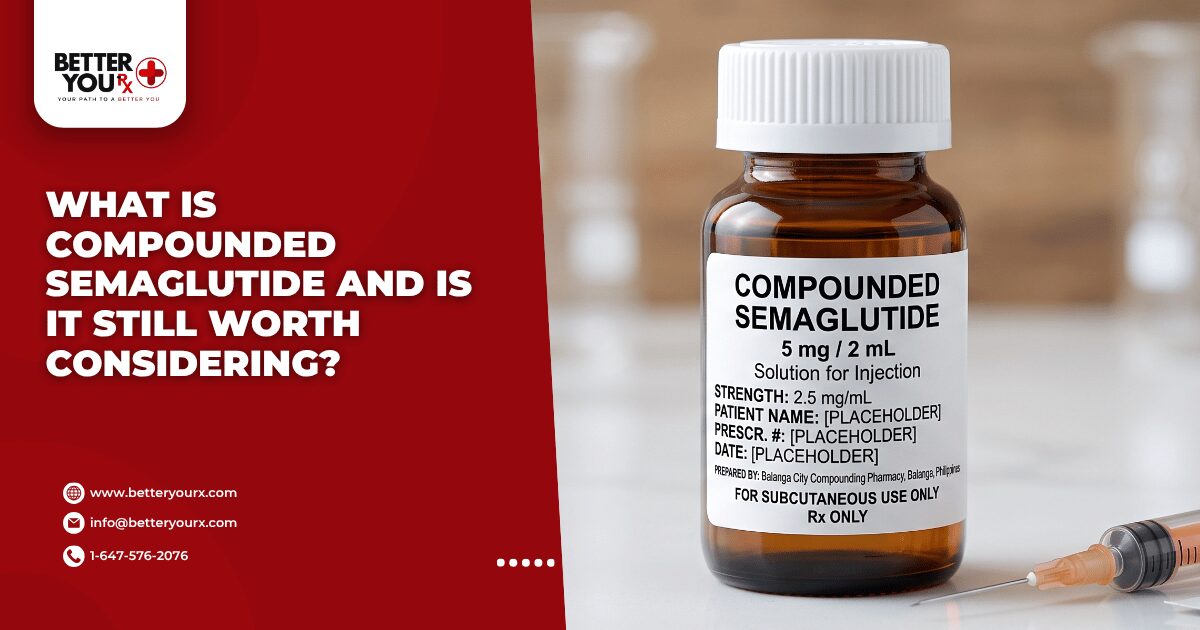
Compounded Semaglutide is a custom-prepared version of Semaglutide, the same active ingredient found in Ozempic and Wegovy, made available through licensed providers and a regulated compounding source rather than the original brand-name manufacturer. It remains an effective, medically supervised option for eligible patients when brand-name Semaglutide is delayed, cost-prohibitive, or unavailable in a needed strength. Because it uses the same core molecule as the brand-name version, weight loss and blood sugar results are generally comparable when the formulation is properly sourced and monitored by a licensed provider, though differences in inactive ingredients, testing standards, and batch consistency are worth understanding before starting treatment.
Key Takeaways
- Compounded Semaglutide contains the same active ingredient as brand-name Semaglutide but is prepared through a different formulation and sourcing process.
- It is legally accessible in the United States only through a valid prescription from a licensed medical doctor and a properly regulated compounding source.
- Effectiveness for weight loss and blood sugar management is generally comparable to the brand-name version when the product is properly formulated and monitored.
- Cost, availability, and formulation flexibility are the most common reasons patients consider this option over the brand-name version.
- Quality can vary between compounding sources, making provider oversight and sourcing transparency essential parts of the decision.
What Exactly Is This Compounded Option?
Semaglutide belongs to a class of medications known as GLP-1 receptor agonists, originally developed for type 2 diabetes management and later approved for chronic weight management under brand names like Ozempic, Wegovy, and Rybelsus. When a brand-name product is delayed, priced out of reach, or unavailable in a strength a patient needs, licensed providers may turn to a compounding source that formulates Semaglutide individually rather than in a mass-manufactured, pre-packaged form.
This is not a generic. Generics are copies of a brand-name drug approved to match it exactly and manufactured at large scale. A compounded version is prepared in smaller batches, often combined with a specific base solution, and tailored to a prescription written for an individual patient. The active ingredient, Semaglutide, is intended to be chemically identical to what is found in brand-name products, but the surrounding formulation process differs meaningfully.
Patients researching this option often want to know how it stacks up against the branded product they may already be familiar with. The table below summarizes the core differences.
| Factor | Compounded Version | Brand-Name Version |
|---|---|---|
| Active Ingredient | Semaglutide | Semaglutide |
| Source | Regulated compounding facility | Original manufacturer |
| Formulation | Customized per prescription | Standardized, mass-produced |
| Availability | Often faster during shortages | Subject to supply fluctuations |
| Packaging | Vial-based, provider-dispensed | Pre-filled pen devices |
| Cost Structure | Frequently more accessible | Set manufacturer pricing |
Why Do Patients Consider This Option?
Cost is the reason most patients bring up first. Brand-name Semaglutide products carry a set price established by the manufacturer, and without coverage, that price can be a genuine barrier for people who would otherwise benefit from GLP-1 therapy. This alternative is often positioned as a more accessible entry point for patients who are paying out of pocket.
Availability is the second major driver. During periods when demand for GLP-1 medications outpaces brand-name supply, patients with an active prescription have sometimes faced delays refilling their treatment. A regulated compounding source can often fill that gap, allowing patients to stay on a consistent treatment schedule rather than pausing therapy altogether.
Providers who work with weight management patients regularly report that treatment interruptions are one of the most common reasons patients lose momentum on a GLP-1 protocol. A patient who has been steadily losing weight and then experiences a two or three month gap in supply often sees appetite and cravings rebound during that window, which can be genuinely discouraging. Having a consistent, provider-monitored source of Semaglutide, whether compounded or brand-name, tends to matter more for long-term outcomes than which specific version a patient starts on.
Dosing flexibility is the third factor. Because this formulation is prepared per prescription, a provider has more room to titrate a dose gradually or adjust a maintenance dose based on how an individual patient is responding, rather than being limited to the fixed increments available in a pre-filled pen.

How Is This Formulation Prepared and Sourced?
Compounded medications are prepared at facilities that operate under state licensing and quality standards distinct from large-scale pharmaceutical manufacturing. A compounding source combines active Semaglutide with a sterile base solution in a controlled environment, then dispenses it according to the exact strength and volume a licensed provider has prescribed for a specific patient.
Reputable compounding sources use third-party testing to verify the potency and purity of each batch before it reaches a patient. This step matters because compounded products are not held to the same pre-market batch testing requirements as mass-manufactured brand-name drugs, which means sourcing transparency becomes one of the most important factors patients should evaluate. Working with a provider network that only partners with vetted, quality-tested compounding sources significantly reduces this variability.
According to the Cleveland Clinic, GLP-1 receptor agonists like Semaglutide work by slowing digestion, reducing appetite signals, and improving insulin response, mechanisms that apply regardless of whether the Semaglutide originated from a brand-name product or a compounded formulation, since the underlying molecule functions the same way in the body.
Things To Know
- This option requires a valid prescription from a licensed medical doctor practicing in the United States; it is not available without one.
- Quality varies by compounding source, so working with a provider network that vets its compounding partners matters more than the price alone.
- It is intended for personal use only and is shipped directly to a patient’s residence rather than to a clinic or office.
- Prescriptions must be written in English and issued by a primary care physician or licensed medical doctor for the product to be processed.
- Switching between a compounded formulation and the brand-name version should always be discussed with a prescribing provider first, since dosing structures can differ.
Dosage Tiers Patients Commonly Ask About
Semaglutide treatment typically follows a gradual titration schedule, starting at a low dose and increasing over time based on tolerance and response. The table below outlines the general tiers commonly referenced in Semaglutide treatment protocols, whether compounded or brand-name.
| Tier | Approximate Weekly Dose | Common Purpose |
|---|---|---|
| Starting Tier | 0.25 mg | Initial tolerance building |
| Early Titration | 0.5 mg | Early response adjustment |
| Mid Titration | 1 mg | Continued dose escalation |
| Higher Titration | 1.7 mg | Extended weight or glycemic goals |
| Maintenance Tier | 2.4 mg | Long-term maintenance dosing |
Actual dosing decisions, including how quickly a patient moves between tiers, should always be determined by a licensed provider based on individual response, tolerance, and treatment goals. This is general reference information, not a substitute for a personalized treatment plan.

Which Option Is Best, Compounded Semaglutide or Brand-Name Semaglutide?
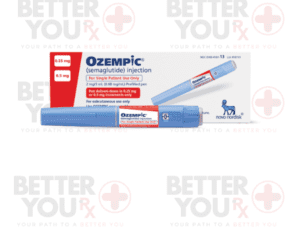
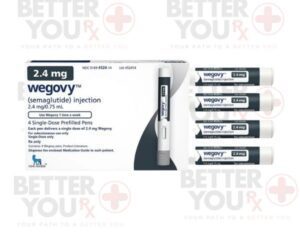
The honest answer depends on what a patient values most in a given moment. This option tends to make sense for patients who are paying out of pocket, who have run into a supply delay with their brand-name prescription, or whose provider has determined a customized dosing schedule fits their treatment plan better than the fixed increments of a pre-filled pen. Brand-name Semaglutide, delivered through devices like the Ozempic or Wegovy pen, tends to make more sense for patients who prioritize the standardized, pre-measured convenience of a manufacturer device and have consistent access to it.
Patients comparing GLP-1 options more broadly, including how Semaglutide stacks up against other medications in this class, often find it helpful to review a direct Ozempic vs Trulicity comparison or explore how compounded formulations of similar GLP-1 medications are prepared, such as Retatrutide.
Neither option is universally “better.” The clinical mechanism, active ingredient, and general safety profile are consistent across both, which means the decision usually comes down to access, cost, and how closely a patient wants their dosing schedule tailored. A licensed provider is best positioned to weigh these factors against a patient’s medical history and goals.
Buy Wegovy from Canada
Original price was: $609.99.$596.99Current price is: $596.99.
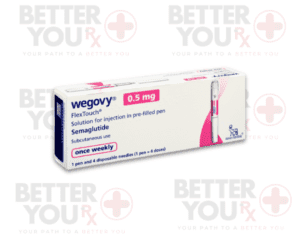
Patients exploring related metabolic health options sometimes also review Mounjaro, Zepbound, or Trulicity dosage guidance as part of a broader conversation with their provider about which GLP-1 medication best fits their treatment goals. For patients specifically weighing Semaglutide against Saxenda, a Saxenda vs Ozempic breakdown covers how the two compare on dosing schedule and delivery method.
Frequently Asked Questions About This Treatment Option
Is compounded Semaglutide still effective?
Yes. It uses the same active ingredient as the brand-name version, so when sourced from a properly tested, regulated compounding source, it produces comparable weight loss and blood sugar results under provider supervision.
Can I still get my compounded Semaglutide?
In most cases, yes, provided a licensed medical doctor has issued a valid prescription and the product is dispensed through a properly regulated compounding source that ships directly to a patient’s residence in the United States.
How long will it take me to lose 30 lbs on Semaglutide?
Results vary widely, but many patients following a structured titration schedule alongside dietary changes report meaningful progress toward a 30 lb goal over roughly six to nine months, depending on starting weight and adherence.
What is the difference between Ozempic and a compounded Semaglutide?
Both contain the same active ingredient, Semaglutide. The difference lies in sourcing and formulation: Ozempic is manufactured and pre-filled in a standardized pen, while a compounded version is prepared individually through a compounding source based on a provider’s prescription.
Can I lose 20 lbs in 2 months on Semaglutide?
Losing 20 lbs in two months is faster than what most patients experience on a standard titration schedule; that pace is uncommon and should be discussed with a provider, since gradual, sustainable loss is generally the safer and more typical outcome.
The Bottom Line on This Treatment Path
Compounded Semaglutide remains a legitimate, medically supervised path to GLP-1 therapy for patients who run into cost barriers, supply delays, or a need for individualized dosing that brand-name products cannot always accommodate. The active ingredient functions the same way in the body regardless of its source, but the differences in formulation, testing, and sourcing transparency are exactly why working with a licensed provider and a properly vetted compounding source matters so much. Patients weighing this option against brand-name Semaglutide are best served by an honest conversation with a prescribing provider about goals, budget, and what consistent access actually looks like for their situation.
Sources
- Cleveland Clinic – Overview of how GLP-1 receptor agonists like Semaglutide work in the body, including appetite regulation and glycemic effects.
- The New England Journal of Medicine – Peer-reviewed clinical research on Semaglutide’s effects on body weight and metabolic markers.
- Mayo Clinic – Patient-focused overview of GLP-1 medications used in weight management and type 2 diabetes treatment.
- Journal of the American Medical Association – Published research on GLP-1 receptor agonist safety and efficacy outcomes.
- Obesity Reviews Journal – Academic review of compounded and brand-name GLP-1 formulation comparisons in clinical practice.
Medical Disclaimer: This content is provided for informational purposes only and is not intended as medical advice. It is not a substitute for professional consultation, diagnosis, or treatment from a licensed healthcare provider. Always speak with a qualified medical professional before starting, stopping, or changing any medication or treatment plan. Better You Rx is a prescription referral service working with a licensed contracted dispensing department and does not provide medical advice directly.