

Written by Sarah Collins, BSN, RN | Medically Reviewed by Dr. Amanda Reyes, PharmD | Updated: August 2026
Metformin extended release vs immediate release comes down to two things: how often you take it and how your stomach reacts to it. Immediate-Release Metformin is usually taken two to three times a day and tends to cause more stomach upset, while Extended-Release Metformin is taken once daily and releases more slowly, which many people find gentler on digestion.
Key Takeaways
- Immediate-Release Metformin (Metformin IR) is typically dosed two to three times daily, while Extended-Release Metformin (Metformin XR or Metformin ER) is usually taken once daily with the evening meal
- Metformin XR tends to cause fewer gastrointestinal side effects because it releases the medication gradually instead of all at once
- Both versions manage blood sugar through the same active ingredient and generally produce similar long-term blood sugar control when dosed appropriately
- Switching between formulations should always be guided by a licensed healthcare provider, since the total daily dose and timing differ
- Cost and personal tolerance often influence which formulation a provider recommends
Metformin has been a first-line treatment for type 2 diabetes for decades, and the choice between its two main formulations often comes up early in treatment planning. Patients frequently ask their care team which version fits their routine and their stomach better, and the answer depends on lifestyle, tolerance, and how consistently a person can stick to a dosing schedule.
What Is The Difference Between Metformin XR And Metformin IR?
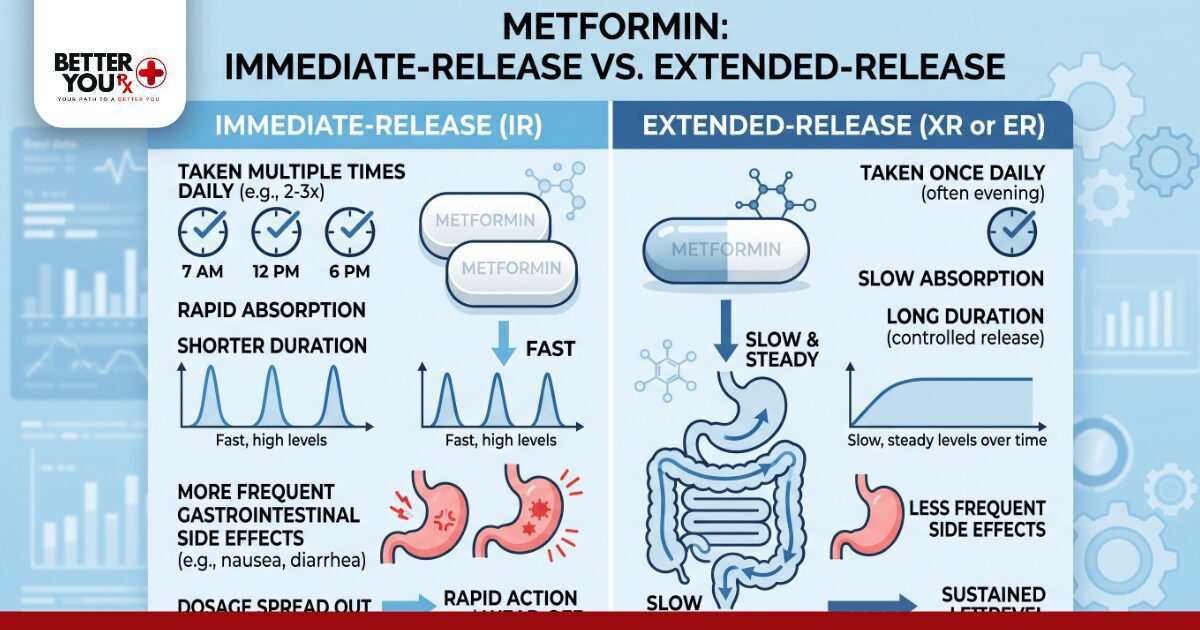
The core question behind Metformin extended release vs immediate release is really about absorption speed and how that speed translates into daily comfort. Immediate-Release Metformin dissolves in the stomach relatively quickly, sending a larger dose of the medication into the bloodstream within a short window. This is effective for lowering blood sugar, but it also means the digestive tract absorbs a concentrated amount of the drug at once, which is part of why nausea, bloating, and diarrhea are common complaints with this version.
Extended-Release Metformin uses a special coating and matrix system that slows the release of the medication over several hours. Instead of one quick surge, the drug enters the bloodstream gradually throughout the day. This slower absorption pattern is the main reason people switch from Immediate-Release Metformin to the extended version when stomach issues become difficult to manage.
Both formulations contain the same active ingredient and are prescribed for type 2 diabetes management, sometimes alongside other medications like Trulicity or Ozempic when additional blood sugar support is needed. The formulation difference is about delivery, not about the underlying drug itself.
| Feature | Metformin Immediate Release (IR) | Metformin Extended Release (XR) |
|---|---|---|
| Typical Dosing Frequency | Two to three times daily | Once daily, usually with dinner |
| Onset of Action | Faster, more concentrated absorption | Slower, gradual absorption |
| Common Side Effects | Higher rate of nausea, bloating, diarrhea | Lower rate of gastrointestinal upset |
| Convenience | Requires multiple daily doses | Single daily dose supports routine adherence |
| Typical Use Case | New patients starting low doses, dose titration | Patients with GI sensitivity or adherence challenges |
Why Do Doctors Choose One Formulation Over The Other?
When weighing Metformin extended release vs immediate release for a specific patient, providers usually think through three factors together: tolerance, routine, and how quickly blood sugar needs to come down. The decision usually starts with how a patient responds to the medication. Many providers begin treatment with Immediate-Release Metformin at a low dose to see how the body adjusts before increasing the amount. If a patient reports significant stomach discomfort after several weeks, switching to Extended-Release Metformin is a common next step, since the gradual release pattern often reduces those symptoms without lowering the medication’s effectiveness.
Cost can also play a role. Immediate-Release Metformin has been available longer and is often the more affordable option, while Extended-Release Metformin may carry a higher price depending on the pharmacy and dosage strength. Providers weigh this against how much the side effect profile is affecting a patient’s daily life.
Lifestyle fits into the decision too. Someone with an unpredictable schedule may find it harder to remember multiple daily doses of Immediate-Release Metformin, making the once-daily Extended-Release Metformin version a more realistic option for consistent use. Consistent dosing matters because Metformin works best when blood levels stay steady, and missed doses can affect blood sugar control.
Most healthcare providers follow established clinical protocols when prescribing either version, adjusting the formulation and dose based on kidney function, other medications, and how well a patient tolerates the drug over the first several weeks of treatment. According to the Cleveland Clinic, Metformin remains one of the most widely prescribed medications for managing type 2 diabetes because of its long safety record and effectiveness.
When Does A Provider Consider Switching Formulations?
A provider typically revisits the Metformin extended release vs immediate release conversation a few weeks into treatment, once there has been enough time to observe how the body is adjusting. If a patient reports ongoing nausea, loose stools, or stomach cramping after the initial adjustment period, that pattern is usually the trigger for discussing a switch to the extended-release version rather than continuing to push through discomfort.
In clinical practice, this conversation often comes up during a routine follow-up appointment rather than an urgent visit, since Metformin side effects are rarely dangerous even when they are uncomfortable. A patient might mention that skipping the midday dose because of nausea has become a habit, which signals to a provider that adherence is at risk and a formulation change could help. Reports like this are common in primary care settings, where consistent blood sugar management depends as much on a patient actually taking the medication as on the medication itself.
Kidney function, liver health, and any other prescriptions a patient takes also factor into the decision. Someone managing type 2 diabetes alongside high cholesterol or blood pressure medication, for example, may need extra monitoring regardless of which Metformin formulation is chosen. This is why self-adjusting between Immediate-Release Metformin and Extended-Release Metformin without medical guidance is discouraged, even though the two contain the same active ingredient.
Things To Know
- Metformin XR and Metformin IR are not interchangeable milligram for milligram in every case, so any switch should be directed by a provider
- Taking Extended-Release Metformin with food, particularly the evening meal, can further reduce stomach discomfort
- Extended-Release tablets should not be crushed, split, or chewed, since this can interfere with the slow-release coating
- It can take several weeks for the digestive system to adjust to either formulation, and mild symptoms often improve over time
- Kidney function is checked periodically during Metformin treatment, since dosing may need adjustment based on how the kidneys are working
Metformin Extended Release Vs Immediate Release In Real-World Use
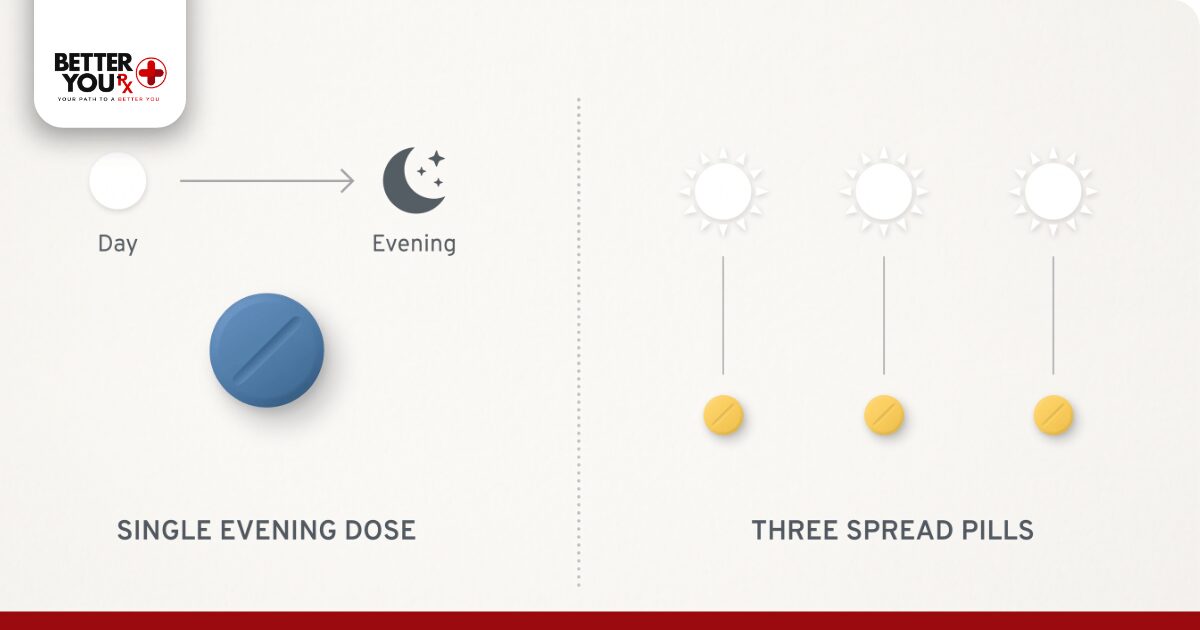
Patients who have switched from Immediate-Release Metformin to Extended-Release Metformin often describe the transition as noticeably easier on their stomach within the first couple of weeks. Someone who previously dreaded the mid-afternoon dose because of nausea may find that a single evening dose fits more naturally into their routine and produces fewer disruptive symptoms.
That said, Extended-Release Metformin is not automatically the better choice for everyone. Some patients tolerate Immediate-Release Metformin without any issues, and its lower cost and flexible dosing can make it a practical long-term option. Providers often use the immediate-release version during the initial titration phase specifically because smaller, more frequent doses make it easier to identify the lowest effective amount before considering a switch.
| Consideration | Best Fit: Metformin IR | Best Fit: Metformin XR |
|---|---|---|
| Budget-Conscious Patients | Often more affordable per dose | May cost more depending on strength |
| GI Sensitivity | Higher risk of discomfort | Generally better tolerated |
| Busy or Irregular Schedules | Harder to maintain multiple doses | Easier with one daily dose |
| Dose Titration Phase | Commonly used to fine-tune dosage | Less flexible for small adjustments |
Which Option Is Actually The Best Choice?
Deciding between Metformin extended release vs immediate release is not about finding a universally superior version. There is no single answer that applies to every patient, but a general pattern holds true in clinical practice. For people who experience noticeable stomach upset, bloating, or diarrhea on Immediate-Release Metformin, Extended-Release Metformin is usually the better option because the gradual absorption reduces the intensity of those symptoms while still delivering effective blood sugar management.
For patients who are just starting treatment or who tolerate the immediate-release version without difficulty, Metformin IR remains a reasonable and often more budget-friendly choice, especially during the early titration period when doses are adjusted frequently.
The most reliable way to decide is tracking how the body responds during the first few weeks of treatment and discussing those observations with a healthcare provider, who can weigh kidney function, other prescriptions, and lifestyle factors before recommending a switch. Some patients managing type 2 diabetes alongside other conditions also use additional medications such as Metformin combined with Ozempic or Trulicity, and a provider can help sequence these therapies safely.
Buy Wegovy from Canada
Original price was: $609.99.$596.99Current price is: $596.99.



Final Thoughts
Choosing between Metformin extended release vs immediate release ultimately comes down to how the digestive system responds and how well a dosing schedule fits daily life. Extended-Release Metformin tends to suit patients who experience stomach discomfort or prefer a single daily dose, while Immediate-Release Metformin remains a practical, budget-conscious option for those who tolerate it well or are still in the early titration phase of treatment. A licensed healthcare provider is the best resource for determining which formulation, dose, and schedule fit an individual’s health picture.
For related reading, explore Is Trulicity A GLP-1, Ozempic Vs Trulicity, and Mounjaro Vs Trulicity for more on how other diabetes and weight management medications compare. Patients exploring their prescription options can also view Metformin, Ozempic, and Trulicity through Better You Rx, a prescription referral service connected to a licensed contracted dispensing department that helps patients access their prescribed medications.
Frequently Asked Questions
Is Metformin XR Easier On Your Stomach?
Yes, for most people. Extended-Release Metformin releases gradually rather than all at once, which typically results in less nausea, bloating, and diarrhea compared to Immediate-Release Metformin. Some sensitivity may still occur, especially in the first few weeks.
Is It Better To Take Metformin XR At Night Or Morning?
Evening is most common. Metformin XR is usually taken with the evening meal because this timing tends to reduce overnight and next-day stomach discomfort. A provider may recommend a different time based on individual routine or other medications.
Can You Lose Weight On Extended-Release Metformin?
Modest weight changes are possible. Some patients experience mild weight stabilization or slight weight loss while taking Metformin, though it is not classified as a weight-loss medication. Diet, activity level, and other prescribed treatments play a larger role in weight outcomes.
How Long Does It Take For Metformin XR To Kick In?
Short answer: A few hours for absorption, weeks for full effect. Metformin XR begins releasing into the bloodstream within a few hours of taking it, but noticeable improvements in blood sugar control typically build over one to two weeks of consistent use. This gradual timeline is one more piece of the Metformin extended release vs immediate release picture, since Immediate-Release Metformin acts faster but requires more frequent dosing to maintain the same steady effect.
What Are The Early Signs Of Taking Too Much Metformin?
Stomach upset and unusual fatigue. Early signs of too much Metformin can include nausea, vomiting, diarrhea, muscle discomfort, and unusual tiredness. Anyone experiencing these symptoms should contact a healthcare provider promptly rather than adjusting the dose independently.
Sources
- Cleveland Clinic: Overview of Metformin tablets, dosing formulations, and common side effects.
- American Diabetes Association Standards of Care: Clinical guidance on first-line pharmacologic treatment for type 2 diabetes.
- Diabetes Care (Journal): Peer-reviewed research on gastrointestinal tolerability of extended-release versus immediate-release Metformin.
- Mayo Clinic: Patient education resource on Metformin use, dosing, and monitoring recommendations.
This content is for informational purposes only and is not a substitute for professional medical advice, diagnosis, or treatment. Always consult a licensed healthcare provider before starting, stopping, or switching any medication, including any change between Metformin formulations. Better You Rx is a prescription referral service connected to a licensed contracted dispensing department and does not provide medical advice.