
Written by Maria Santos, Health and Wellness Writer | Medically Reviewed by Dr. Michael Tan, MD | Last Updated: August 2026
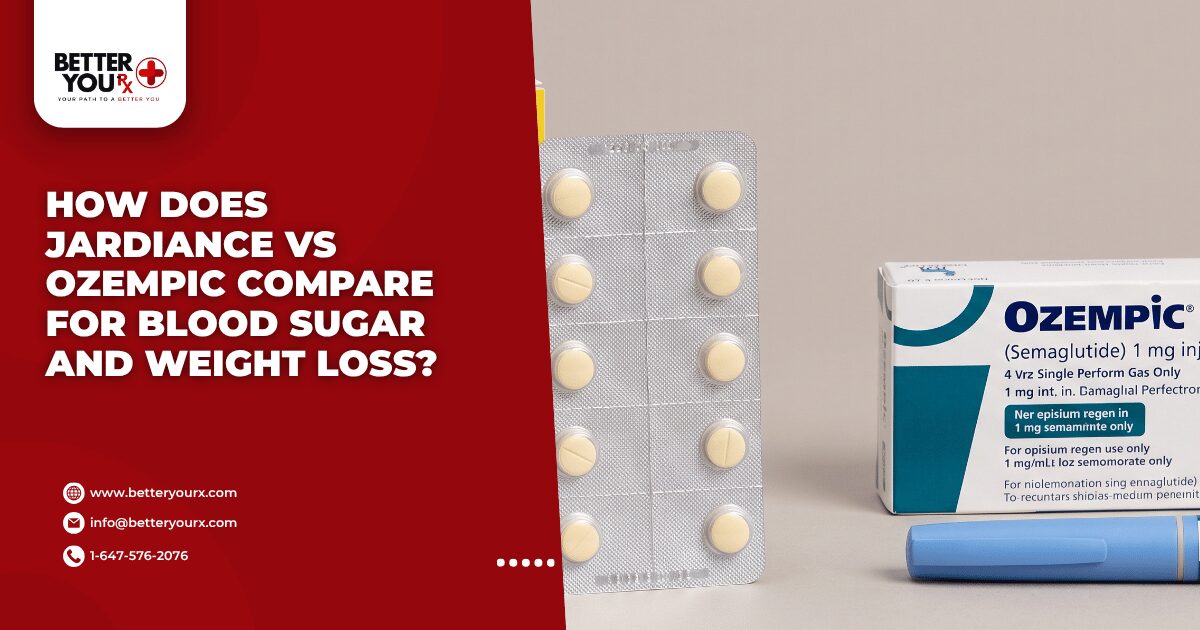
Jardiance and Ozempic are both prescription medications for type 2 diabetes, but they lower blood sugar in entirely different ways. Jardiance is a small oral tablet taken once a day that works in the kidneys, while Ozempic is a once-weekly injection that works on appetite and digestion. The Jardiance vs Ozempic comparison below breaks down how each medication works, where they overlap, and which factors typically point someone toward one option over the other. People weighing Jardiance vs Ozempic are usually balancing convenience against results: one offers a simple daily pill with strong heart and kidney protection, the other tends to deliver more noticeable weight loss and blood sugar improvement for many patients.
Key Takeaways
- Jardiance and Ozempic lower blood sugar through completely different mechanisms in the body, even though both treat type 2 diabetes.
- Jardiance (Empagliflozin) is a once-daily oral tablet that helps the kidneys flush out excess glucose through urine.
- Ozempic (Semaglutide) is a once-weekly injectable that lowers blood sugar and reduces appetite by mimicking a natural gut hormone.
- Ozempic generally produces more significant weight loss, while Jardiance has stronger, well-documented benefits for heart failure and chronic kidney disease.
- Jardiance and Ozempic are sometimes prescribed together, since they work through different systems and can complement each other.
- The right choice between the two depends on personal health history, weight goals, and comfort with a pill versus an injection.
What Is Jardiance and How Does It Work?
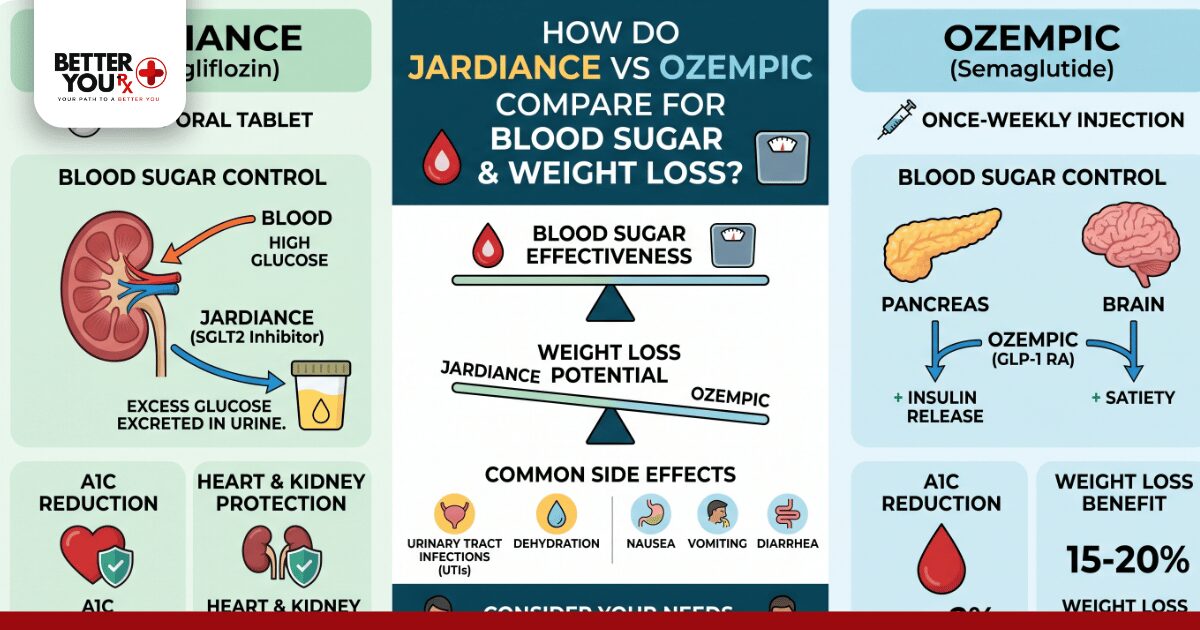
Jardiance is the brand name for Empagliflozin, a type of medication called an SGLT2 inhibitor. It works directly in the kidneys, blocking a protein responsible for pulling glucose back into the bloodstream. Instead of being reabsorbed, that excess sugar gets flushed out through urine. This process lowers blood sugar without relying on insulin, which is part of why Jardiance is often well tolerated by people whose pancreas still produces some insulin.
Beyond blood sugar control, Jardiance has become widely recognized for its effects on the heart and kidneys. Research has shown that Empagliflozin can reduce the risk of hospitalization for heart failure and slow the progression of chronic kidney disease, even in some patients who do not have diabetes. This dual benefit is one of the biggest reasons a healthcare provider may recommend Jardiance for someone managing diabetes alongside cardiovascular or kidney concerns.
What Is Ozempic and How Does It Work?
Ozempic is the brand name for Semaglutide, a medication that belongs to the GLP-1 receptor agonist class. Rather than acting in the kidneys, Ozempic mimics a hormone the gut naturally releases after eating. This hormone slows digestion, signals the brain that the stomach is full, and helps the pancreas release insulin only when blood sugar is elevated. The combined effect is steadier blood sugar throughout the day and a natural reduction in appetite.
That appetite-reducing effect is why Ozempic has become closely associated with weight loss, even though it was originally developed for type 2 diabetes management. Many patients report eating smaller portions without feeling deprived, simply because meals feel more satisfying sooner. Better You Rx, a prescription referral service connecting patients with a licensed contracted dispensing department, regularly fields questions from patients trying to understand whether Ozempic’s weight loss effect will apply to their own treatment plan.
What Are the Key Differences Between Jardiance vs Ozempic?
| Feature | Jardiance | Ozempic |
| Drug Class | SGLT2 inhibitor | GLP-1 receptor agonist |
| Form | Oral tablet | Injectable pen |
| Dosing Frequency | Once daily | Once weekly |
| Primary Mechanism | Removes excess sugar through urine | Slows digestion and reduces appetite |
| Typical Weight Change | Modest weight loss | More significant weight loss |
| Notable Added Benefit | Heart failure and kidney protection | Strong A1C reduction and appetite control |
| Common Side Effects | Genital yeast infections, urinary tract infections, increased urination | Nausea, mild stomach upset, appetite changes |
Things To Know
- Jardiance and Ozempic are approved for adults with type 2 diabetes and are sometimes prescribed together as part of a combination treatment plan.
- Both medications require a valid prescription written by a primary care physician or licensed medical doctor practicing in the United States before a referral can move forward.
- Neither medication is meant to manage type 1 diabetes on its own.
- Response to either medication varies from person to person, so healthcare providers typically monitor blood sugar and side effects closely during the first few months.
- Metformin remains one of the most common medications paired with either Jardiance or Ozempic for combination therapy in a broader treatment plan.
Which Medication Produces More Weight Loss, Jardiance or Ozempic?
When it comes to the Jardiance vs Ozempic comparison for weight loss, Semaglutide typically has the advantage. Its effect on appetite and digestion produces more consistent, often more significant weight loss over time compared to the modest reduction associated with SGLT2 inhibitors like Jardiance. This distinction is part of why GLP-1 medications are frequently the first name people mention when weight management comes up during a diabetes appointment. For a closer look at how Semaglutide options stack up against other injectable options, Ozempic vs Trulicity compares the two head to head.
That said, Jardiance is not without a weight benefit. Because excess glucose, and the calories tied to it, gets excreted through urine rather than stored, most patients on Jardiance do lose a modest amount of weight, generally a few pounds over several months. It is simply a smaller effect than what most people experience on a GLP-1 medication like Mounjaro, which works through a related but distinct mechanism.
How Do Jardiance and Ozempic Compare for Kidney and Heart Health?
| Feature | Jardiance | Ozempic |
| Heart Failure Risk Reduction | Strong, well-documented | Emerging, less established |
| Chronic Kidney Disease Protection | Strong, slows progression | Some supportive evidence |
| Blood Pressure Effect | Mild reduction | Mild reduction |
| Cardiovascular Event Reduction | Established in high-risk patients | Established in high-risk patients |
When comparing these two medications for heart and kidney health, Jardiance holds the stronger research position. Its ability to lower the risk of heart failure hospitalization and slow chronic kidney disease progression has made it a common recommendation for patients managing diabetes alongside cardiovascular disease. According to the Mayo Clinic overview of type 2 diabetes, keeping blood sugar within a healthy range is one of the most effective ways to protect long-term kidney and heart function, regardless of which medication a person ultimately takes.
Which Option Is Better, Jardiance or Ozempic?
Why Jardiance may be the better fit: it tends to suit people who already manage heart failure or chronic kidney disease, since its cardiovascular and renal benefits are backed by some of the strongest research in its drug class. It also appeals to patients who prefer a daily pill over a weekly injection, or who experience stomach discomfort with GLP-1 medications.
Why Ozempic may be the better fit: it is generally the stronger choice for people whose primary concern is meaningful weight loss alongside blood sugar control. Because it works on appetite regulation rather than kidney filtration, patients often notice a bigger shift in eating habits and A1C levels within the first few months of treatment.
How the two can work together: because Jardiance and Ozempic act on completely different systems, some healthcare providers prescribe both medications together for patients who need more comprehensive blood sugar management. Combination therapy is a decision made between a patient and their prescribing physician, based on lab results, other health conditions, and how each medication is tolerated individually.
Which is best overall: there is no universal answer to the Jardiance vs Ozempic decision. The right choice comes down to individual health priorities. Heart and kidney protection point toward Jardiance, while significant weight loss and appetite control point toward Ozempic. A primary care physician or endocrinologist is best positioned to weigh these factors against a person’s complete medical history.
Making the Switch or Combining Jardiance and Ozempic
In practice, many patients start on one medication and add the second later, once lab results show room for additional support. For example, someone managing type 2 diabetes with Metformin and Jardiance alone may add Ozempic if their A1C plateaus above target or if weight loss becomes a bigger priority during a follow-up visit. Most healthcare providers follow established clinical protocols when introducing a second diabetes medication, adjusting monitoring frequency rather than changing an entire treatment plan all at once.
Whether someone is weighing Jardiance vs Ozempic on its own or considering both together, switching medications or starting a new prescription should always happen under the direction of a licensed healthcare provider. Better You Rx supports this process as a prescription referral service, connecting patients who already hold a valid prescription from their physician with a licensed contracted dispensing department for fulfillment. Reviewing Saxenda vs Ozempic can also help patients understand how other appetite-focused medications compare before finalizing a decision with their doctor.
Buy Wegovy from Canada
Original price was: $609.99.$596.99Current price is: $596.99.

Final Thoughts on the Jardiance vs Ozempic Decision
Choosing between Jardiance and Ozempic is not about finding a universally “better” medication, it is about matching the medication to individual health priorities. For most patients, the Jardiance vs Ozempic decision comes down to two questions: is heart and kidney protection the priority, or is significant weight loss the priority? Whichever direction feels right, working closely with a licensed healthcare provider remains the surest way to build a treatment plan that lasts.
Frequently Asked Questions
Does Jardiance make you lose weight like Ozempic?
Not to the same degree. Jardiance produces modest weight loss through calorie loss in urine, while Ozempic’s appetite-suppressing effect typically leads to more noticeable weight reduction over time.
Is Jardiance or Ozempic better for kidneys?
Jardiance has the stronger kidney research. It is specifically studied and prescribed to slow chronic kidney disease progression, while Ozempic’s kidney benefits are still considered emerging evidence.
Which costs more, Ozempic or Jardiance?
Ozempic is typically the more expensive option. As a brand-name GLP-1 injectable, its monthly price generally runs higher than Jardiance’s oral tablet form, though exact costs vary by dose and location.
Does Jardiance get rid of belly fat?
Jardiance can help reduce overall body fat modestly, including some abdominal fat, but it is not designed to specifically target belly fat the way diet, exercise, or appetite-focused medications can.
What to avoid while taking Jardiance?
Avoid dehydration and excess alcohol while taking Jardiance. Since it increases urination, staying well hydrated and limiting alcohol helps reduce the risk of low blood pressure and genital infections.
Can you eat bananas while taking Jardiance?
Yes, bananas are generally fine while taking Jardiance. There is no specific restriction against bananas, though anyone managing blood sugar closely should account for their carbohydrate content like any other fruit. For more on how GLP-1 medications fit into diabetes care, this Trulicity comparison guide can offer additional context.
Sources
- Mayo Clinic: Overview of type 2 diabetes causes, symptoms, and treatment approaches.
- New England Journal of Medicine: Clinical outcomes research on SGLT2 inhibitors and their cardiovascular and kidney effects.
- Journal of the American Medical Association: Clinical findings on Empagliflozin’s expanded use in heart failure management.
- Diabetes Care Journal: Research on GLP-1 receptor agonists and their effects on glycemic control and weight management.
This content is for informational purposes only and is not a substitute for professional medical advice, diagnosis, or treatment. Always consult a licensed healthcare provider before starting, stopping, or changing any medication, including Jardiance or Ozempic.