
Retatrutide coffee caffeine questions come up constantly among people following triple-agonist research protocols, and theshort answer is that caffeine is not off-limits, but it can intensify the same side effects Retatrutide is already known for. Nausea, a racing heart, and appetite suppression can all get stronger when caffeine is added on top of a compound that already slows digestion and affects hunger signals.
Retatrutide, a compound still under research and provider-supervised evaluation for its effects on Glucagon-like peptide-1, GIP, and glucagon receptors, is administered only under professional oversight, and none of the information below should be used to self-manage dosing or treatment decisions.
Key Takeaways
- Caffeine is not banned during Retatrutide research protocols, but it can amplify nausea, jitteriness, and appetite suppression
- The so-called “2 hour coffee rule” is a spacing habit some people use, not a formal clinical requirement
- Tea is generally gentler on the stomach than coffee for people managing Retatrutide-related nausea
- Caffeine does not meaningfully affect thyroid function on its own, though thyroid health is still worth monitoring during any metabolic treatment
- Alcohol, greasy foods, and excessive caffeine are the three things people managing Retatrutide side effects report struggling with most
Why Retatrutide Coffee Caffeine Combinations Feel Different Than They Used To
Retatrutide slows gastric emptying, meaning food and liquid sit in the stomach longer than they normally would. Caffeine, on its own, stimulates the release of stomach acid and speeds up gut motility in ways that can clash with that slower digestion. People who never had an issue with a morning espresso before starting Retatrutide sometimes find that the same cup now triggers acid reflux, queasiness, or an uncomfortably full feeling.
There is also a compounding effect on appetite. Both caffeine and Retatrutide can suppress hunger independently. Combined, some people notice they barely feel like eating at all in the first few hours of the day, which can lead to skipped meals, low blood sugar sensations, and fatigue if it happens repeatedly.
Heart rate is another factor worth understanding. Retatrutide research has tracked mild increases in heart rate in some participants, and caffeine is a known stimulant that raises heart rate on its own. Stacking the two does not automatically cause harm for most healthy adults, but for anyone who already notices palpitations or lightheadedness, reducing caffeine intake is a reasonable and commonly recommended adjustment.
Things To Know About Caffeine While On Retatrutide
- Caffeine sensitivity often increases during the first four to eight weeks of a research protocol, then tends to level out as the body adjusts
- Cold brew and espresso are more concentrated than drip coffee, so smaller amounts can still deliver a large caffeine dose
- Energy drinks combine caffeine with sugar and other stimulants, making them a less predictable choice than plain coffee or tea
- Hydration matters more than usual, since caffeine has a mild diuretic effect and Retatrutide can already reduce overall fluid intake if appetite and thirst cues are dulled
- Providers overseeing Retatrutide research protocols generally suggest tracking symptoms alongside caffeine intake rather than eliminating it outright, since individual tolerance varies considerably
The Retatrutide Coffee Caffeine Timing Debate: What The “2 Hour Rule” Actually Means
The 2 hour coffee rule is a habit that circulated among people managing GLP-1 and multi-agonist treatments, and it generally means waiting roughly two hours after a dose or after the first meal of the day before drinking coffee, rather than having caffeine on a completely empty, medicated stomach. It is not a formal medical guideline published anywhere, and no clinical protocol requires it. That said, the reasoning behind it holds up reasonably well: caffeine on an already slow-emptying, possibly still-adjusting stomach tends to produce sharper nausea than caffeine taken after some food has settled.
People who find mornings rough sometimes shift their first coffee to mid-morning instead of first thing, pairing it with a small, bland snack like crackers or toast. Providers who work with Retatrutide research participants often describe this as one of the more effective, low-effort adjustments patients make once nausea becomes a pattern rather than an occasional issue.
Coffee, Tea, Or Something Else: Which Option Actually Works Best
| Beverage | Typical Caffeine Content | How It Tends To Sit With Retatrutide |
| Black coffee | 95–165 mg per 8 oz cup | Can trigger reflux and nausea on an empty stomach; better tolerated after food |
| Green tea | 25–45 mg per 8 oz cup | Gentler on digestion, lower caffeine load, often the easiest option |
| Herbal tea (caffeine-free) | 0 mg | Safest choice for people with pronounced nausea or reflux |
| Cold brew | 150–200+ mg per 8 oz cup | Higher concentration makes overstimulation more likely |
| Espresso | 60–75 mg per 1 oz shot | Small volume but very concentrated; easy to underestimate the dose |
Tea is generally the more forgiving option because it delivers less caffeine per serving and contains compounds that are typically easier on an already sensitive stomach. Herbal, caffeine-free varieties are the gentlest choice of all and are often recommended first for anyone dealing with morning nausea. Coffee is not something people need to give up entirely, but shifting to a smaller cup, adding it later in the morning, or diluting it with more water are all practical middle-ground options.
Why does the type of beverage matter this much? Because Retatrutide’s effect on digestion means the stomach is doing more work with less predictable timing, and caffeine’s stimulating properties interact directly with that slower system. How this plays out varies by person, which is why tracking symptoms for the first couple of weeks tends to be more useful than following a blanket rule. Which option is best genuinely depends on individual tolerance, but starting with tea or a smaller, later coffee and adjusting from there is the approach most people land on successfully.
Patients navigating Retatrutide research protocols often report that the first two to three weeks are the period where caffeine sensitivity is most noticeable, and that small changes like switching to tea or moving coffee later in the day make a meaningful difference before the body adjusts further.
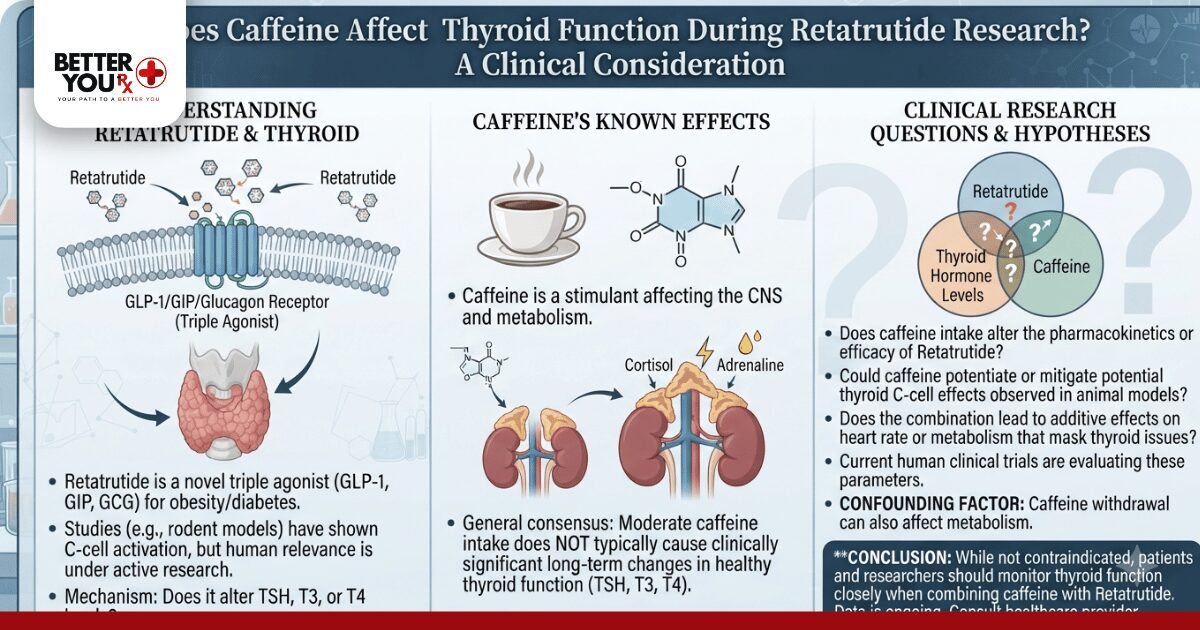
Does Caffeine Affect Thyroid Function During Retatrutide Research
This question comes up often because thyroid health is part of the broader conversation around metabolic treatments. Caffeine itself does not meaningfully suppress or overstimulate thyroid hormone production in typical dietary amounts. Some research has suggested caffeine can modestly reduce the absorption of thyroid medication if taken too close together, which is a timing issue rather than a direct effect on the thyroid gland itself. For anyone with an existing thyroid condition, spacing caffeine and thyroid medication by at least 30 to 60 minutes is a standard, widely accepted practice, according to information published by Cleveland Clinic.
This aligns with established clinical understanding of how caffeine interacts with hormone-related medications generally, and most healthcare providers overseeing Retatrutide research protocols apply the same general caution here that they would for any other metabolic or hormone-adjacent treatment.
What To Avoid While Managing Retatrutide Side Effects
| Category | Why It Tends To Cause Problems | Better Alternative |
| Alcohol | Compounds nausea and dehydration risk | Sparkling water with citrus |
| Greasy or fried foods | Digests slowly, worsens fullness and reflux | Lean proteins, steamed vegetables |
| High caffeine intake | Stacks stimulant effects with appetite suppression | Smaller portions, later timing |
| Carbonated sugary drinks | Can increase bloating and discomfort | Herbal tea, plain or infused water |
| Very large meals | Overwhelms a slower-emptying stomach | Smaller, more frequent meals |
Practical Tips For Managing Coffee And Caffeine Day To Day
Start the day with water before coffee, even a small glass, since Retatrutide can dull thirst cues and mild dehydration makes nausea worse. Pair the first cup of coffee with something small in the stomach rather than drinking it completely fasted. Keep an eye on total daily caffeine from all sources, including chocolate and certain medications, since it adds up faster than people expect. If jitteriness or a racing heart shows up consistently, cutting the daily amount in half for a week is a reasonable, low-risk adjustment to try before assuming it is unrelated to caffeine at all.
Anyone exploring metabolic or weight-related treatment options can review current offerings such as Zepbound, Mounjaro, or Ozempic to understand how different approaches compare. For more background specific to this compound, Retatrutide side effects, Retatrutide vs Tirzepatide, and Retatrutide benefits go into more detail on related questions people frequently ask.
Better You Rx operates as a prescription referral service with a licensed contracted dispensing department, connecting patients across the United States with prescriptions issued by their own licensed medical doctor. Prescriptions must be written in English by a physician practicing within the United States, and all orders are mailed directly to the patient’s residence for personal use only.
Bottom Line On Retatrutide Coffee And Caffeine Habits
Coffee and tea do not need to disappear from a morning routine just because Retatrutide is part of the picture, but paying attention to timing, portion size, and beverage choice makes a real difference in how the stomach handles both. Tea tends to be the gentler option, spacing caffeine away from doses and empty-stomach moments reduces nausea, and keeping total caffeine intake moderate protects against compounding appetite suppression and heart rate changes. Small, consistent adjustments around Retatrutide coffee and caffeine habits tend to matter far more than cutting caffeine out completely.
Frequently Asked Questions
Can I drink caffeine on Retatrutide?
Yes, in moderation. Caffeine is not prohibited, but it can intensify nausea, appetite suppression, and heart rate increases, so smaller amounts and later timing tend to work best.
What is the 2 hour coffee rule?
It means waiting about two hours after a dose or first meal before coffee. It is a common personal habit, not an official medical guideline, and it helps reduce nausea on an already slower digestive system.
Can you drink tea on Reta?
Yes, tea is usually easier to tolerate than coffee. Green tea and herbal, caffeine-free varieties tend to sit better with a stomach that is digesting more slowly.
Can caffeine affect your thyroid?
Not directly in normal amounts. Caffeine can reduce absorption of thyroid medication if taken too close together, so spacing them by 30 to 60 minutes is generally recommended.
What to avoid on Retatrutide?
Alcohol, greasy foods, and excessive caffeine top the list. These tend to worsen nausea, reflux, and dehydration more than most other dietary choices.
Medical Disclaimer: This content is for informational purposes only and is not a substitute for professional medical advice, diagnosis, or treatment. Retatrutide remains under research and provider-supervised evaluation. Always consult a licensed healthcare provider before starting, stopping, or adjusting any treatment, medication, or supplement.
Sources:
- Mayo Clinic — Overview of caffeine’s effects on digestion, heart rate, and hydration.
- Cleveland Clinic — Guidance on thyroid function, hormone interactions, and medication timing.
- Harvard Health Publishing — Research summaries on GLP-1 and multi-receptor agonist compounds and gastrointestinal side effects.
- American Heart Association — Information on caffeine’s cardiovascular effects and general intake guidance.
- The Journal of Clinical Endocrinology & Metabolism — Peer-reviewed research on incretin-based and multi-agonist metabolic treatments.