

Written by Sarah Mitchell, Health and Wellness Content Writer | Medically Reviewed by Dr. Angela Torres, MD
Last Updated: September 2026
Retatrutide fertility research in humans is essentially nonexistent, since the compound remains investigational and has not been evaluated for reproductive safety in completed trials. What is documented instead comes from related GLP-1 medications: weight loss and improved insulin sensitivity can restore ovulation in people whose infertility was tied to obesity or polycystic ovary syndrome, which explains why some patients have conceived unexpectedly during treatment.
Retatrutide itself has not been studied specifically for fertility outcomes, and no clinical guidance supports using it, or any GLP-1 based compound, as a way to improve conception chances. For anyone trying to get pregnant, or hoping to avoid pregnancy, understanding how these medications interact with the reproductive system matters more than assuming fertility will simply improve or decline.
Key Takeaways
- Retatrutide fertility data in humans does not currently exist in any meaningful way, since the compound is still investigational and has not completed the trial stages needed for reproductive safety conclusions.
- Significant weight loss achieved through GLP-1 based treatments can restore ovulation in people with obesity-related infertility, which may unintentionally raise the chance of pregnancy during treatment.
- Reports of unplanned pregnancies during GLP-1 receptor agonist use reflect improved metabolic and hormonal function rather than a fertility-boosting property of the medication itself.
- No established clinical guidance recommends using Retatrutide, Tirzepatide, or Semaglutide as a fertility treatment, and healthcare providers do not prescribe these medications for that purpose.
- Anyone actively trying to conceive should discuss timing, contraception, and medication discontinuation with a licensed healthcare provider before starting or continuing any GLP-1 based therapy.
The Direct Answer On Retatrutide And Fertility
No dedicated human studies have measured retatrutide fertility outcomes directly. Everything currently understood is borrowed from research on related GLP-1 based compounds like Semaglutide and Tirzepatide, since Retatrutide combines similar receptor targets and produces comparable weight loss and metabolic effects. Animal studies conducted during Retatrutide’s investigational development have shown developmental risks at exposures relevant to humans, which is a standard reason these compounds are not recommended during pregnancy. Until dedicated reproductive studies are completed, the responsible approach treats Retatrutide the same way any other unproven weight management compound would be treated around conception: with caution, medical supervision, and a clear discontinuation plan.
What Retatrutide Actually Is And How It Works
Retatrutide is an investigational compound designed to activate three separate metabolic receptors at once: GLP-1, GIP, and glucagon. This triple-action approach is why early research has shown more pronounced weight loss compared to medications that target only one or two of these pathways. Because it works primarily on appetite regulation, blood sugar control, and energy expenditure, Retatrutide was developed with metabolic health as the goal, not reproductive health. Its investigational status means dosing protocols, long-term safety profiles, and reproductive outcomes are still being studied in controlled research settings rather than established through years of everyday clinical use.
Researchers evaluating Retatrutide have focused heavily on markers like body weight, waist circumference, blood glucose, and cardiovascular risk factors, which means fertility has simply not been a primary endpoint in the studies published so far. That gap is common with newer investigational compounds, since reproductive research typically follows years behind metabolic research in the overall development timeline.
How GLP-1 Medications Have Been Linked To Unplanned Pregnancies
Stories about unexpected pregnancies during GLP-1 treatment have circulated widely, and the explanation is more straightforward than it sounds. People with obesity or polycystic ovary syndrome often experience irregular or absent ovulation. Once meaningful weight loss occurs, hormonal balance can shift enough for regular ovulation to return, sometimes within weeks. A second factor involves digestion: GLP-1 based medications slow gastric emptying, and some researchers believe this may reduce how consistently oral contraceptives are absorbed, though this has not been proven definitively for every medication in the class.
The table below compares how different GLP-1 based medications relate to fertility discussions currently circulating among patients and providers.
| Medication | Classification | Fertility-Related Observation |
|---|---|---|
| Semaglutide (Ozempic, Wegovy) | Approved GLP-1 receptor agonist | Most documented reports of ovulation returning after weight loss |
| Tirzepatide (Mounjaro, Zepbound) | Approved dual GIP/GLP-1 agonist | Similar ovulation-related reports, fewer published cases than Semaglutide |
| Liraglutide (Saxenda, Victoza) | Approved GLP-1 receptor agonist | Early GLP-1 medication with the longest history of anecdotal fertility discussion |
| Retatrutide | Investigational triple agonist | No completed fertility studies, mechanism assumed similar to approved GLP-1 medications |
Patients researching options often compare Ozempic and Wegovy alongside Mounjaro when discussing how GLP-1 based weight loss might intersect with fertility timelines, even though none of these medications are prescribed specifically to treat infertility.
 Things To Know
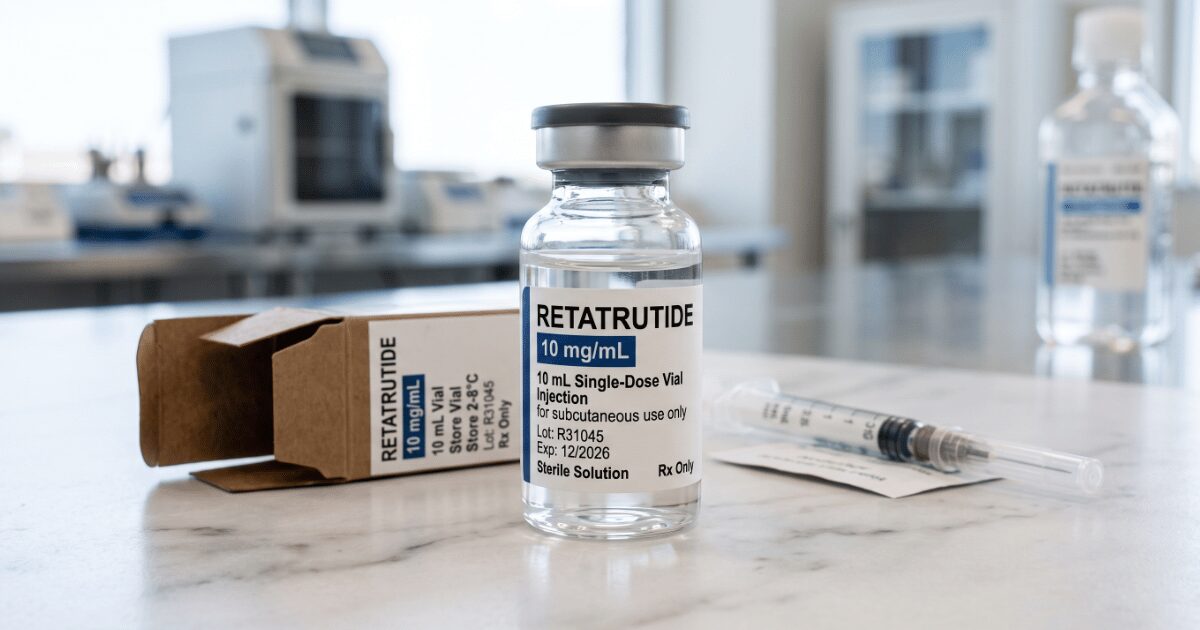
- Retatrutide has not completed the clinical development stages required before reproductive safety data becomes available.
- Animal studies on similar GLP-1 based compounds have shown fetal risk at exposures relevant to humans, which is why these medications list pregnancy avoidance during use.
- Ovulation can return within weeks of significant weight loss, sometimes before a person notices their cycle has changed.
- Contraception should not be assumed to work exactly the same way during treatment with medications that slow digestion.
- A licensed healthcare provider can advise on stopping a GLP-1 based medication a reasonable period before attempting conception.
Retatrutide Fertility Considerations For Women Trying To Conceive
Retatrutide fertility planning starts with a conversation, not a calendar. Because reproductive safety data for this specific compound does not exist yet, healthcare providers generally apply the same caution used with other investigational or recently approved GLP-1 medications. Many providers recommend discontinuing GLP-1 based treatment a set period before actively trying to conceive, giving the body time to clear the medication and return to its baseline metabolic state. This timing conversation belongs with a licensed healthcare provider who understands a patient’s full medical history, not a general rule applied the same way to everyone.
| Consideration | What It Means For Retatrutide Fertility Planning |
|---|---|
| Investigational status | No completed human studies exist on reproductive safety or fertility outcomes |
| Weight loss and ovulation | Restored ovulation is possible as a side effect of weight change, not a direct drug action |
| Contraceptive reliability | Delayed digestion may affect how consistently oral contraceptives are absorbed |
| Provider consultation timing | A licensed provider determines an appropriate discontinuation window before conception |
What About Male Fertility And Retatrutide
Most public discussion around GLP-1 based medications and reproduction focuses on women, but male fertility deserves attention too. Obesity is independently associated with lower testosterone levels and reduced sperm quality in men, and meaningful weight loss has been shown in some studies to improve both. Because Retatrutide produces substantial weight loss in early research, it is reasonable to expect similar indirect benefits for men managing obesity-related fertility concerns, though no dedicated studies have confirmed this specifically for Retatrutide. As with women, any male patient considering this medication while planning a pregnancy with a partner should raise the topic directly with their prescribing provider rather than assuming a particular outcome.
Why Weight Loss Itself May Influence Fertility Outcomes
Weight and fertility are more closely connected than many people realize. Excess body weight can disrupt the hormonal signals that regulate ovulation, particularly in people with polycystic ovary syndrome, a condition Cleveland Clinic describes in detail as a common cause of irregular cycles and reduced fertility. Patients who have struggled with PCOS-related infertility for years often report their cycles becoming more regular within a few months of meaningful weight loss, a pattern providers frequently observe with GLP-1 based treatment regardless of which specific compound is involved.
This is not unique to retatrutide fertility discussions specifically; it reflects a broader relationship between metabolic health and reproductive hormone balance that has been documented across multiple weight management approaches. Most healthcare providers follow established clinical protocols when evaluating whether a GLP-1 based medication is appropriate for someone who is pregnant, breastfeeding, or actively trying to conceive. In everyday practice, this usually looks like a straightforward conversation at a routine visit rather than a formal referral, since providers are accustomed to weighing metabolic treatment goals against a patient’s reproductive timeline.

What The Research Gaps Mean For Family Planning Decisions
Because Retatrutide remains investigational, questions about its long-term reproductive effects will not be fully answered until more research is completed and published through standard scientific channels. Patients who search for retatrutide fertility information today are essentially looking ahead of the available evidence, which is a reasonable thing to do as long as the limits of that evidence are kept in view.
Better You Rx, a prescription referral service with a licensed contracted dispensing department, only facilitates access to medications once a qualified healthcare provider has issued an appropriate prescription within the United States. For patients whose healthcare provider has recommended an approved GLP-1 based option while questions about family planning timing are resolved, the following options are commonly discussed:
Buy Wegovy from Canada
Original price was: $609.99.$596.99Current price is: $596.99.



Readers interested in learning more about this compound can review documented retatrutide benefits, explore reported retatrutide side effects, or read a broader overview of what does retatrutide do to understand how it compares with approved GLP-1 medications.
Moving Forward With Retatrutide And Family Planning
Retatrutide fertility conversations are still catching up to the pace of the compound’s growing popularity. Until dedicated reproductive studies are completed, the safest approach treats Retatrutide like any other GLP-1 based therapy that lacks pregnancy safety data: pause it, confirm timing with a provider, and rely on dependable contraception if pregnancy is not the current goal. Working with a licensed healthcare provider remains the safest path forward, and services like Better You Rx exist to connect patients with a licensed contracted dispensing department once a valid prescription has been issued by a provider practicing within the United States.
Frequently Asked Questions
Has anyone got pregnant on retatrutide?
No confirmed pregnancies have been documented in Retatrutide’s investigational trials that link the medication directly to improved fertility. Reports of pregnancy during use of related GLP-1 medications exist, but these are generally attributed to restored ovulation following weight loss rather than a specific fertility effect of the drug itself.
Can you take retatrutide if you want to get pregnant?
Most healthcare providers do not recommend starting or continuing Retatrutide while pregnancy is being planned. Because reproductive safety data remains incomplete, providers typically advise discontinuing GLP-1 based medications and discussing alternative, better-documented options before attempting conception.
Do peptides affect fertility?
Some peptides can influence fertility indirectly by changing weight, insulin levels, or hormone balance. Retatrutide fertility effects specifically have not been studied, but its metabolic actions mirror other peptide-based compounds known to affect ovulation through weight change.
Do GLP-1 make you more fertile?
GLP-1 medications do not directly increase fertility, but weight loss from these drugs can restore ovulation in some people. This effect is most notable in individuals with obesity-related infertility or polycystic ovary syndrome, where hormonal balance often improves as weight decreases.
Does retatrutide make you more fertile?
There is no evidence that Retatrutide directly increases fertility. Any fertility change would most likely come from associated weight loss and metabolic improvement, not from a unique reproductive effect of the compound itself.
Sources
- Journal of Clinical Endocrinology and Metabolism – Research on GLP-1 receptor agonists, weight loss, and reproductive hormone changes.
- Cleveland Clinic – Patient information on polycystic ovary syndrome, obesity-related infertility, and metabolic health.
- Fertility and Sterility – Peer-reviewed studies on ovulation restoration following significant weight loss.
- Obesity Reviews – Analysis of incretin-based therapies including triple agonist compounds such as Retatrutide.
Medical Disclaimer: This content is provided for informational purposes only and is not a substitute for professional medical advice, diagnosis, or treatment. Always consult a licensed healthcare provider before starting, stopping, or changing any medication, including any GLP-1 based treatment, particularly when family planning, pregnancy, or fertility is a consideration.