
Medically Reviewed by Dr. Amanda Reyes, MD | Last Updated: July 2026
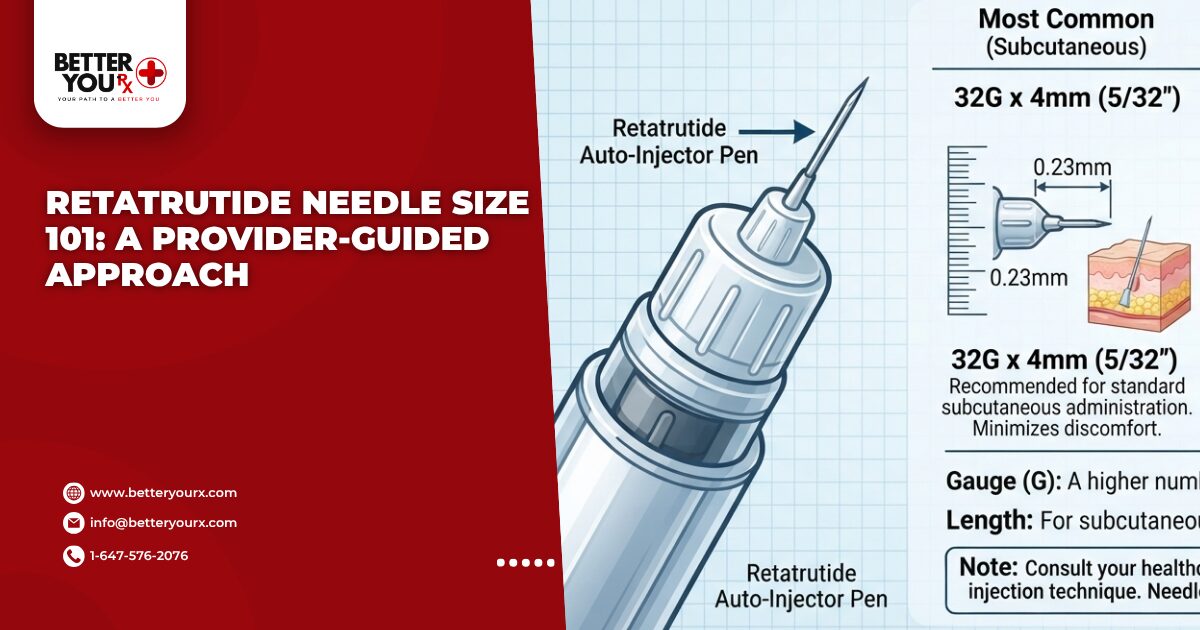
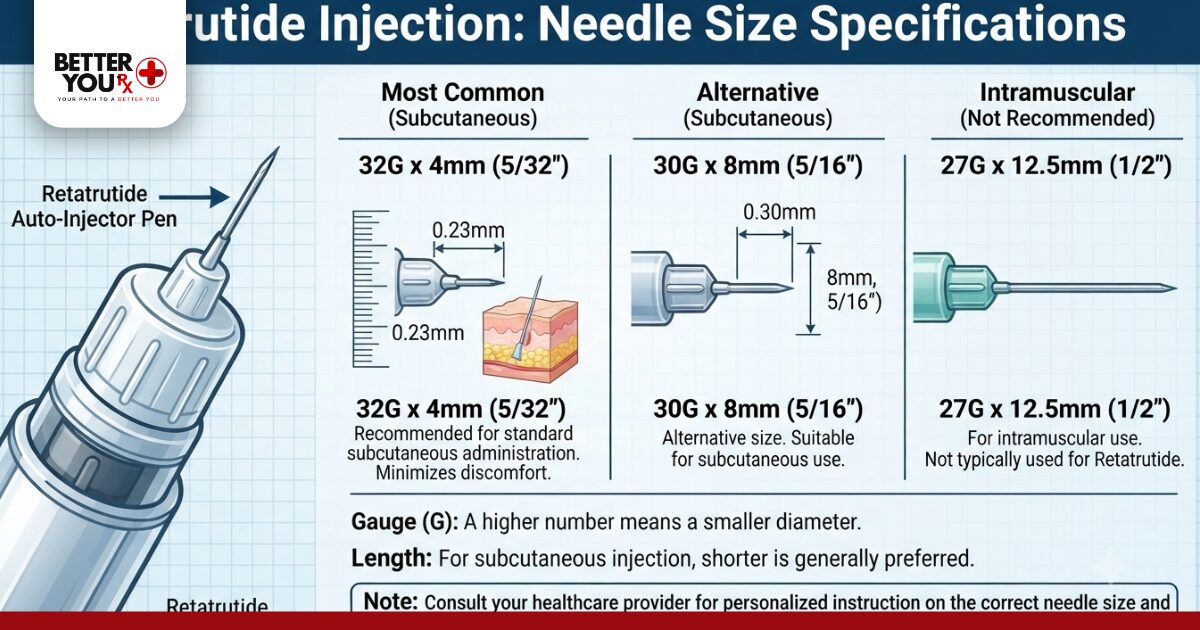
Retatrutide needle size is not something patients look up and select independently. A licensed provider determines the appropriate equipment based on the specific formulation being used, the patient’s current dosing stage, and other individual clinical factors. Because Retatrutide is still an investigational compound, there is no standardized product insert covering equipment the way approved medications typically have, which is exactly why this decision stays with the prescribing provider rather than general online resources.
Key Takeaways
- Retatrutide needle size is selected by a licensed provider based on formulation, dosing stage, and individual patient needs
- No standardized equipment sheet exists for Retatrutide since it remains an investigational compound
- Providers typically walk patients through administration details during consultation rather than relying on generic instructions
- Needle gauge, injection depth, and supply sourcing are all decisions that stay within the provider’s clinical oversight
- Patients benefit most by treating their provider as the single source of truth for equipment and technique questions
Why This Decision Belongs To A Provider, Not A Search Engine
It’s a natural instinct to search for practical details like gauge or depth before starting any injectable treatment. But with an investigational compound like Retatrutide, those specifics vary from patient to patient and even from one dosing stage to the next. A provider factors in the formulation being dispensed, how far along a patient is in their titration schedule, and any individual anatomical or comfort considerations before recommending equipment.
This is a meaningful difference from approved, widely prescribed injectables that come with consistent, standardized patient guides. Retatrutide’s investigational status means that guidance is built around the individual, not a printed instruction sheet meant for a general population.
A Look At What Providers Actually Weigh
| Factor | Why It Matters | Who Decides |
| Formulation type | Different preparations may call for different equipment | Prescribing provider |
| Current dosing stage | Titration phase can affect volume and technique | Prescribing provider |
| Patient anatomy and comfort | Individual differences influence what works best | Provider, with patient input |
| Prior tolerability | Past experience shapes ongoing recommendations | Prescribing provider |
Providers use this kind of framework as a starting point, then adjust based on how each patient responds throughout treatment.
Things To Know
- Retatrutide needle size is never a fixed number patients can apply universally to their own situation
- Investigational compounds lack the standardized patient literature that comes packaged with approved medications
- Providers often cover equipment questions in the same visit where dosing schedules are discussed
- Patients frequently report feeling more confident once they have a direct provider relationship to ask these questions, rather than piecing together answers from scattered sources
- Most healthcare providers follow established clinical protocols when guiding injectable treatment planning, prioritizing individualized safety over generic assumptions
How This Compares To Approved GLP-1 Options
Patients who have used approved medications such as Ozempic, Trulicity, or Wegovy are often used to clear, standardized instructions included with the product. Retatrutide doesn’t follow that same model yet, since it remains under clinical investigation. That distinction matters because it shifts the responsibility for administration guidance almost entirely onto the provider-patient relationship rather than a printed insert.
Providers prescribing investigational compounds tend to spend more time on this kind of individualized education specifically because there isn’t a one-size-fits-all sheet to hand out. This is one more reason ongoing, open communication with a provider carries more weight with a compound like this than it might with a long-established medication.
 What A Typical Consultation Looks Like
 What A Typical Consultation Looks Like
In practice, providers commonly walk new patients through every practical detail of their investigational treatment plan during the first consultation, equipment included, so nothing is left to guesswork. Patients often mention that having this laid out clearly upfront, instead of trying to piece it together from general searches, gives them more confidence heading into treatment. Providers may revisit these same details at later visits, since needs can shift as a patient moves through different stages of titration.
This reflects a broader pattern in metabolic health care: consistent, individualized provider communication tends to produce smoother experiences than relying on assumptions borrowed from other medications. Patients researching Retatrutide’s benefits or comparing Retatrutide versus Tirzepatide will notice this same individualized approach applies across nearly every practical aspect of care, not only dosing.
Where To Direct Supply And Sourcing Questions
Questions about where to obtain appropriate injection supplies should go to the prescribing provider or treatment team, not general retailers or unrelated sources. Providers typically coordinate supply needs as part of the broader treatment plan, so patients aren’t left guessing at specifications that may not even apply to their particular formulation or stage.
Better You Rx functions as a prescription referral service with a licensed contracted dispensing department, connecting patients with providers who manage treatment planning, including equipment guidance, on an individualized basis. Patients weighing other options can also look into Zepbound or Mounjaro while discussing the full range of provider-directed choices available to them.
For more context on how Retatrutide fits into an overall treatment picture, it may help to review what Retatrutide does in the body and documented Retatrutide side effects, both useful starting points for a more informed provider conversation.

The Bottom Line On Equipment Decisions
Every practical question tied to Retatrutide needle size, whether it’s gauge, depth, or where to source supplies, comes back to the same answer: a licensed provider makes this call directly with each patient. Investigational compounds require a degree of individualized oversight that generic instructions simply can’t replace safely. Patients who keep communication open with their provider throughout treatment tend to move through these details with far more clarity than those trying to apply standardized answers to a plan that isn’t standardized at all.
Anyone starting or continuing Retatrutide treatment is best served by treating their provider as the go-to source for every equipment and technique question, keeping their plan safe, appropriate, and built around their own needs.
Frequently Asked Questions
What Gauge Needle For Retatrutide?
This is determined by the prescribing provider. Since Retatrutide is investigational, gauge selection depends on the individual’s formulation and treatment plan rather than a general standard.
How Deep Do You Inject Reta?
Injection depth is a provider-directed decision. Patients should discuss technique directly with their provider instead of relying on general online guidance.
Where To Get Needles For Retatrutide?
Supply sourcing goes through the prescribing provider or treatment team. They coordinate equipment as part of an individualized plan.
What Size Needle For GLP1?
Needle size varies by medication and provider protocol. Approved GLP-1 medications often include standardized supplies, while investigational compounds require direct provider input.
What Is 2.5 Units On A Syringe?
This refers to a volume marking on the syringe barrel. A provider explains exact measurements relevant to each patient’s individual dosing plan.
Sources
- New England Journal of Medicine — Clinical research on injectable metabolic compounds and administration protocols.
- The Lancet Diabetes & Endocrinology — Peer-reviewed data on GLP-1 and multi-receptor agonist administration practices.
- Mayo Clinic — Patient education on injectable medication administration and provider-guided treatment planning.
- Cleveland Clinic — Overview of individualized treatment approaches for metabolic health medications.
- Journal of Clinical Endocrinology & Metabolism — Research on investigational compound protocols and clinical oversight standards.
Medical Disclaimer: This content is provided for informational purposes only and is not intended as medical advice. It does not replace consultation with a licensed healthcare provider. Anyone considering Retatrutide or any other treatment should speak with a qualified medical professional regarding administration, equipment, and dosing before starting, adjusting, or discontinuing any treatment.