

Medically Reviewed by Dr. Priya Nathan, MD, Endocrinology | Last Updated: July 2026
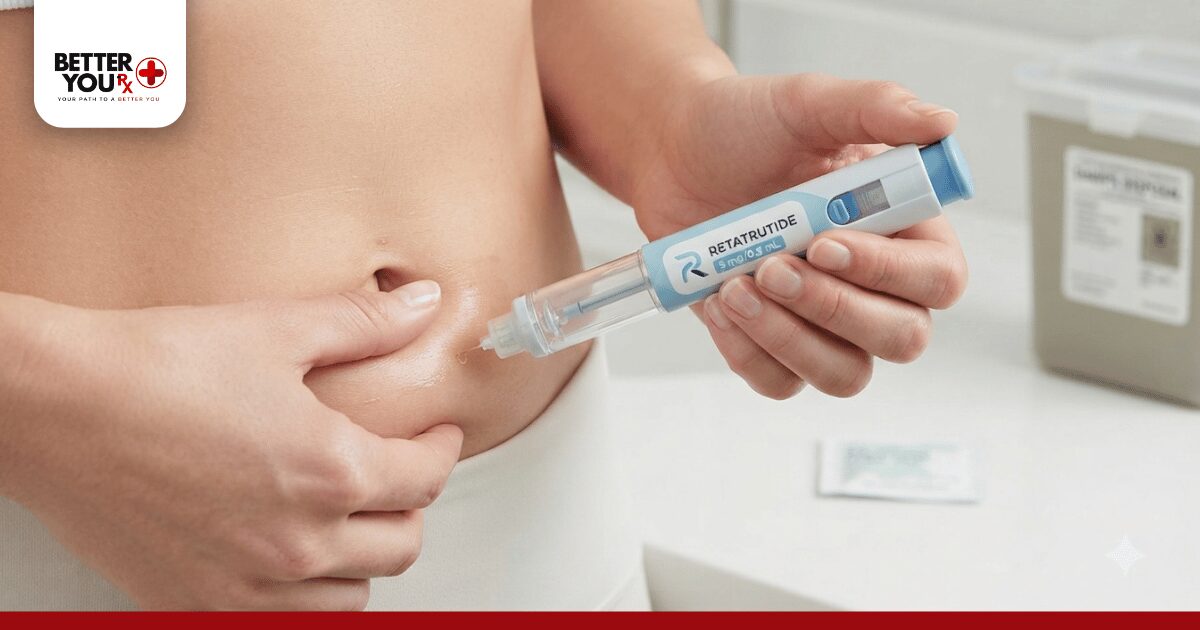
Retatrutide subcutaneous injection is the administration route used in current research on this investigational triple-agonist peptide, delivering the compound into the fatty tissue layer just beneath the skin. Because Retatrutide remains investigational and is not yet approved for routine self-administration, every aspect of dosing and injection technique is handled under direct provider oversight rather than through independent trial and error at home.
Key Takeaways
- Retatrutide subcutaneous injection refers to delivery into the subcutaneous fat layer, the same general route used for other GLP-1 and GIP-based peptide therapies
- Retatrutide is still investigational, so administration decisions, including technique and site selection, are directed by a licensed provider rather than self-taught
- Common subcutaneous sites used in clinical research settings include the abdomen, thigh, and upper arm
- Absorption through subcutaneous tissue is generally slower and steadier than intramuscular or intravenous delivery, which supports a more gradual release profile
- Patients considering Retatrutide should expect provider-guided scheduling, monitoring, and technique review rather than a standardized home-injection kit
Why Retatrutide Subcutaneous Injection Is the Standard Administration Route
Peptide compounds like Retatrutide are structured as proteins, which means they cannot be taken orally without breaking down in the digestive tract before reaching the bloodstream. Subcutaneous delivery bypasses this problem entirely by placing the compound directly into the fatty layer beneath the skin, where a dense network of small blood vessels gradually absorbs it into circulation.
This is the same general mechanism used across the GLP-1 and dual or triple agonist category, including approved options like Mounjaro Kwikpen and Zepbound Kwikpen. The subcutaneous route allows for a slower, more sustained release compared to intramuscular or intravenous administration, which is part of why these medications are typically dosed weekly rather than daily.
Things To Know
- Subcutaneous tissue has fewer nerve endings than muscle, which is part of why this route tends to be more comfortable for weekly dosing schedules
- Retatrutide’s investigational status means dosing protocols, injection frequency, and technique are still being refined through ongoing research rather than fixed by long-standing clinical practice
- A provider reviewing injection technique in person catches issues, like improper site rotation or angle, that are easy to miss when learning from written instructions alone
How Subcutaneous Absorption Works in the Body
Once a compound is placed into the subcutaneous layer, it does not enter the bloodstream immediately. Instead, capillaries in the fatty tissue absorb it gradually over hours, which is what allows for the extended dosing intervals seen with this drug class. This is different from an intramuscular injection, where absorption happens faster because muscle tissue has a richer blood supply.
Patients working with a prescribing provider often ask why the injection site matters at all if the medication eventually reaches the same bloodstream regardless of location. In practice, providers note that absorption rate can vary slightly between common sites, which is one reason site selection and rotation are part of the broader administration plan a provider builds around each patient rather than a detail left to guesswork.
| Administration Route | Absorption Speed | Typical Use Case |
| Subcutaneous | Slow and steady | Weekly peptide therapies, insulin, GLP-1 and GIP agonists |
| Intramuscular | Faster | Vaccines, certain antibiotics |
| Intravenous | Immediate | Hospital settings requiring rapid effect |
Common Subcutaneous Sites Used in Clinical Research Settings
Across the broader category of injectable peptide therapies, three general body areas are typically used for subcutaneous administration. These are not unique to Retatrutide but reflect standard practice for this route across the drug class.
| Injection Site | General Characteristics |
| Abdomen | Widely used site with a consistent fat layer, avoiding the area directly around the navel |
| Thigh | Front or outer thigh, often preferred for self-visibility during provider-guided sessions |
| Upper arm | Back of the upper arm, sometimes harder to reach without assistance |
A provider will typically walk a patient through which site fits their body type, activity level, and comfort, and will explain why rotating between sites over time supports tissue health. This kind of individualized guidance is part of why Retatrutide subcutaneous injection protocols in research settings are always paired with clinical supervision rather than a one-size-fits-all handout.
Why Provider Oversight Matters for an Investigational Compound
Retatrutide has not completed the same regulatory pathway as established medications, which changes how administration is approached. Providers who work with patients considering Retatrutide typically spend more time on technique review, site rotation planning, and monitoring for injection-site reactions than they might with a long-established therapy, precisely because the safety and dosing profile is still being defined through ongoing research.
Most healthcare providers follow established clinical protocols when overseeing injectable peptide therapies, adapting monitoring and follow-up based on how new compounds like Retatrutide compare to better-characterized options already on the market, such as Ozempic or Wegovy. This is also why dosing figures referenced in research, such as 2mg, 4mg, 8mg, or 9mg, are treated as research reference points rather than a fixed at-home dosing chart, and why any decision about a specific milligram amount belongs in conversation with a prescribing provider rather than in a general article.
External resource: For general patient education on subcutaneous injection anatomy and technique across drug classes, MedlinePlus offers a plain-language overview of subcutaneous injection basics.
Which Approach Is Right: Why, How, and What Applies
The “why” behind subcutaneous administration is straightforward: it is the only practical delivery method for a peptide compound that would otherwise be broken down before reaching the bloodstream. The “how” is where individualization matters most, since site selection, rotation schedule, and timing are shaped by a patient’s body composition, daily routine, and how their provider is monitoring the investigational treatment. The “which” question, meaning which specific approach applies to a given patient, is not something a general guide can answer responsibly. That determination sits with the prescribing provider, who weighs the patient’s full health picture against what current research on Retatrutide actually supports.
Patients who are also comparing options across the broader category often find it helpful to look at how Retatrutide differs from Tirzepatide or to review the researched benefits associated with Retatrutide before a consultation, so the conversation with a provider starts from an informed baseline rather than from scratch.

Timing and Scheduling Considerations
Weekly dosing schedules are common across this medication category, and providers generally recommend choosing a consistent day and time that fits a patient’s routine, since consistency supports steadier absorption patterns over the following days. Some patients prefer scheduling around a day off from work, in case they experience mild, temporary injection-site tenderness. Others simply pick whichever day is easiest to remember, like a Sunday evening.
A provider will also account for how a chosen schedule interacts with any other medications or appointments, which is part of the broader monitoring plan built around an investigational compound like Retatrutide. Patients exploring how this compares to more established weekly injectables sometimes review what Retatrutide actually does in the body as background before their first consultation.
Getting Started With a Provider
Better You Rx operates as a prescription referral service with a licensed contracted dispensing department, connecting patients with providers who can evaluate whether a treatment like Retatrutide fits their overall health picture. Because this compound is investigational, the process typically begins with a consultation focused on medical history, current medications, and treatment goals, rather than a direct request for a specific product.
Patients interested in established, already-approved weekly injectable options while discussing Retatrutide with a provider often review products like Mounjaro Kwikpen, Zepbound Kwikpen, or Saxenda as points of comparison during that same conversation.
Buy Wegovy from Canada
Original price was: $609.99.$596.99Current price is: $596.99.
Things To Know Before Your First Consultation
- Bring a full list of current medications and supplements, since some can interact with peptide therapies
- Ask your provider directly about site rotation, since reusing the same spot repeatedly can affect tissue over time
- Mention any history of needle anxiety in advance, since providers can adjust the pace of the first session accordingly
- Keep track of which day you dosed, since consistency matters more than the exact hour
Bringing It All Together
Subcutaneous administration remains the foundation of how Retatrutide is used in current research, and every meaningful decision beyond that basic fact, from site selection to timing to technique, belongs in a conversation with a licensed provider rather than a general reference article. Patients weighing Retatrutide subcutaneous injection against more established options can start that conversation informed, but the specifics of their own treatment plan will always come down to individualized medical guidance.
Patients researching cost and access considerations across GLP-1 therapies may also find it useful to review how Trulicity compares to Mounjaro as part of understanding the broader weekly injectable landscape before their consultation.
Frequently Asked Questions
Should Retatrutide be injected subcutaneously?
Yes, subcutaneous is the administration route used in current research on Retatrutide. It allows the compound to absorb gradually through the fatty layer beneath the skin, and any specific injection decision should be guided directly by a prescribing provider given the compound’s investigational status.
Where is the best place to inject Retatrutide?
The abdomen, thigh, and upper arm are the general sites used across this medication category. A provider will help determine which site and rotation pattern fits an individual patient’s body type and comfort level.
How to inject Retatrutide with a syringe?
Technique should be demonstrated and reviewed in person by a licensed provider, not learned from a written guide. Because Retatrutide is investigational, hands-on instruction ensures proper handling, angle, and site care specific to each patient.
What is the correct technique for subcutaneous injection?
Correct technique depends on individual factors like body composition and the specific product, and should be taught directly by a healthcare provider. General subcutaneous principles include using the fatty tissue layer rather than muscle, but exact steps are provider-guided.
When is the best time to inject Retatrutide?
Most patients are guided toward a consistent day and time each week that fits their routine. A provider will help select timing that also accounts for any other medications or monitoring needs.
Medical Disclaimer: This article is for informational purposes only and is not a substitute for professional medical advice, diagnosis, or treatment. Retatrutide is an investigational compound, and readers should consult a licensed healthcare provider before considering any treatment involving it or any other prescription medication.
Sources
- The New England Journal of Medicine — Clinical trial data on triple-agonist peptide compounds and metabolic outcomes.
- Mayo Clinic — Patient education overview of subcutaneous injection technique and injectable medication classes.
- MedlinePlus (National Library of Medicine) — Plain-language patient instructions for subcutaneous injection basics.
- The Lancet — Peer-reviewed research on GLP-1 and GIP receptor agonist mechanisms of action.
- Journal of Diabetes Science and Technology — Comparative research on subcutaneous absorption rates across injection sites.