
Medically Reviewed by Dr. A. Santos, MD | Updated: July 2026
Last Updated: July 2026
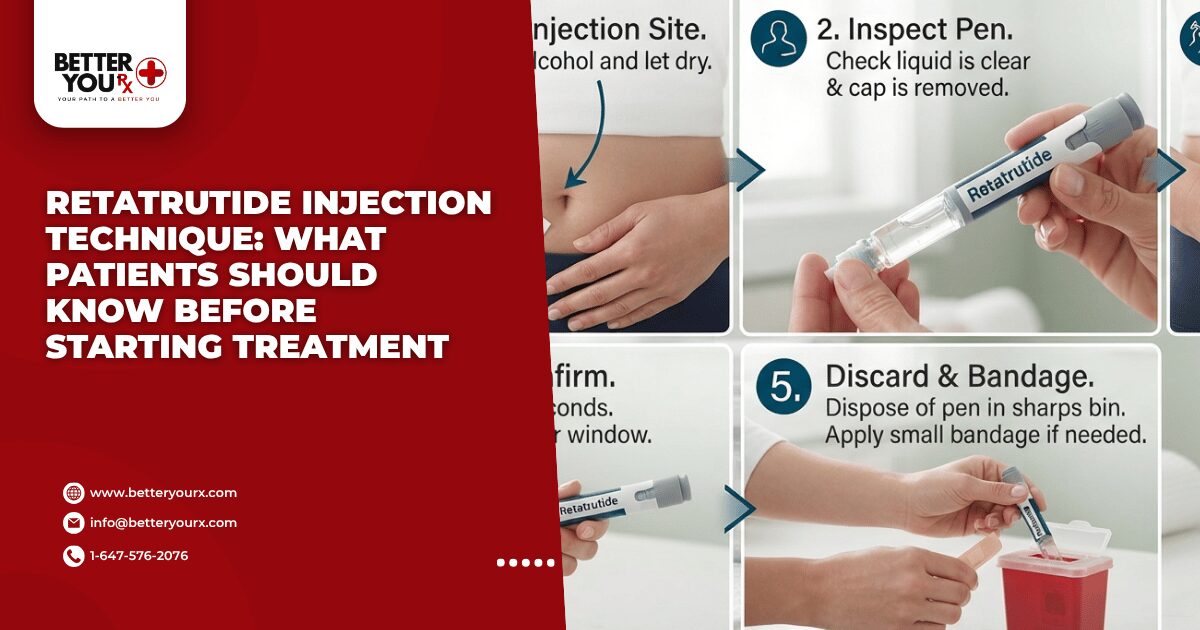
Retatrutide injection technique is not something patients are expected to figure out alone. Because Retatrutide is still an investigational treatment being studied for weight management and metabolic support, every aspect of how it is administered is handled directly between a patient and their prescribing provider. This is different from many well-established injectable medications, where general public guidance is more widely available.
Patients researching this topic are often looking for reassurance that there is a right way and a wrong way to approach treatment, and that reassurance is fair. There is a right way. It just comes from a licensed medical professional who has reviewed the individual’s health history, not from a generic walkthrough.
Key Takeaways
- Retatrutide injection technique is taught directly by a licensed provider, not through self-guided instructions, since Retatrutide remains an investigational compound
- Proper technique centers on consistent site rotation, timing, and follow-up with the prescribing provider rather than independent trial and error
- Getting the best results depends more on consistency and provider communication than on any single injection habit
- Concerns about depth, angle, or comfort during injections should always be directed to the prescribing provider rather than answered through general guides
- Working with a provider throughout treatment reduces the chances of technique-related issues and keeps dosing aligned with the individualized plan
Why Injection Technique Matters More With Investigational Treatments
Any injectable treatment carries some degree of risk if administered incorrectly, but that risk is elevated when a compound is still investigational. Established medications typically come with standardized patient materials refined over years of real-world use. Retatrutide does not yet have that same body of public-facing guidance, which is exactly why providers take a more hands-on role.
Healthcare providers who work with patients on Retatrutide typically walk through the process in person during an initial visit, then confirm technique again at follow-up appointments. This reflects established clinical practice for handling compounds still under active study.
Patients often report feeling more confident after that first supervised session than after reading any amount of written material, simply because a provider can watch their technique and correct small habits in real time.
The Role of the Prescribing Provider
The prescribing provider is the only appropriate source for the specific mechanics of Retatrutide injection technique. This includes decisions about site selection, rotation schedule, and how to handle any discomfort or unusual reactions. A provider factors in body composition, prior injection experience, and overall treatment plan, none of which a general article can account for.
Patients should feel comfortable asking questions at every visit, including ones that might seem basic. Providers expect these questions and generally welcome them, since a patient who fully understands their technique is less likely to run into avoidable issues.
What General Injection Care Looks Like
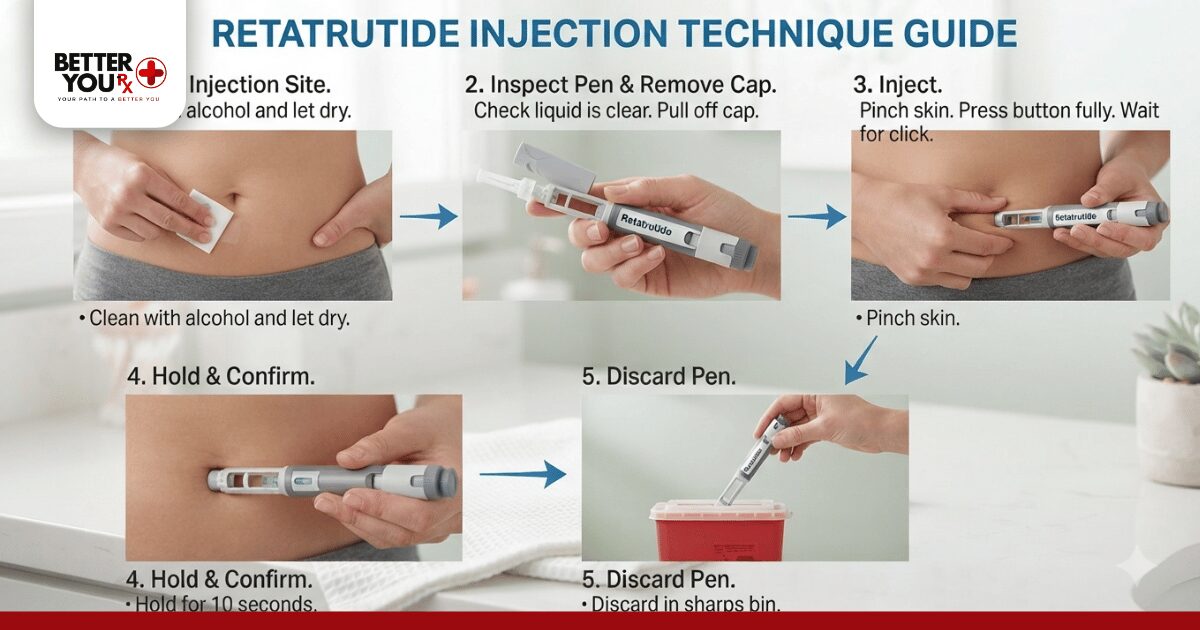
While the specific technique for Retatrutide is provider-directed, there are broad categories of injection care that apply across most injectable treatments and are worth understanding in general terms.
| Category | General Consideration | Why It Matters |
| Site rotation | Providers typically recommend rotating between a few approved areas | Reduces irritation and supports consistent absorption |
| Timing consistency | Many treatment plans favor a similar time of day or week | Helps maintain a steady routine the patient can follow |
| Storage handling | Providers give specific storage instructions for the prescribed product | Protects the integrity of the medication between uses |
| Follow-up check-ins | Regular appointments allow technique review | Catches small habits before they become patterns |
This table reflects general categories only. The specific instructions a patient receives will always come from their own provider and may differ based on individual circumstances.
Things To Know
- Retatrutide is still being studied, which is why self-administration instructions are intentionally left out of general health content
- Providers usually demonstrate technique in person before a patient administers a first dose independently
- Comfort and confidence with injections tend to improve after the first few provider-supervised sessions
- Any unusual reaction at an injection site should be reported to the provider rather than managed independently
- Retatrutide injection technique will look slightly different for each patient depending on their individualized treatment plan
How Patients Get the Best Results With Retatrutide
The patients who tend to have the smoothest experience are not necessarily the ones with the most injection experience. They are usually the ones who stay consistent with their provider check-ins and follow their individualized plan closely.
Consistency matters more than any single habit. Sticking to the schedule a provider outlines, keeping appointments, and reporting any concerns promptly all contribute more to a positive experience than small variations in personal preference. Providers commonly observe that patients who ask questions early, rather than waiting until something feels off, have fewer complications overall.
Lifestyle factors also play a supporting role. Adequate hydration, following any dietary guidance provided alongside treatment, and maintaining regular sleep patterns all support how a patient responds to their overall plan. None of these factors replace medical guidance, but they work alongside it.
For patients comparing options, understanding what does Retatrutide do and reviewing Retatrutide vs Tirzepatide can offer helpful context before a first consultation.
 Common Questions Patients Bring to Their Provider
 Common Questions Patients Bring to Their Provider
Patients frequently want to know whether their technique matches what is expected, whether mild discomfort is normal, and how to know if something needs attention. A provider is best positioned to answer these, since the response often depends on the individual’s specific plan and history.
| Patient Question Type | Best Answered By | Reason |
| Technique specifics (angle, depth, pinching) | Prescribing provider | Depends on individual anatomy and plan |
| Reconstitution details | Prescribing provider or contracted dispensing team | Requires precise, individualized instruction |
| General comfort or timing preferences | Prescribing provider | Adjusts based on patient feedback over time |
| Site reaction concerns | Prescribing provider | May require an in-person evaluation |
Patients exploring related metabolic treatments sometimes also review Retatrutide benefits to better understand the broader treatment goals before their first appointment.
Working With a Prescription Referral Service
Better You Rx operates as a prescription referral service with a licensed contracted dispensing department, connecting patients with the medications their provider has prescribed. Patients interested in exploring GLP-1 and related metabolic treatment options can review products such as Mounjaro, Zepbound, or Saxenda alongside a conversation with their provider about whether Retatrutide fits their individualized plan.
Prescriptions must come from a primary care physician or licensed medical doctor practicing in the USA, and all documentation must be issued in English. This keeps the referral and dispensing process aligned with each patient’s own medical team, which is especially important for a treatment still under investigation.
-
-
Buy Wegovy from Canada
Original price was: $609.99.$596.99Current price is: $596.99.



Final Thoughts on Retatrutide Injection Technique
Retatrutide injection technique is one of the clearest examples of why investigational treatments call for a closer relationship with a prescribing provider rather than a self-guided approach. The mechanics of administration, from site selection to timing, are worked out between patient and provider, adjusted as needed, and revisited at follow-up visits.
Patients who lean on their provider rather than piecing together instructions from scattered sources tend to feel more settled in their routine and better equipped to notice when something needs a second look. That collaborative approach is really the heart of getting Retatrutide injection technique right.
Frequently Asked Questions
What is the correct injection technique?
The correct technique is demonstrated directly by the prescribing provider during an in-person visit, based on the patient’s individualized plan, not through general instructions.
How is Retatrutide mixed before use?
Mixing and reconstitution steps are handled or explained directly by the prescribing provider or the licensed contracted dispensing team, since precise handling matters for an investigational compound.
How can patients get the best results from Retatrutide?
Consistency with the provider’s plan, regular follow-up appointments, and prompt communication about any concerns lead to the best outcomes.
Is injection technique something a provider walks patients through?
Yes. Providers typically demonstrate technique in person before a patient administers any dose independently.
What should a patient do if something feels off during or after an injection?
Any discomfort, unusual reaction, or uncertainty should be reported to the prescribing provider promptly rather than managed alone.
Medical Disclaimer: This content is for informational purposes only and is not a substitute for professional medical advice, diagnosis, or treatment. Always consult a licensed healthcare provider before starting, stopping, or making any changes to a medication or treatment plan, particularly with investigational compounds such as Retatrutide.
Sources:
- New England Journal of Medicine — Clinical trial data on GLP-1 and multi-agonist receptor treatments for weight management.
- Mayo Clinic — General patient education on injectable medication administration and site care.
- Journal of Clinical Endocrinology & Metabolism — Research on incretin-based investigational therapies for metabolic conditions.
- Cleveland Clinic — Patient guidance on working with prescribers during investigational or newly introduced treatments.
- American Diabetes Association Clinical Compendium — Reference material on injectable therapy management and patient follow-up practices.