
Farxiga Vs Ozempic: Which Medication Fits Your Health Goals?
Written by Maria Santos, Health Content Writer | Medically Reviewed by Dr. James Cole, PharmD | Updated: August 2026
Last Updated: August 27, 2026
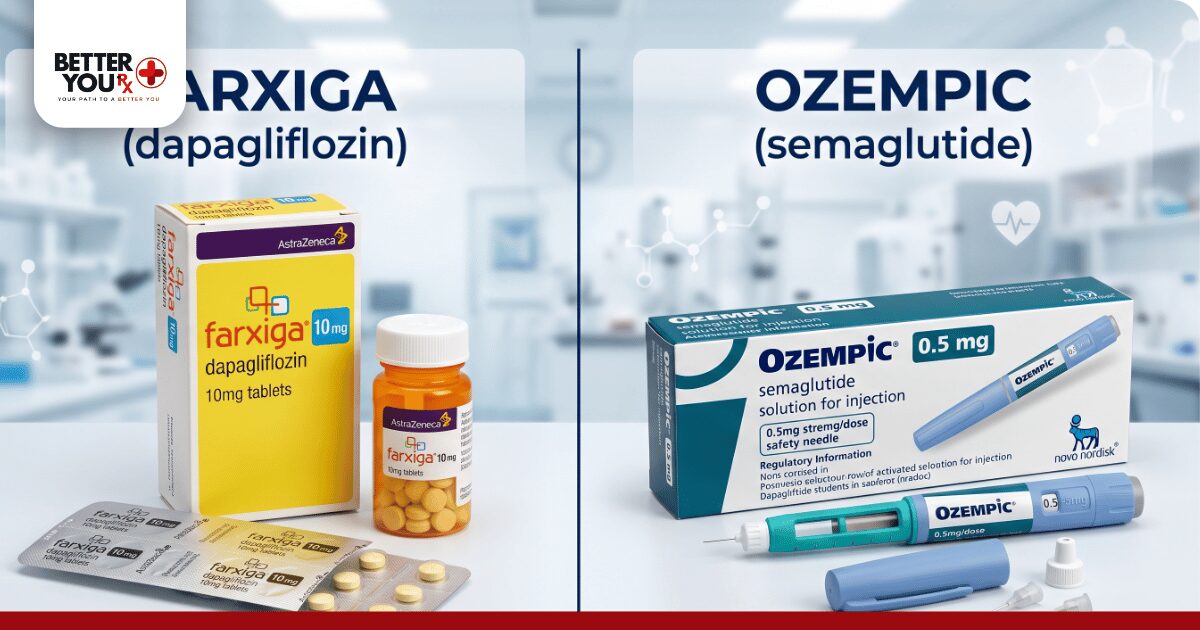
Farxiga vs Ozempic is one of the more common medication comparisons patients bring up with their doctor, since both help manage type 2 diabetes but work through completely different pathways in the body. Farxiga (Dapagliflozin) lowers blood sugar by helping the kidneys remove excess glucose through urine, while Ozempic (Semaglutide) slows digestion and reduces appetite, which is why it tends to produce more noticeable weight loss. Farxiga also carries approvals for heart failure and chronic kidney disease that Ozempic does not share, making it a preferred option for patients managing overlapping cardiovascular concerns.
Ozempic, on the other hand, is the medication more people search for when weight management is the primary goal alongside blood sugar control. Choosing between the two usually comes down to what a patient’s doctor is treating first, whether that is glucose control alone or glucose control paired with weight and cardiovascular risk, and that is exactly what the Farxiga vs Ozempic comparison below is meant to clarify.
Key Takeaways
- Farxiga and Ozempic treat type 2 diabetes through different mechanisms, SGLT2 inhibition versus GLP-1 receptor activity, so they are not interchangeable without medical guidance.
- Ozempic generally produces more weight loss than Farxiga because it directly reduces appetite, while Farxiga’s weight change is a secondary effect of calorie loss through urine.
- Farxiga has additional approvals for heart failure and chronic kidney disease, while Ozempic’s cardiovascular benefit is tied to reducing major cardiac events in patients with existing heart disease.
- The most common side effect of Farxiga is genital yeast infection, while Ozempic is more associated with nausea and digestive discomfort.
- Some patients are prescribed both medications together under medical supervision, since they work through separate mechanisms and can complement each other.
What Is Farxiga and How Does It Work?
Farxiga belongs to a drug class called SGLT2 inhibitors, short for sodium-glucose cotransporter-2 inhibitors. Rather than acting on insulin production, Farxiga blocks a protein in the kidneys responsible for reabsorbing glucose back into the bloodstream. When that protein is blocked, extra sugar leaves the body through urine instead of circulating in the blood, which lowers overall blood sugar levels.
This mechanism also has effects beyond glucose control. By removing extra fluid and sugar through the kidneys, Farxiga eases the workload on the heart, which is part of why it carries approval for certain types of heart failure. It has also shown benefit in slowing the progression of chronic kidney disease in patients who have this condition alongside diabetes. Farxiga is taken as a once-daily tablet, making it a simple addition to a daily medication routine for most patients.
What Is Ozempic and How Does It Work?
Ozempic belongs to a different drug class entirely, called GLP-1 receptor agonists. It mimics a natural hormone called glucagon-like peptide-1, which the body releases after eating. This hormone signals the pancreas to release insulin when blood sugar is high, slows down how quickly food leaves the stomach, and sends signals to the brain that reduce hunger.
That appetite-suppressing effect is the main reason Ozempic has become closely associated with weight loss, even though its original approval was for blood sugar management in type 2 diabetes. Patients often describe feeling fuller sooner during meals and experiencing fewer food cravings between meals once their dose is stabilized. Ozempic is administered on a weekly schedule rather than daily, and dosing is typically increased gradually under a doctor’s guidance to reduce digestive side effects. For patients weighing the injectable route generally, our page on Ozempic vs Trulicity walks through how two weekly GLP-1 options compare to one another.
Farxiga Vs Ozempic: Key Differences at a Glance
The table below breaks down the Farxiga vs Ozempic comparison across the categories patients ask about most, from drug class to dosing schedule.
| Category | Farxiga (Dapagliflozin) | Ozempic (Semaglutide) | Why It Matters |
| Drug Class | SGLT2 Inhibitor | GLP-1 Receptor Agonist | Different mechanisms mean different side effects and benefits |
| How It Lowers Sugar | Removes glucose through urine | Boosts insulin release, slows digestion | Explains why side effects differ so much between the two |
| Administration | Once-daily tablet | Once-weekly injection | Matters for patients who prefer fewer weekly doses |
| Weight Loss Effect | Mild, secondary effect | More significant, appetite-driven | Key deciding factor for patients focused on weight |
| Added Approvals | Heart failure, chronic kidney disease | Cardiovascular risk reduction | Both offer heart-related benefits through different pathways |
Weight Loss: Which One Actually Works Better?
If weight loss is the primary reason someone is comparing these two medications, Ozempic is generally the stronger option. Clinical use has shown that patients on Semaglutide tend to lose a meaningfully higher percentage of body weight compared to those on Dapagliflozin, largely because Ozempic works directly on appetite regulation rather than as a side effect of glucose excretion.
Farxiga can still produce modest weight loss, typically in the range of a few pounds, because the body is losing calories through excreted glucose. However, this effect is far less pronounced than the appetite suppression driven by GLP-1 receptor agonists. Patients whose primary treatment goal is significant weight reduction alongside diabetes management are more likely to see that outcome with Ozempic, while patients who need blood sugar control with heart or kidney protection may find Metformin or Farxiga better matched to their overall treatment plan when paired with other first-line options.
For patients exploring GLP-1 options more broadly, our comparison of Ozempic vs Trulicity covers how Ozempic stacks up against other medications in the same class, which can help frame where Farxiga fits by contrast.
Things To Know
- Farxiga and Ozempic are not typically prescribed as substitutes for one another; a doctor may prescribe both together depending on a patient’s combination of diabetes, heart, and kidney needs.
- Staying well hydrated is particularly important while taking Farxiga, since the medication increases urination and fluid loss.
- Ozempic doses are increased gradually over several weeks, and most digestive side effects are strongest during this adjustment period.
- Neither medication is approved for type 1 diabetes.
- Regular lab monitoring, including kidney function tests, is a standard part of care for patients on either medication.
Side Effects: What Patients Actually Experience
Every medication carries a side effect profile, and Farxiga and Ozempic differ meaningfully here because of how differently they act on the body. Patients weighing Farxiga vs Ozempic should understand that the type of side effect experienced often depends on which mechanism the drug uses, kidney-based excretion versus appetite and digestion, and this is one of the clearest ways the two medications diverge.
| Side Effect Category | Farxiga | Ozempic |
| Most Common Complaint | Genital yeast infections | Nausea and mild stomach upset |
| Digestive Effects | Uncommon | Nausea, constipation, occasional vomiting |
| Fluid-Related Effects | Increased urination, dehydration risk | Not typically reported |
| Typical Timing | Can occur any time during treatment | Strongest during dose increases |
Most side effects from either medication are manageable and tend to lessen with time, though some patients switch medications or adjust dosing with their doctor if symptoms persist. Healthcare providers typically start patients at a lower dose of either drug and increase gradually, which is standard clinical practice for minimizing early side effects while the body adjusts.
Which Option Is Better for You?
Neither medication wins the Farxiga vs Ozempic debate outright, because they are built for somewhat different treatment priorities. The right choice depends on what a patient and their doctor are trying to accomplish beyond basic blood sugar numbers, and a family history of heart or kidney complications often shapes that decision as much as the diabetes diagnosis itself.
Why Farxiga May Be the Right Fit
Farxiga tends to be recommended for patients who have type 2 diabetes alongside heart failure or chronic kidney disease, since its benefits extend to protecting those organs. Patients who prefer a once-daily tablet over an injection may also find Farxiga easier to work into their routine, and its lower rate of digestive side effects appeals to patients who have struggled with nausea on other diabetes medications in the past. Those seeking additional information on how SGLT2 inhibitors compare with other diabetes medications can also review resources like what Trulicity is to understand how the broader diabetes medication landscape is organized.
Why Ozempic May Be the Right Fit
Ozempic is often the better match for patients whose doctor has identified weight management as a meaningful part of their treatment plan, or for those with established cardiovascular disease who could benefit from the medication’s heart-related risk reduction. Patients who don’t mind a weekly injection routine, rather than a daily tablet, may also lean toward Ozempic for convenience.
How They Work Together
In practice, some patients are prescribed Farxiga and Ozempic simultaneously. Because the two drugs lower blood sugar through separate mechanisms, kidney-based glucose removal versus appetite and insulin signaling, they do not cancel each other out and can sometimes provide more complete blood sugar control than either alone. This combination approach is something a primary care physician or endocrinologist typically evaluates on a case-by-case basis rather than a default starting point. In practice, many providers describe patients who plateau on one medication alone and see their numbers move again once the second medication is layered in under close monitoring, which is a pattern seen often enough in clinical settings to inform how these two drugs are frequently paired.
Prescriptions for either medication must come from a primary care physician or licensed medical doctor practicing in the United States, written in English. Better You Rx operates as a prescription referral service connecting patients with a licensed contracted dispensing department, and medications are mailed directly to a patient’s residence rather than picked up in person. For patients weighing GLP-1 options generally, reviewing how Ozempic compares to other GLP-1 medications can add useful context before a doctor’s appointment.
Buy Wegovy from Canada
Original price was: $609.99.$596.99Current price is: $596.99.

The questions below cover the details patients most often ask once they’ve narrowed the Farxiga vs Ozempic decision down to their own situation.
 The Bottom Line on Farxiga Vs Ozempic
 The Bottom Line on Farxiga Vs Ozempic
Choosing between Farxiga and Ozempic isn’t about which medication is objectively stronger, it’s about which mechanism matches a patient’s broader health picture. Farxiga stands out for patients managing heart failure or chronic kidney disease alongside diabetes, delivered through a simple daily tablet.
Ozempic stands out for patients whose treatment plan includes meaningful weight loss and cardiovascular risk reduction, delivered through a weekly injection. According to the Cleveland Clinic, SGLT2 inhibitors like Farxiga are increasingly recognized for benefits that go well beyond blood sugar control alone, which reinforces why this decision often depends on a patient’s full medical picture rather than diabetes management in isolation. A conversation with a licensed healthcare provider remains the most reliable way to determine which medication, or combination, fits an individual treatment plan.
Frequently Asked Questions
What drug is comparable to Farxiga?
Jardiance and Invokana are the closest comparisons, since both are SGLT2 inhibitors like Farxiga. These medications share a similar side effect profile, including increased urination and a higher risk of genital yeast infections, though they differ slightly in dosing and additional approved uses.
Does Farxiga cause weight loss like Ozempic?
Farxiga causes only mild weight loss, far less than Ozempic. This effect is much smaller than what patients typically see with Ozempic, which reduces appetite directly and generally produces more significant weight loss over time.
What to avoid while taking Farxiga?
Avoid becoming dehydrated while taking Farxiga. It’s also worth discussing alcohol intake, certain diuretics, and any signs of urinary tract discomfort with a doctor, since these can compound the medication’s effects on fluid balance and infection risk.
What is the most common side effect of Farxiga?
Genital yeast infections are the most common side effect. Increased urination and mild dehydration are also frequently reported, especially during the first few weeks of treatment.
How long do you stay on Farxiga?
Farxiga is generally intended for long-term, ongoing use. Most patients remain on it indefinitely unless a doctor adjusts the treatment plan based on lab results or side effects.
This content is for informational purposes only and is not intended as medical advice. It should not replace consultation with a licensed healthcare provider. Always talk to a doctor before starting, stopping, or switching any medication, including Farxiga or Ozempic.
Sources
- Cleveland Clinic – Overview of Dapagliflozin (Farxiga), including mechanism of action, approved uses, and side effect profile.
- Mayo Clinic – Patient information on Semaglutide (Ozempic), covering dosing, weight-related effects, and safety considerations.
- American Diabetes Association – Standards of care guidance on SGLT2 inhibitors and GLP-1 receptor agonists in type 2 diabetes treatment.
- Journal of the American College of Cardiology – Research on SGLT2 inhibitors and cardiovascular and kidney outcomes in diabetes patients.
- Endocrine Society – Clinical guidance on GLP-1 receptor agonist use for glycemic control and weight management.