
Written by Danielle Reyes, Health and Wellness Writer | Medically Reviewed by Dr. Marcus Feld, PharmD | Updated: July 2026
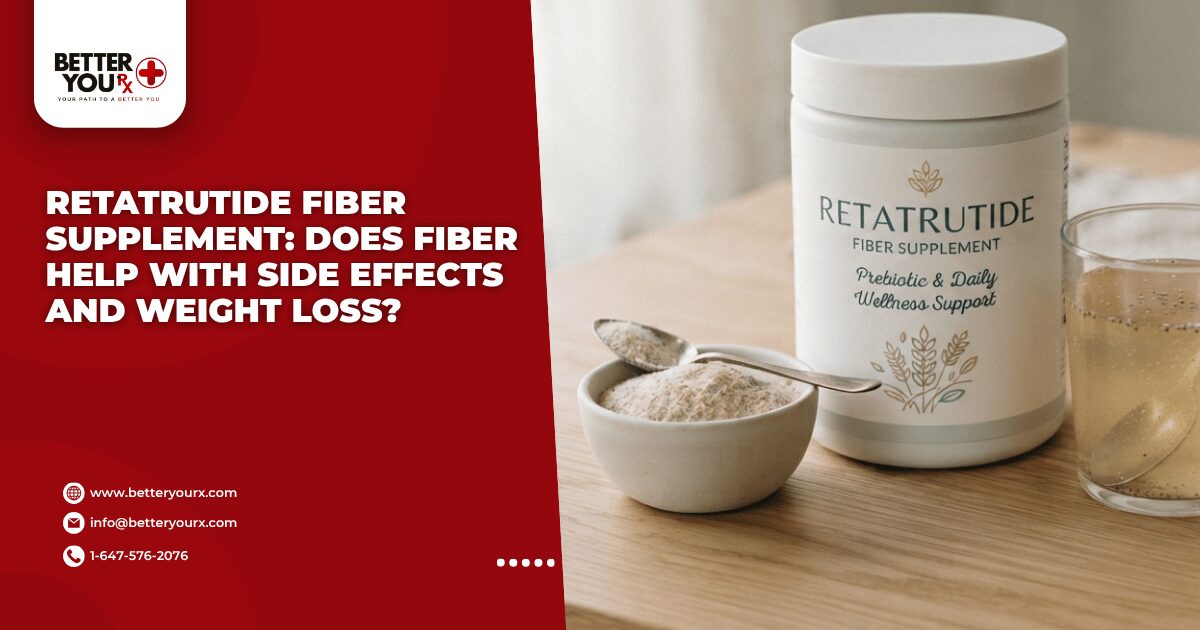
A Retatrutide fiber supplement can genuinely help with the constipation, bloating, and slower digestion many people notice while on the medication, though it works best alongside fiber rich foods rather than in place of them. Soluble fiber sources like psyllium husk, ground oats, and chia seeds tend to sit more comfortably with Retatrutide’s effect on gastric emptying than large doses of insoluble fiber taken all at once.
Because Retatrutide already slows how quickly food and stool move through the digestive tract, adding fiber without enough water can occasionally make constipation worse instead of better, which is why timing, portion, and hydration matter just as much as the fiber source itself. Most people do well starting with five to ten grams of soluble fiber daily, building this up gradually while paying attention to how the body responds, and checking in with a prescribing provider before adding any new supplement.
Key Takeaways
- A Retatrutide fiber supplement can ease constipation and bloating for many patients, though it works best alongside fiber rich foods rather than replacing them.
- Retatrutide already slows gastric emptying, so soluble fiber tends to fit that rhythm far better than large amounts of insoluble fiber.
- Constipation is one of the most commonly reported digestive complaints among patients starting Retatrutide, and hydration is just as important as the fiber itself.
- Most people do well starting with five grams of soluble fiber daily and increasing gradually rather than adding a large dose right away.
- Any new supplement, including fiber, should be reviewed with the prescribing provider given Retatrutide’s investigational status and current research reference dosing.
Does a Retatrutide Fiber Supplement Actually Help?
Yes, for most people a Retatrutide fiber supplement helps more than it hurts, provided the type and amount are matched to what the digestive system can handle. Retatrutide activates GLP-1, GIP, and glucagon receptors together, and one of the most consistent effects of that triple action is a slower rate of gastric emptying. Food sits in the stomach longer, which supports the appetite reduction people are looking for, but it also means the intestines are processing less volume, less often. Add a fiber supplement on top of an already slowed system and the result depends heavily on which fiber is used.
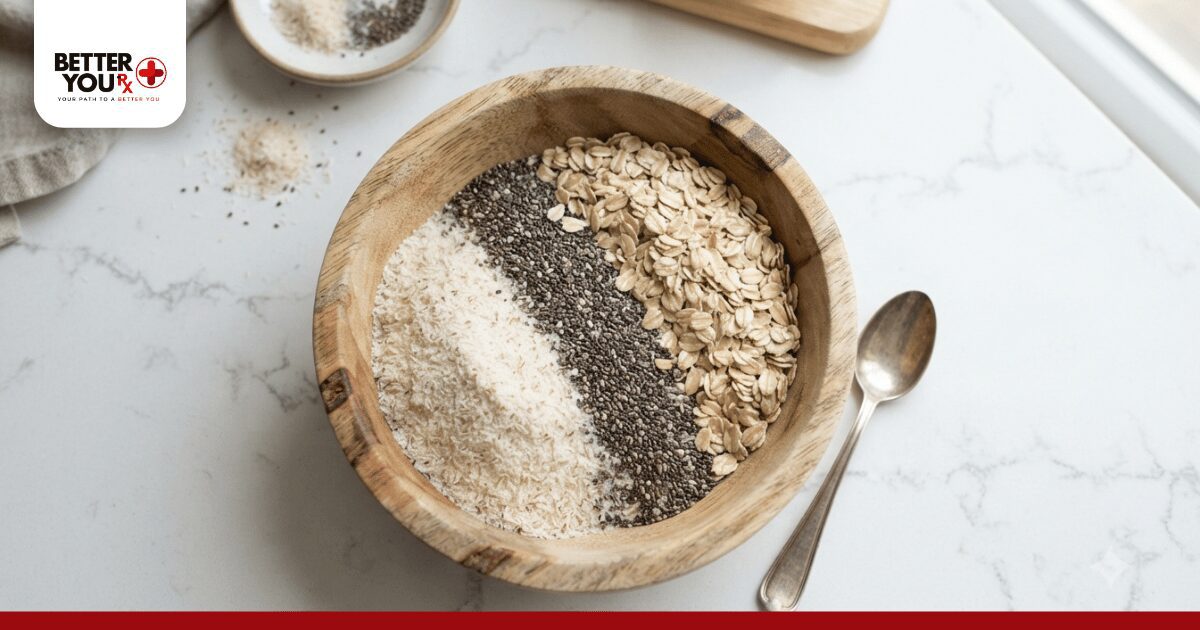
Soluble fiber, the kind that dissolves into a gel like texture in water, tends to work with this slower rhythm rather than against it. It softens stool and makes it easier to pass without demanding rapid muscle contractions from the intestines. Insoluble fiber, the coarse kind found in wheat bran and many raw vegetable skins, adds bulk that needs strong intestinal motility to move along. When that motility is already reduced by Retatrutide, a large dose of insoluble fiber without adequate water can sit and compact rather than move through, sometimes making constipation worse rather than better.
Why Retatrutide Slows Digestion in the First Place
Retatrutide is currently studied as an investigational triple agonist, meaning any specific dosing figures discussed here are research reference points only and should always be confirmed with a prescribing provider rather than self adjusted. The appetite suppressing and gastric emptying effects that make Retatrutide notable for weight management are the same effects behind the digestive side effects patients commonly report, including nausea, early fullness, bloating, and constipation.
Healthcare providers who work with GLP-1 and multi agonist therapies routinely describe this pattern in practice: patients tolerate the medication well overall but need a specific plan for bowel regularity within the first several weeks, because the digestive tract is adjusting to a genuinely different rhythm. This is not a flaw in the medication or a sign that something has gone wrong. It is an expected physiological response that most healthcare providers anticipate and plan for using established clinical protocols around hydration, fiber, and gentle daily activity.
For context on how food choices interact with digestion more broadly, resources like the Harvard T.H. Chan School of Public Health Nutrition Source explain how fiber affects gut transit time in ways that apply just as much to someone on Retatrutide as to anyone else adjusting their diet.
Soluble Versus Insoluble Fiber: Which One Fits a Retatrutide Fiber Supplement Routine
Not all fiber behaves the same way once it reaches a digestive system that has been slowed down. The table below breaks down how each type tends to perform for someone managing Retatrutide related digestion.
| Fiber Type | Common Sources | How It Affects a Slowed Digestive System | Best Used For |
| Soluble Fiber | Psyllium husk, oats, chia seeds, flaxseed, apples | Forms a gel that softens stool and moves gently with reduced gut motility | General constipation prevention alongside Retatrutide |
| Insoluble Fiber | Wheat bran, raw vegetable skins, whole nuts | Adds bulk that needs strong motility to move along, can compact if water intake is low | Best introduced slowly and in smaller amounts |
| Mixed Fiber Foods | Lentils, beans, pears, berries | Combination effect, generally well tolerated in modest portions | Everyday dietary fiber intake |
Things To Know
- Start low and increase slowly. Jumping straight to a high fiber dose in one sitting is one of the most common reasons people feel worse instead of better in the first week.
- Water intake matters more with fiber than without it. Fiber without enough fluid can bind stool rather than soften it, particularly for anyone already eating and drinking less due to reduced appetite.
- Fiber gummies and powders are not interchangeable. Gummy fiber supplements often contain less fiber per serving than powders like psyllium husk, so checking the label matters more than the marketing.
- Spacing fiber supplements away from the Retatrutide dosing window by a few hours can reduce the chance of compounding nausea or fullness for some people.
- Persistent constipation lasting more than a week despite fiber and water should be discussed with a provider rather than managed indefinitely at home.
What Foods Are High in Fiber for Retatrutide
Whole food sources of fiber generally provide better results than isolated supplements alone, largely because they arrive with water content, natural sugars, and other nutrients that support digestion as a whole system rather than a single input. Registered dietitians commonly note that most adults already fall short of daily fiber recommendations even without a medication slowing digestion further, which makes food based fiber a reasonable daily target regardless of Retatrutide use.
| Food | Serving Size | Approximate Fiber |
| Raspberries | 1 cup | 8 grams |
| Lentils, cooked | 1 cup | 15 grams |
| Chia seeds | 2 tablespoons | 10 grams |
| Avocado | 1 medium | 10 grams |
| Oats, cooked | 1 cup | 4 grams |
| Pear with skin | 1 medium | 6 grams |
Because appetite is often reduced, eating enough total food to reach these fiber numbers can be genuinely difficult. Many patients find it easier to spread smaller fiber rich portions across the day rather than trying to eat one large fiber heavy meal, which can worsen the fullness sensation Retatrutide already produces. A simple, realistic approach many people report success with is adding one fiber rich food to breakfast, one to lunch, and relying on a small evening supplement only if the day’s food intake fell short.
How Much Fiber Supplement Is Reasonable to Add
A common and sensible starting point is five grams of soluble fiber once daily, taken with a full glass of water, for the first week. If tolerated well, this can increase to ten grams daily in the second or third week. Very few people managing Retatrutide related digestion need more than fifteen grams of supplemental fiber on top of dietary fiber, and going well beyond that without guidance can trigger the opposite problem of bloating and cramping.
Patients often report that the combination of a modest fiber supplement, consistent water intake, and short daily walks resolves mild constipation within one to two weeks. A patient managing early Retatrutide side effects, for example, might notice that adding a single tablespoon of ground chia to a morning smoothie, alongside an extra glass of water, makes a noticeable difference within just a few days. When bowel changes do not improve on a routine like this, that is generally the signal to loop in a provider rather than continuing to increase the fiber dose independently.
 When Fiber Alone Is Not Enough
 When Fiber Alone Is Not Enough
Fiber addresses one piece of the digestive picture, but it is not the only supplement worth discussing when Retatrutide slows things down. Magnesium citrate is commonly used alongside fiber for constipation that does not fully resolve, since it draws water into the intestine rather than relying on bulk. Electrolyte support can also matter for people eating and drinking less overall, since reduced intake can contribute to sluggish digestion independent of fiber intake.
For people exploring other GLP-1 based options alongside these digestive strategies, medications such as Zepbound and Mounjaro work through a related receptor mechanism, while Saxenda uses a different pathway that some patients find easier on digestion. A prescribing provider can help determine which option, and which supporting supplement routine, fits an individual’s history and goals best.
Buy Wegovy from Canada
Original price was: $609.99.$596.99Current price is: $596.99.



Getting Started With a Retatrutide Fiber Supplement Plan
Reading more about how Retatrutide works overall can help put the digestive side effects into context. Coverage on Retatrutide benefits outlines what the medication is generally used for, while a breakdown of Retatrutide side effects covers the fuller list of what patients commonly report beyond digestion alone. For anyone comparing options, a direct look at Retatrutide vs Tirzepatide explains how the two differ in mechanism and reported tolerability.
Better You Rx operates as a prescription referral service with a licensed contracted dispensing department, connecting patients with the appropriate contracted partners once a valid prescription from a licensed United States provider is on file. Any fiber or supplement routine should still be reviewed with the prescribing provider managing the overall Retatrutide treatment plan.
Final Thoughts on Using a Retatrutide Fiber Supplement
A Retatrutide fiber supplement is not a requirement for everyone on the medication, but for the many patients who notice slower digestion, it is one of the simplest and most reasonable tools available. The type of fiber, the pace of increasing it, and the amount of water taken alongside it matter more than any specific brand or product chosen. Building this into a daily routine, alongside movement and adequate hydration, gives most people a practical path through the digestive adjustment period without needing to abandon fiber altogether, and a Retatrutide fiber supplement approach that starts small tends to hold up best over time.
Frequently Asked Questions
Should I take a fiber supplement with Retatrutide?
Generally, yes, in modest amounts. A soluble fiber supplement paired with adequate water is a reasonable, low risk way to support regularity while on Retatrutide, though it should be introduced gradually and reviewed with a provider.
What foods are high in fiber for Retatrutide?
Berries, chia seeds, oats, lentils, and avocado. These foods offer meaningful fiber per serving without requiring large portions, which suits the smaller appetite Retatrutide tends to produce.
What supplements should you take with Retatrutide?
Soluble fiber, magnesium citrate, and electrolytes. These are the most commonly discussed additions, always confirmed with the prescribing provider first.
Should I take a fiber supplement on GLP-1?
In most cases, yes. GLP-1 medications share the same slowed digestion pattern as Retatrutide, and soluble fiber tends to complement that rhythm rather than fight it.
How to avoid constipation on Retatrutide?
Water, gradual fiber, movement, and regular meals. These four habits together are the most practical, provider supported strategies for avoiding constipation.
Sources
- New England Journal of Medicine, clinical research coverage on triple hormone receptor agonists and weight management outcomes.
- Mayo Clinic, overview of constipation causes, dietary management, and when to seek care.
- Harvard T.H. Chan School of Public Health, The Nutrition Source, guidance on soluble and insoluble fiber and digestive health.
- Cleveland Clinic, overview of GLP-1 receptor agonist gastrointestinal side effects and management strategies.
- Academy of Nutrition and Dietetics, guidance on daily fiber intake recommendations and food sources.
Medical Disclaimer
This content is provided for general informational purposes only and is not a substitute for professional medical advice, diagnosis, or treatment. Always consult a licensed healthcare provider before starting, stopping, or combining any medication or supplement, including Retatrutide or any fiber product.