

Written by Zas Villanueva, Health Content Writer | Medically Reviewed by Dr. Angela Reyes, MD | Last Updated: July 2026
Retatrutide for type 2 diabetes has produced some of the largest average blood sugar and body weight reductions recorded in early-phase metabolic research to date. It is not yet a routine treatment option, and it is not something a person can request off a menu of medications, because it remains under investigation and requires close coordination with a licensed physician.
Researchers are drawn to Retatrutide because it activates three separate hormone pathways at once, rather than the one or two pathways targeted by currently accessible therapies. Patients who ask their care team about it are typically told the same thing endocrinologists tell each other at conferences: the early numbers are compelling, but the compound has not yet completed the studies needed to define a standard, provider-approved protocol. What follows is a grounded look at how Retatrutide works, why it draws so much research attention, how it compares to established options, and what actually matters if a physician decides it is relevant to a person’s care.
Key Takeaways
- Retatrutide for type 2 diabetes remains an investigational compound, meaning it has not finished the research pathway required for general prescribing.
- Early trial data on Retatrutide show some of the largest average A1C and body weight reductions reported for an injectable metabolic therapy so far.
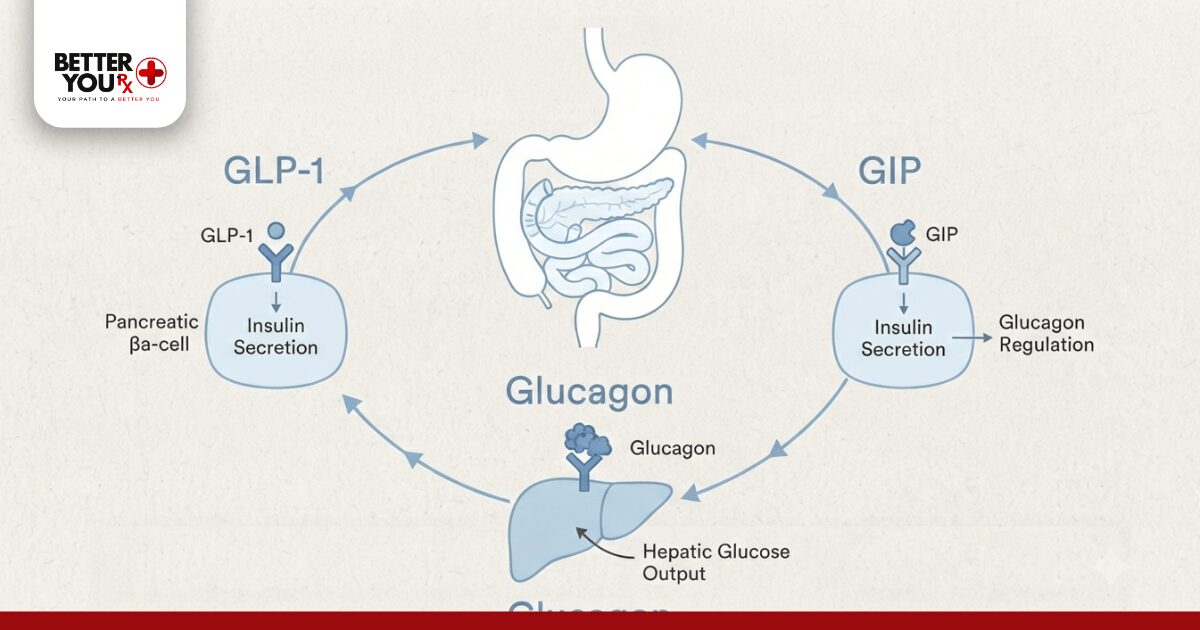
- Retatrutide acts on three separate hormone receptors, GLP-1, GIP, and glucagon, which sets it apart from single or dual-acting options already available.
- Provider oversight matters more with Retatrutide than with established medications because dosing protocols are still being refined in ongoing studies.
- Semaglutide and Tirzepatide remain the more established, provider-accessible options for managing type 2 diabetes today.
How Retatrutide for Type 2 Diabetes Works in the Body
Type 2 diabetes develops when the body’s cells respond poorly to insulin and the pancreas struggles to keep pace with rising blood sugar. Most modern injectable therapies address this by mimicking a gut hormone called GLP-1, which slows digestion, increases insulin release after meals, and reduces appetite.
Retatrutide takes that concept further. It is designed as a triple agonist, meaning it activates three receptors instead of one: GLP-1, GIP (glucose-dependent insulinotropic polypeptide), and glucagon. Each pathway contributes something different. GLP-1 supports insulin release and appetite regulation. GIP appears to improve how fat tissue processes energy. The glucagon receptor component, which is unusual among this drug class, is believed to raise energy expenditure, which may partly explain why weight reductions in trial participants have outpaced those seen with GLP-1-only therapies.
This multi-receptor approach is exactly why Retatrutide for type 2 diabetes has become such a frequent search term among patients who are already familiar with existing GLP-1 options and are wondering what comes next.

Why Researchers Are Studying Retatrutide for Type 2 Diabetes
Clinical researchers are not chasing Retatrutide simply because it is new. They are studying it because the early data suggests a meaningfully different ceiling on outcomes compared to existing therapies.
In published phase 2 research, participants receiving higher doses of Retatrutide saw average A1C reductions and body weight reductions that were notably larger than what earlier trials recorded for single or dual-hormone therapies. That kind of separation in a phase 2 trial is unusual, and it is the reason the compound has moved into larger, longer phase 3 studies rather than being set aside.
It helps to see how the research conversation around Retatrutide fits alongside medications people already recognize.
| Therapy | Hormone Targets | Current Status | Typical Use Today |
| Metformin | Not hormone-receptor based | Established, first-line | Long-standing standard for type 2 diabetes |
| Semaglutide | GLP-1 | Established, provider-prescribed | Blood sugar control and weight management |
| Tirzepatide | GLP-1 and GIP | Established, provider-prescribed | Blood sugar control and weight management |
| Retatrutide | GLP-1, GIP, and glucagon | Investigational, later-phase trials | Not yet available for routine prescribing |
Most healthcare providers follow established clinical protocols when prescribing metabolic medications, which is exactly why Retatrutide has not moved into everyday practice yet. The compound has to complete the same rigorous review pathway that every currently prescribed diabetes medication already went through.
Things To Know About Retatrutide for Type 2 Diabetes Research
- Retatrutide is currently studied in structured clinical trial settings, not prescribed as a standard therapy outside of that research context.
- Reported dose levels in published research, including figures such as 2 mg, 4 mg, 8 mg, and up to 12 mg, are research reference points tied to specific trial protocols, not self-directed treatment targets.
- Any specific dosing decision belongs entirely to a licensed physician who has reviewed a person’s full medical history and current trial or provider access.
- Side effect patterns reported so far resemble other GLP-1-class therapies, including nausea and digestive changes, particularly during early dose adjustments.
- Weight loss and blood sugar improvements in trial data are consistently paired with structured medical monitoring, not used in isolation.
Which Option Is Best: Retatrutide, Semaglutide, or Tirzepatide?
This is the question most people are actually trying to answer when they search for Retatrutide for type 2 diabetes, and the honest answer depends on what is actually accessible right now.
Semaglutide, available as Rybelsus in tablet form or through other GLP-1 formulations, has years of real-world prescribing history behind it and a well-documented safety profile for type 2 diabetes management. Tirzepatide, which activates both GLP-1 and GIP receptors, has shown stronger average results than single-hormone GLP-1 therapy in head-to-head research, and it is currently accessible through a licensed physician’s prescription.
Retatrutide is not currently an option a person can choose from that same accessible list. Its three-receptor mechanism is scientifically promising, but promising trial data is not the same as an approved, provider-ready treatment protocol. For most people managing type 2 diabetes today, the practical answer is that Tirzepatide or Semaglutide represents the best currently available option, while Retatrutide represents where the research may be heading.
A patient managing type 2 diabetes for several years, for example, might already be using Metformin alongside a GLP-1 therapy and simply want to know whether something newer could do more. In practice, physicians typically respond to that question by reviewing current A1C trends and weight goals before ever discussing an investigational compound, because the accessible option in front of a patient almost always outperforms waiting on a compound still completing trials.
What Happens When Retatrutide Research Is Paired With Lifestyle Care
Across nearly every metabolic drug trial, including the ones studying Retatrutide, the strongest outcomes appear in participants who combine the medication with structured dietary guidance and regular activity. This is not a minor footnote. Trial protocols typically build in nutrition counseling and movement goals specifically because the combination consistently outperforms medication alone.
This pattern matters for context. Even if Retatrutide eventually becomes available through a physician’s prescription, it will not replace the foundational habits that already influence A1C and weight, things like consistent meal timing, reduced processed sugar intake, and regular movement. It will, if approved, sit alongside those habits rather than instead of them.
People exploring how currently available therapies compare often start with a broader look at Retatrutide vs Tirzepatide research, or review the documented benefits of Retatrutide that have emerged from published trial data so far. For those already using an established GLP-1 therapy, understanding Tirzepatide vs Trulicity comparisons show can help frame where Retatrutide research might eventually fit.
For patients whose care plan already includes an accessible GLP-1 or GIP therapy, options such as Ozempic, Mounjaro, and Metformin remain the medications a licensed physician can actually prescribe today, while Retatrutide continues through its research phases.
Buy Wegovy from Canada
Original price was: $609.99.$596.99Current price is: $596.99.



Better You Rx supports patients across the United States as a prescription referral service with a licensed contracted dispensing department, connecting people with the currently approved medications their physician prescribes, including established GLP-1 and GIP therapies used in type 2 diabetes management.
Frequently Asked Questions
Can a diabetic take retatrutide?
Not yet, outside of clinical trial settings. Retatrutide remains investigational, so it is only available to people enrolled in structured research studies. A physician can explain whether a relevant trial applies to someone’s specific situation.
What is the best injection for type 2 diabetes?
Semaglutide and Tirzepatide are the most established injectable options today. Both are provider-prescribed, have years of real-world data behind them, and are typically chosen based on a person’s A1C levels, weight goals, and medical history.
Can type 2 diabetes be reversed permanently?
Type 2 diabetes can go into remission for some people, but “permanently reversed” is not an accurate description. Sustained weight loss, consistent nutrition, and physical activity can bring blood sugar into a normal range, though ongoing monitoring is still recommended.
Does retatrutide lower A1C?
Yes, published trial data show meaningful average A1C reductions with Retatrutide. These results come from controlled research settings, so outcomes in general practice would depend on completing further trials and provider-guided protocols.
What happens when you eat sugar on retatrutide?
Sugar intake can still raise blood glucose while on Retatrutide, just as it can with other GLP-1-class therapies. These medications support the body’s insulin response, but they do not eliminate the impact of dietary sugar, which is why nutrition guidance remains part of every trial protocol.
The Bottom Line on Retatrutide for Type 2 Diabetes
Retatrutide represents one of the more closely watched compounds in current metabolic research, and the early numbers explain why. A therapy that activates three hormone receptors at once, rather than one or two, has the potential to reshape how physicians approach both blood sugar control and weight management. But potential is not the same as access.
Until Retatrutide completes its research pathway, Semaglutide and Tirzepatide remain the medications a licensed physician can actually prescribe, and both already carry a strong track record in type 2 diabetes care. Anyone curious about where Retatrutide fits into their own care should raise it directly with their physician, who can weigh current trial data against what is already working in that person’s treatment plan.
According to research published in the New England Journal of Medicine, triple-hormone-receptor agonists like Retatrutide have produced some of the largest average weight reductions reported in phase 2 obesity and metabolic trials to date.
Medical Disclaimer
This content is provided for informational purposes only and does not constitute medical advice. It is not a substitute for a consultation with a licensed healthcare provider. Always speak with a physician before starting, stopping, or changing any medication or treatment plan, including any therapy discussed in this article.
Sources
- New England Journal of Medicine: Phase 2 trial data on triple-hormone-receptor agonists and their effects on weight and metabolic markers.
- The Lancet Diabetes and Endocrinology: Published research on GLP-1 and multi-receptor agonist therapies for type 2 diabetes.
- Mayo Clinic: Overview of type 2 diabetes management approaches, including medication-assisted care.
- American Diabetes Association: Standards of care guidance for A1C targets and glucose management.
- Diabetes Care Journal: Clinical research on GIP and glucagon receptor involvement in metabolic regul