Written by The Better You Rx Clinical Content Team | Medically Reviewed by Dr. Sarah Mitchell, MD | Last Updated: August 2026
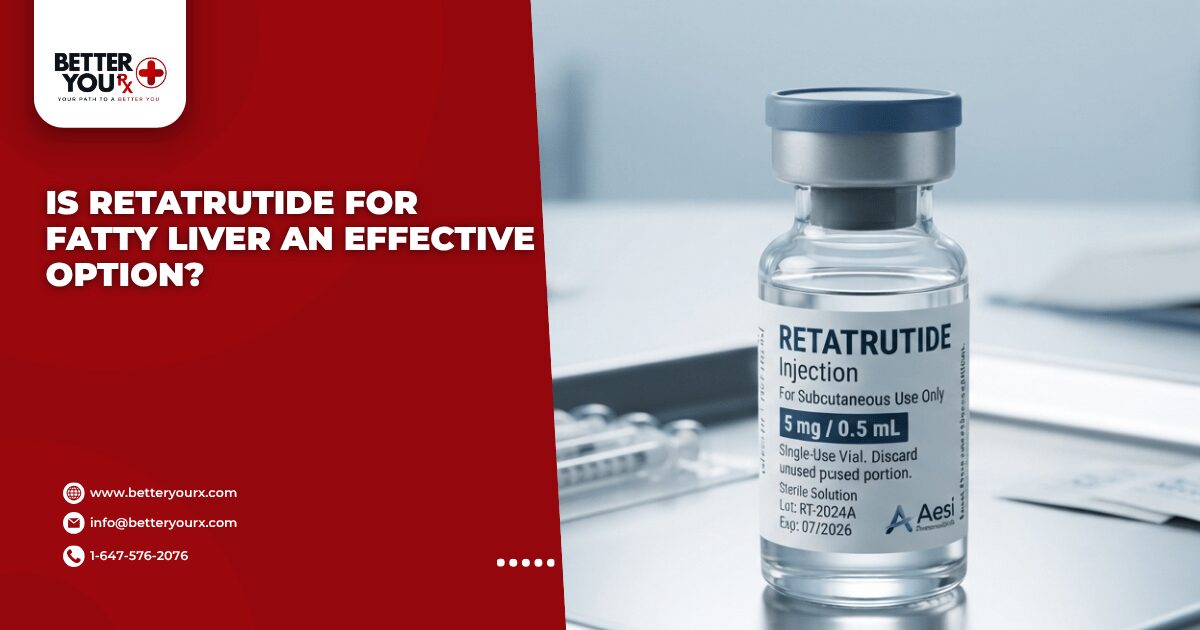
Retatrutide for fatty liver has become one of the most researched questions in metabolic medicine today. Early clinical research suggests this investigational peptide may reduce liver fat by supporting significant weight loss and improving insulin sensitivity, though it remains under study and is not yet a standard treatment. Retatrutide targets three separate hormone receptors, GIP, GLP-1, and glucagon, a combination that appears to produce more pronounced metabolic effects than single-receptor therapies. For people managing excess liver fat alongside obesity or prediabetes, this triple-action approach is drawing significant attention from both researchers and patients.
Key Takeaways
- Retatrutide for fatty liver research is still emerging, but early trial data shows meaningful reductions in liver fat content among participants with obesity.
- Retatrutide activates GIP, GLP-1, and glucagon receptors simultaneously, a mechanism that distinguishes it from Semaglutide and Tirzepatide.
- Weight loss and improved insulin sensitivity appear to be the primary pathways through which Retatrutide may support liver health.
- Retatrutide remains an investigational medication, and any use should occur only under the guidance of a licensed healthcare provider.
- Comparing GLP-1 and multi-receptor options helps patients and providers determine which approach best fits individual metabolic goals.
The Direct Answer On Retatrutide For Fatty Liver
Retatrutide shows early promise for reducing liver fat, primarily as a downstream result of substantial weight loss and improved metabolic function rather than a direct liver-targeted mechanism. Clinical researchers have observed that participants using Retatrutide in study settings experienced measurable reductions in liver fat percentage alongside broader improvements in body weight and blood sugar regulation.
This does not mean Retatrutide functions as a dedicated liver medication. Fatty liver improvement observed in research settings appears connected to the same mechanisms that drive weight reduction: appetite regulation, slower gastric emptying, and improved how the body processes glucose and fat. Because excess liver fat is closely tied to obesity and insulin resistance, medications that meaningfully address those two factors often show secondary benefits for liver health.
What Is Fatty Liver Disease and How Metabolic Health Plays a Role
Fatty liver disease develops when fat accumulates in liver cells beyond what is considered normal. It ranges from a milder buildup with no symptoms to a more advanced form involving inflammation and scarring. According to the Cleveland Clinic’s overview of nonalcoholic fatty liver disease, the condition is closely linked to obesity, type 2 diabetes, and elevated cholesterol, making it one of the most common liver conditions affecting adults today.
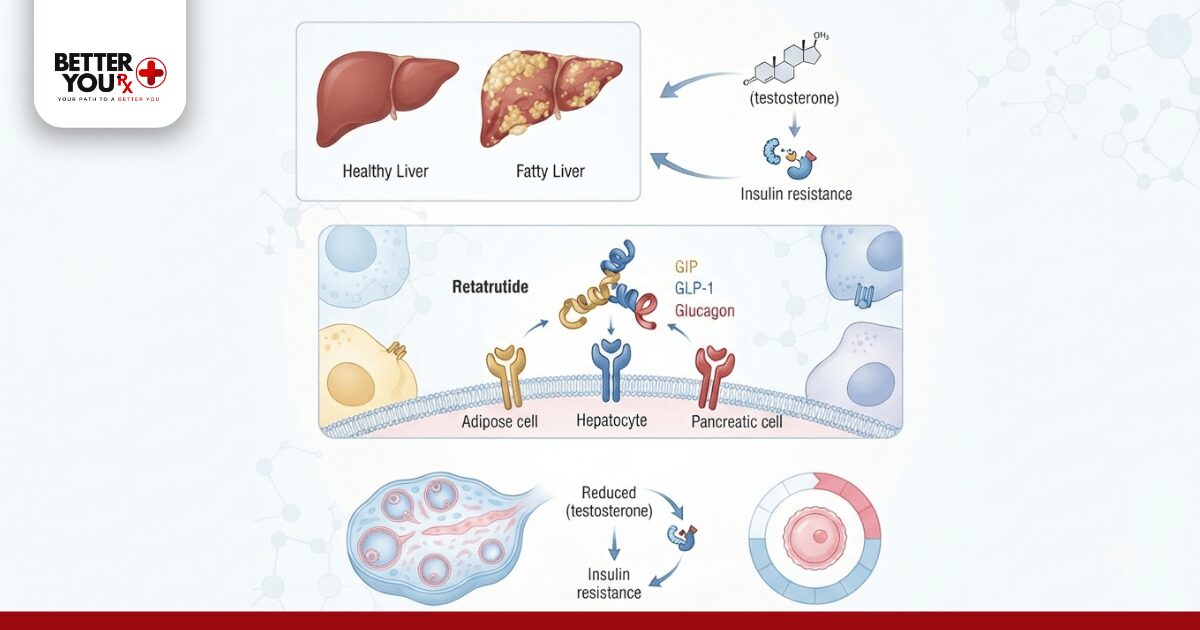
Metabolic health and liver fat are deeply connected. When the body struggles to regulate blood sugar and insulin, the liver often compensates by storing more fat. This creates a cycle where excess liver fat can worsen insulin resistance, which in turn can allow more fat to accumulate. Breaking this cycle typically requires addressing the underlying metabolic drivers rather than the liver in isolation, which is part of why medications like Retatrutide, originally developed for weight management, are being studied for their liver-related effects.
For patients researching Retatrutide for fatty liver, knowing the baseline severity of liver fat buildup matters before starting any new treatment. Providers typically rely on bloodwork markers such as liver enzymes, alongside imaging when available, to establish a starting point. This baseline allows for meaningful comparison later in treatment, since liver fat changes are gradual and best tracked over months rather than weeks. Patients with mild fat accumulation and those with more advanced changes may see different rates of improvement, which is another reason individualized provider guidance carries so much weight in this process.
How Retatrutide May Support Liver Fat Reduction
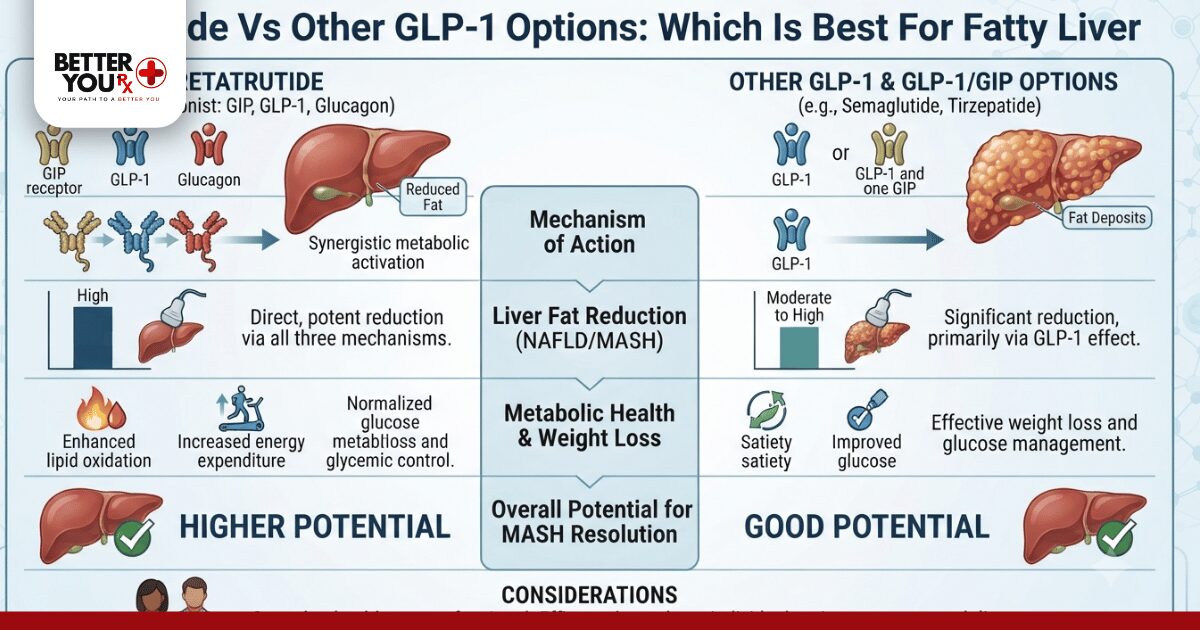
Retatrutide’s triple-receptor mechanism appears to influence liver fat through several connected pathways rather than a single direct action. GLP-1 receptor activation slows digestion and reduces appetite, GIP receptor activation may improve how fat cells store and release energy, and glucagon receptor activation is believed to increase energy expenditure. Together, these actions support the kind of substantial weight loss that research has repeatedly linked to liver fat reduction.
| Mechanism | How It May Support Liver Fat Reduction |
|---|---|
| GLP-1 Receptor Activation | Reduces appetite and slows digestion, supporting sustained calorie reduction |
| GIP Receptor Activation | May improve fat cell metabolism and insulin sensitivity |
| Glucagon Receptor Activation | Believed to increase resting energy expenditure, supporting fat loss |
| Combined Weight Loss Effect | Substantial weight reduction is consistently associated with lower liver fat percentage in research settings |
Providers who discuss Retatrutide for fatty liver with patients typically emphasize that liver fat improvement tracks closely with overall weight loss progress. Patients who lose a meaningful percentage of body weight during treatment tend to show the most noticeable reductions in liver fat on imaging, which is consistent with what clinicians observe across other weight management therapies as well.
Things To Know
- Retatrutide is still considered investigational and has not been established as a first-line treatment specifically for fatty liver disease.
- Liver fat reduction observed in research appears connected to weight loss rather than a standalone liver-targeted effect.
- Most healthcare providers follow established clinical protocols when considering GLP-1 and multi-receptor therapies for patients with metabolic risk factors, including elevated liver fat.
- Any decision to pursue Retatrutide should involve bloodwork, imaging, and ongoing monitoring by a licensed healthcare provider.
- Lifestyle factors such as diet quality, physical activity, and alcohol intake continue to play a meaningful role in liver health regardless of medication use.
Retatrutide Vs Other GLP-1 Options: Which Is Best For Fatty Liver
Choosing between Retatrutide, Tirzepatide, and Semaglutide often comes down to how each medication’s receptor activity aligns with a patient’s specific metabolic profile. Semaglutide, sold under brand names like Ozempic and Wegovy, works through GLP-1 receptor activation alone. Tirzepatide, found in Mounjaro and Zepbound, combines GLP-1 and GIP receptor activity. Retatrutide adds a third receptor, glucagon, to that combination.
| Medication | Receptor Activity | Why It May Matter For Liver Fat |
|---|---|---|
| Semaglutide | GLP-1 only | Reliable weight loss with a well-established research history |
| Tirzepatide | GLP-1 and GIP | Dual mechanism associated with greater average weight loss than GLP-1 alone |
| Retatrutide | GLP-1, GIP, and Glucagon | Triple mechanism under study for potentially greater metabolic and weight loss effects |
Why does the number of receptors matter for liver fat specifically? Because liver fat reduction in research has consistently correlated with the magnitude of weight loss achieved. How this plays out clinically is that medications producing greater average weight loss in trials have also shown greater average reductions in liver fat on imaging.
Which option is best depends on the individual, since Semaglutide may be appropriate for patients seeking a well-established option, while Tirzepatide or Retatrutide may be considered for patients with higher metabolic burden who have not achieved sufficient results with single-receptor therapy. A licensed healthcare provider is best positioned to weigh these factors against a patient’s full medical history.
What Patients And Providers Typically Observe During Treatment
In clinical practice, providers often report that patients pursuing GLP-1 and multi-receptor therapies for metabolic concerns describe steady, gradual changes rather than immediate results.
Liver fat reduction is not something a patient feels day to day. It is typically identified through follow-up imaging or bloodwork ordered by a provider tracking metabolic progress over several months. Patients frequently mention noticing improved energy and reduced appetite before any liver-specific improvement becomes measurable, which aligns with the sequence researchers have observed: weight loss tends to precede detectable liver fat reduction.
This gradual pattern is one reason ongoing provider supervision matters throughout treatment. Adjustments to dosing, monitoring for side effects, and tracking metabolic markers are all part of a structured approach that a qualified provider oversees, rather than something managed independently by the patient.
A common scenario providers describe involves a patient who begins treatment primarily focused on weight loss, only to discover during a routine follow-up that liver enzyme levels have also improved. This kind of secondary finding reinforces why regular check-ins matter, even when a patient feels the treatment is “just” working on appetite or weight. Metabolic health tends to improve across several markers together, and liver fat is often one of the last changes to become visible on imaging, even though the underlying improvement may already be underway.
Getting Started With Retatrutide
For patients whose provider has determined that Retatrutide or a related metabolic medication may be appropriate, Better You Rx operates as a prescription referral service with a licensed contracted dispensing department, connecting patients across the United States with contracted partners who fulfill valid prescriptions issued by a licensed U.S. medical provider. Patients exploring Mounjaro Kwikpen or Zepbound Kwikpen as GLP-1 and dual-receptor options, or Saxenda as an additional weight management alternative, can review these options alongside their provider before deciding on the right fit.
Buy Ozempic Semaglutide from Canada
$327.99
Select options
This product has multiple variants. The options may be chosen on the product page
Buy Wegovy from Canada
Original price was: $609.99.$596.99Current price is: $596.99.
Select options
This product has multiple variants. The options may be chosen on the product page
Every referral requires a valid prescription written in English by a licensed medical doctor practicing in the United States. Once a prescription is confirmed, medications are mailed directly to the patient’s residence for personal use only, with no clinic or office deliveries involved.
To better understand how Retatrutide compares to related therapies, patients often review Retatrutide benefits, explore Retatrutide vs Tirzepatide for a side-by-side breakdown, or read more on what Retatrutide does in the body before discussing options with their provider.
The Bottom Line On Retatrutide For Fatty Liver
Retatrutide for fatty liver represents a genuinely promising area of ongoing research, grounded in the well-established relationship between weight loss, improved insulin sensitivity, and reduced liver fat. The medication’s triple-receptor mechanism sets it apart from earlier GLP-1 therapies, and early data suggests meaningful potential for patients managing both excess weight and elevated liver fat. Because Retatrutide remains investigational, decisions about whether it fits a patient’s treatment plan should always involve a licensed healthcare provider who can evaluate bloodwork, imaging, and overall metabolic history before moving forward.
Frequently Asked Questions
Can retatrutide help fatty liver?
Early research suggests Retatrutide may reduce liver fat, primarily through weight loss and improved insulin sensitivity rather than a direct liver-targeted effect. Ongoing studies continue to evaluate the extent and consistency of this benefit.
Which GLP-1 is best for fatty liver?
No single GLP-1 medication is universally best, since the right option depends on a patient’s metabolic profile and how much weight loss is needed. Tirzepatide and Retatrutide have shown larger average weight loss than Semaglutide alone in research settings.
How quickly does retatrutide work?
Weight loss and metabolic changes typically build gradually over several months of consistent use under provider supervision. Liver fat reduction tends to follow weight loss rather than occurring immediately.
What is the best peptide for fatty liver?
There is no single confirmed “best” peptide for fatty liver, though Retatrutide’s triple-receptor mechanism is being studied for its potential metabolic benefits. A provider can help determine which option aligns with individual health needs.
Does retatrutide help visceral fat?
Early research indicates Retatrutide may reduce visceral fat as part of its broader effect on total body weight and fat distribution. Visceral fat reduction is closely linked to the same metabolic improvements associated with liver fat reduction.
Sources
- Cleveland Clinic, Nonalcoholic Fatty Liver Disease, overview of causes, risk factors, and the connection between liver fat and metabolic health.
- Journal of Hepatology, peer-reviewed research on the relationship between weight loss interventions and liver fat reduction in patients with obesity.
- Mayo Clinic, Obesity and Metabolic Health, overview of how excess weight contributes to insulin resistance and related liver changes.
- American Liver Foundation, patient-facing resource on fatty liver disease progression and lifestyle-related risk factors.
- Diabetes, Obesity and Metabolism, clinical research publication covering multi-receptor peptide therapies and their metabolic effects.
Medical Disclaimer
This content is provided for informational purposes only and is not intended as medical advice. It should not be used to diagnose or treat any health condition and does not replace the guidance of a licensed healthcare provider. Always consult a qualified medical professional before starting, stopping, or changing any medication or treatment plan, including Retatrutide or any related therapy.