Retatrutide Mixing Instructions: What Determines Your Provider’s Protocol

Medically Reviewed by Dr. Priya Nair, MD | Updated: July 2026

Last Updated: July 24, 2026

Retatrutide mixing instructions are not something patients should follow from a blog post or a social media video. Because Retatrutide is still an investigational compound, the exact reconstitution ratio, dosing volume, and preparation steps a provider selects depend on the specific vial concentration, the patient’s titration stage, and clinical judgment, which means there is no single universal protocol to publish.

Key Takeaways

  • Retatrutide mixing instructions vary by vial strength, prescribed dose, and the provider’s titration plan, so no fixed ratio applies to every patient
  • Reconstitution is a clinical step that should be performed or directly supervised by a licensed provider, not self-taught from online sources
  • Vial concentration, diluent volume, and storage handling all influence how a compound is prepared before use
  • Retatrutide remains investigational, and dosing figures referenced online are research points requiring provider oversight, not do-it-yourself targets
  • Providers typically walk patients through preparation during an in-office visit or a supervised telehealth consultation before any at-home use begins

What Retatrutide Mixing Instructions Actually Depend On

Patients searching for Retatrutide mixing instructions are usually hoping for a single, universal answer: a fixed amount of diluent, a fixed number of units to draw. That answer does not exist, and any source offering one identical protocol for every patient should be treated with caution.

Reconstitution protocols are built around several variables that differ from one prescription to the next. The vial’s powder concentration is the starting point, since manufacturers can package the same compound at different strengths. The prescribed dose, which shifts as a patient moves through a titration schedule, changes how much diluted solution is needed per injection. Storage conditions, syringe type, and the interval between reconstitution and first use also factor into what a provider recommends.

This is exactly why generic mixing charts circulating online create more confusion than clarity. A ratio that applies to one vial strength can produce an entirely different concentration in another, and a patient following the wrong chart risks a dosing error that has nothing to do with the medication itself and everything to do with mismatched preparation.

Retatrutide Mixing Instructions

Why Reconstitution Requires Provider Oversight

Reconstitution is the process of converting a lyophilized, or freeze-dried, powder into a liquid solution ready for injection. It sounds mechanical, and in a clinical setting it is a routine step performed daily. The reason it stays in provider hands rather than becoming a home guide is accuracy.

A small miscalculation in diluent volume changes the final concentration of every subsequent dose drawn from that vial. Because Retatrutide is still being studied and does not yet carry standardized consumer labeling the way long-approved medications do, providers rely on current research protocols and manufacturer-specific vial data rather than a fixed public standard. That is a meaningful difference from medications that have years of consistent, standardized home-use instructions behind them.

Providers who prescribe Retatrutide typically walk a patient through the entire preparation process in person or through a supervised telehealth session before the patient ever handles a vial independently. This mirrors how most healthcare providers introduce any new injectable therapy: demonstration first, supervised practice second, independent use only once competency is confirmed.

Factor Why It Changes the Protocol
Vial concentration Different manufacturers or batches may package the compound at different strengths
Titration stage Early low-dose phases require smaller draw volumes than later maintenance phases
Diluent type The specific diluent used affects stability and final solution concentration
Storage timeline How long a reconstituted vial remains stable affects how it should be handled after mixing
Syringe increments Providers select syringe sizes that allow accurate measurement of small volume differences

Things To Know

Patients often assume that because a compound arrives as a powder requiring reconstitution, the process must be identical to other injectable medications they have used before. That assumption is where most confusion starts. Every compound has its own stability profile, its own recommended diluent, and its own handling window once mixed. A protocol that worked for a different medication should never be applied to Retatrutide without direct provider confirmation.

It also helps to know that reconstitution is only one part of a broader preparation and administration plan. Providers typically pair mixing guidance with instructions on storage temperature, injection site rotation, and what to do if a dose looks visibly different than expected, such as cloudiness or discoloration. None of these details are meant to be pieced together from separate sources. A single conversation with a prescribing provider covers all of it at once, which is part of why that conversation is not optional.

Retatrutide Mixing Instructions and the Broader Titration Picture

Retatrutide dosing research generally references figures in the 2 milligram to 12 milligram range across a gradual titration schedule, with providers increasing the dose incrementally over weeks or months. Each step in that schedule can correspond to a different reconstituted concentration, which is another reason mixing instructions are not static.

A patient beginning at a lower research reference point may be working with a more diluted solution than a patient several months into treatment at a higher maintenance dose. Providers recalculate preparation guidance at each titration step rather than expecting one mixing instruction to carry a patient through the entire course of treatment.

Titration Phase General Purpose Who Determines the Protocol
Initial phase Allows the body to adjust with minimal side effects Prescribing provider, based on baseline health and tolerance
Escalation phase Gradually increases dose toward a target level Provider, reassessed at scheduled follow-up visits
Maintenance phase Sustains the dose associated with ongoing research outcomes Provider, adjusted only if clinically indicated

Patients working with a licensed provider through a structured program often report that the biggest source of early anxiety is not the injection itself but uncertainty about preparation. That uncertainty tends to resolve quickly once a provider demonstrates the process directly and answers questions specific to the patient’s own vial and dose, rather than the patient trying to reverse-engineer instructions from unrelated sources.

Why, How, and Which Approach Applies to You

Why does a single set of Retatrutide mixing instructions not exist online. Because vial strength, dose, and titration stage all shift the math, and because the compound’s investigational status means there is no long-standing, standardized consumer protocol the way there is for older, fully approved medications.

How do providers determine the right protocol for an individual patient. They start with the vial’s labeled concentration, confirm the patient’s current titration stage, calculate the diluent volume needed to reach the prescribed dose, and then walk the patient through the physical steps during a supervised session, adjusting as the treatment plan progresses.

Which approach is best for a patient trying to understand their own preparation needs. The only reliable approach is direct, ongoing communication with the prescribing provider rather than relying on general online guidance, since even well-intentioned public information cannot account for the specific vial and dose a particular patient has been prescribed.

Patients interested in how Retatrutide compares to other GLP-1 based options may find it useful to review Retatrutide vs Tirzepatide or explore the broader Retatrutide benefits that research has associated with the compound so far. Understanding Retatrutide side effects alongside preparation questions gives patients a fuller picture before starting any treatment plan.

For patients further along in a GLP-1 treatment journey, or comparing options with a provider, medications such as Mounjaro, Zepbound, and Saxenda are among the approved alternatives providers may discuss depending on individual treatment goals.

Better You Rx operates as a prescription referral service with a licensed contracted dispensing department, connecting patients with providers who can walk through preparation and dosing questions directly rather than leaving patients to interpret mixing instructions on their own.

Why Reconstitution Requires Provider Oversight

Bringing It All Together

Retatrutide mixing instructions cannot be reduced to a single chart because the compound’s investigational status, varying vial concentrations, and individualized titration schedules all shape what a correct protocol looks like for any given patient. The safest and most accurate path forward is a direct conversation with a licensed provider who can confirm the specific numbers that apply to a particular prescription, rather than piecing together guidance from general sources.

What is the correct ratio for Retatrutide mixing instructions?

There is no single correct ratio, since it depends on vial concentration and prescribed dose. A provider calculates this individually for each patient rather than applying a universal number.

Can I follow Retatrutide mixing instructions I found online?

No, general online instructions should not replace provider guidance. Vial strengths and dosing schedules vary, so a mismatched protocol can lead to an inaccurate dose.

Who should perform Retatrutide reconstitution?

A licensed provider should perform or directly supervise the process. This ensures the correct diluent volume and concentration for the specific vial being used.

Does the mixing protocol change during treatment?

Yes, it typically changes as a patient moves through titration phases. Higher maintenance doses often require different preparation than the initial low-dose phase.

Why does Retatrutide not have standardized public mixing instructions?

Because it remains investigational and lacks long-term standardized consumer labeling. Providers rely on current research protocols and vial-specific data instead of a fixed public standard.

Medical Disclaimer: This content is provided for informational purposes only and is not a substitute for professional medical advice, diagnosis, or treatment. Retatrutide is an investigational compound, and any dosing or preparation information referenced here reflects general research context, not individualized medical guidance. Always consult a licensed healthcare provider before starting, adjusting, or preparing any medication.

Sources:

  1. New England Journal of Medicine — Clinical trial data on triple agonist GLP-1/GIP/glucagon receptor compounds, including Retatrutide, and associated metabolic outcomes.
  2. The Lancet — Peer-reviewed research on investigational incretin-based therapies and phased dose-escalation study designs.
  3. Mayo Clinic — Patient education overview of injectable medication preparation, reconstitution principles, and provider-supervised administration.
  4. Journal of Clinical Endocrinology and Metabolism — Research on titration protocols and safety monitoring for GLP-1 receptor agonist therapies.
  5. American Diabetes Association Clinical Guidelines — Established clinical framework for provider-directed injectable therapy initiation and dose adjustment.
 

What Determines Retatrutide Syringe Type In A Treatment Plan?

Medically Reviewed by Dr. Amanda Reyes, MD | Last Updated: July 2026

Retatrutide syringe type is determined by the prescribing provider and the licensed contracted dispensing department handling a patient’s treatment, based on the prescribed dose and formulation rather than patient preference. Since Retatrutide remains an investigational compound, every detail of how it is dispensed and administered is handled within a structured, provider-directed process. Understanding who makes these decisions, and why, helps set realistic expectations for anyone moving through a Retatrutide-based treatment plan.

Key Takeaways

  • Retatrutide syringe type is selected by a prescribing provider and licensed contracted dispensing department, not chosen independently by patients
  • Syringe selection depends on factors like prescribed dose, formulation, and delivery method determined during the prescribing process
  • Patients never handle reconstitution or draw-up steps themselves; all administration specifics are managed within the referral and dispensing process
  • General medical syringe types vary by volume and gauge, though the specific syringe type used in any treatment is a clinical decision, not a patient choice
  • Questions about administration supplies should always go to the prescribing provider or dispensing team, not general product research

Why Syringe Selection Is Not A Patient Decision

Syringe type, much like dose and titration schedule, falls under the clinical decisions a provider and dispensing team make together rather than something a patient selects independently. Because Retatrutide is investigational, the entire administration process, including anything related to syringe type or delivery format, is coordinated through the prescribing provider and the licensed contracted dispensing department fulfilling that prescription.

This structure exists to reduce error and ensure consistency. A provider considers the prescribed dose, the formulation dispensed, and general delivery requirements before any administration supply decision is finalized. Patients are not expected to research or select this information on their own, and are always encouraged to direct supply or administration questions to their care team rather than general sources.

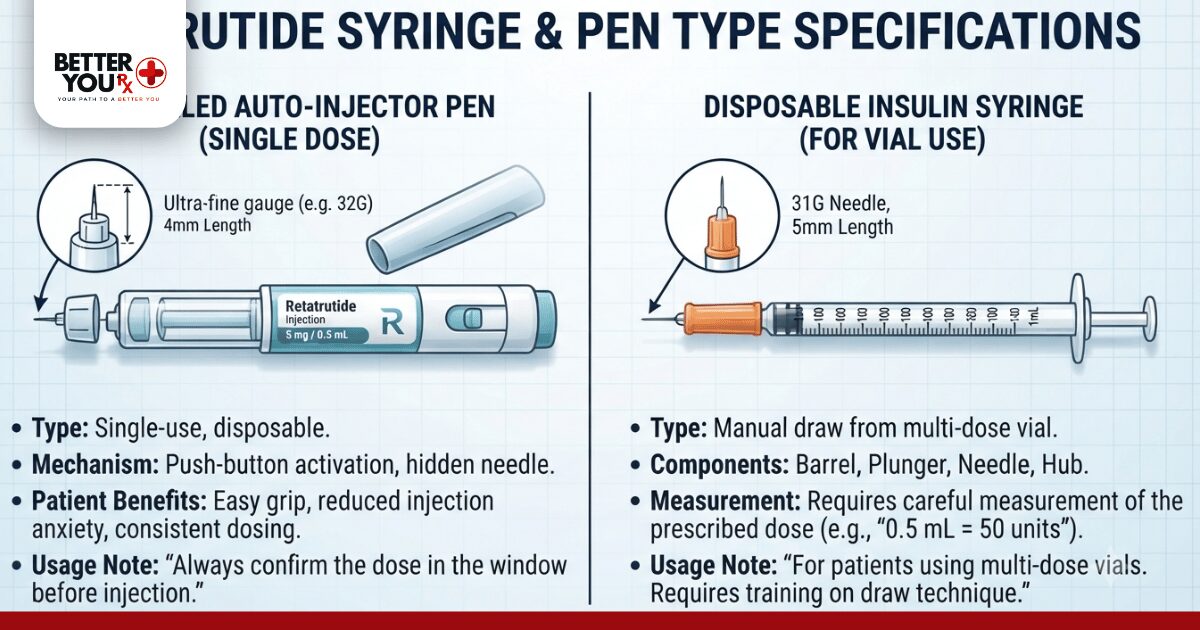
Retatrutide Syringe TypeGeneral Syringe Types Used In Medical Settings

Outside the context of any specific medication, syringes generally fall into a few broad categories based on their construction and typical use. This is general medical background information and is not intended as guidance for self-administering Retatrudide or any other specific medication.

Syringe Type Common Volume Range Typical General Use
Insulin Syringe Small volume, fine gradations Precise small-volume dosing in diabetes management
Standard Hypodermic Syringe Small to moderate volume General injectable medication administration
Oral/Dosing Syringe Variable volume, no needle Measuring liquid oral medications

The specific syringe type used for any patient’s Retatrutide treatment is determined separately by the prescribing provider and dispensing department, and is not something this general breakdown is meant to apply to directly.

Things To Know

  • Retatrutide syringe type is one of several administration details coordinated entirely between the prescriber and dispensing department
  • Patients are not expected to select or source their own administration supplies independently
  • Because Retatrutide is investigational, protocols around dispensing and delivery may be refined as clinical understanding develops
  • Questions about syringe type or supplies should always be directed to the prescribing provider or dispensing team, not general online research
  • Providers commonly report that patients feel more confident in their treatment plan once they understand which decisions are handled clinically versus which are part of general patient education

How Providers And Dispensing Teams Coordinate This Process

In clinical practice, the prescribing provider communicates the prescribed dose and formulation to the licensed contracted dispensing department, which then prepares the prescription according to that order. Any detail related to Retatrutide syringe type is part of this internal coordination rather than something communicated to patients as a decision point they need to make.

Most healthcare providers follow established clinical protocols when coordinating with dispensing teams, prioritizing consistency and patient safety over individual preference in these administration-related decisions. Patients typically report feeling reassured once they understand this coordination happens behind the scenes, rather than being something they need to manage or research independently.

Patients exploring Retatrutide as part of a broader metabolic health conversation may also want to review how it compares with other options like Mounjaro or Zepbound, since delivery formats and provider protocols can differ meaningfully between compounds.

Why This Structure Matters For Investigational Compounds

Because Retatrutide has not completed the same regulatory pathway as long-established medications, providers and dispensing departments take a more structured approach to every detail of a patient’s treatment, including anything connected to Retatrutide syringe type. This is part of a broader pattern seen across newer GLP-1, GIP, and glucagon receptor compounds, where dispensing protocols are still being refined as clinical experience grows.

This structured approach is one reason patients are not given independent instructions on administration supplies. Instead, the prescribing provider and dispensing department manage these details as part of the overall treatment plan, updating their internal protocols as needed based on evolving clinical guidance.

For a broader understanding of how Retatrutide compares to other established options, Retatrutide vs Tirzepatide and what Retatrutide does in the body offer useful context, alongside a closer look at Retatrutide side effects for patients building a fuller picture before starting treatment.

Working With Better You Rx’s Referral Process

Better You Rx operates as a prescription referral service connecting patients with providers and a licensed contracted dispensing department. Within this process, any decision tied to Retatrutide syringe type, dose, or delivery format is handled entirely by the prescriber and dispensing team, not by the patient or by general product research. Patients are encouraged to bring any supply-related questions directly to their care team during the referral process.

Patients interested in related treatment options can also review Saxenda as part of a broader conversation with their provider about which metabolic health path fits their individual needs.

General Syringe Types Used In Medical Settings
Bringing It All Together

Retatrutide syringe type is a clinical detail managed entirely by the prescribing provider and licensed contracted dispensing department, not a decision patients need to research or make independently. Understanding this distinction helps patients focus their attention on the parts of treatment that matter most to them, like communicating openly with their provider about tolerability and response, while trusting that administration logistics are being handled with appropriate clinical oversight.

Frequently Asked Questions

What Are The Three Types Of Syringes?

Insulin, standard hypodermic, and oral dosing syringes are the three general categories. Each differs by volume range and typical use, though specific medication syringe types are always determined by a prescriber.

Who Determines The Syringe Type Used For Retatrutide?

The prescribing provider and dispensing department make this decision together. It is based on the prescribed dose and formulation, not patient preference.

Does Syringe Type Affect How Retatrutide Is Stored?

Storage requirements are determined separately by the dispensing department. Patients receive specific storage guidance directly from their care team rather than general sources.

Is Syringe Type The Same For Every Retatrutide Dose?

Not necessarily, since dose and formulation can vary by patient. The dispensing department adjusts administration details according to each individual prescription.

Can Patients Request A Specific Syringe Type?

Any such request should go through the prescribing provider. Final decisions depend on clinical appropriateness rather than patient preference alone.

Sources

  1. New England Journal of Medicine — Clinical research on triple-receptor agonist compounds and their metabolic effects.
  2. The Lancet Diabetes & Endocrinology — Peer-reviewed data on GLP-1, GIP, and glucagon receptor co-agonism in metabolic treatment research.
  3. Mayo Clinic — Overview of investigational weight management medications and general dosing principles.
  4. Cleveland Clinic — Patient education resources on GLP-1 and multi-receptor agonist therapies.
  5. Journal of Clinical Endocrinology & Metabolism — Research on titration strategies and administration protocols in metabolic compound studies.

Medical Disclaimer: This content is provided for informational purposes only and is not intended as medical advice. It does not replace consultation with a licensed healthcare provider. Anyone considering Retatrutide or any other treatment should speak with a qualified medical professional regarding dosing, administration, and supplies before starting, adjusting, or discontinuing any medication.


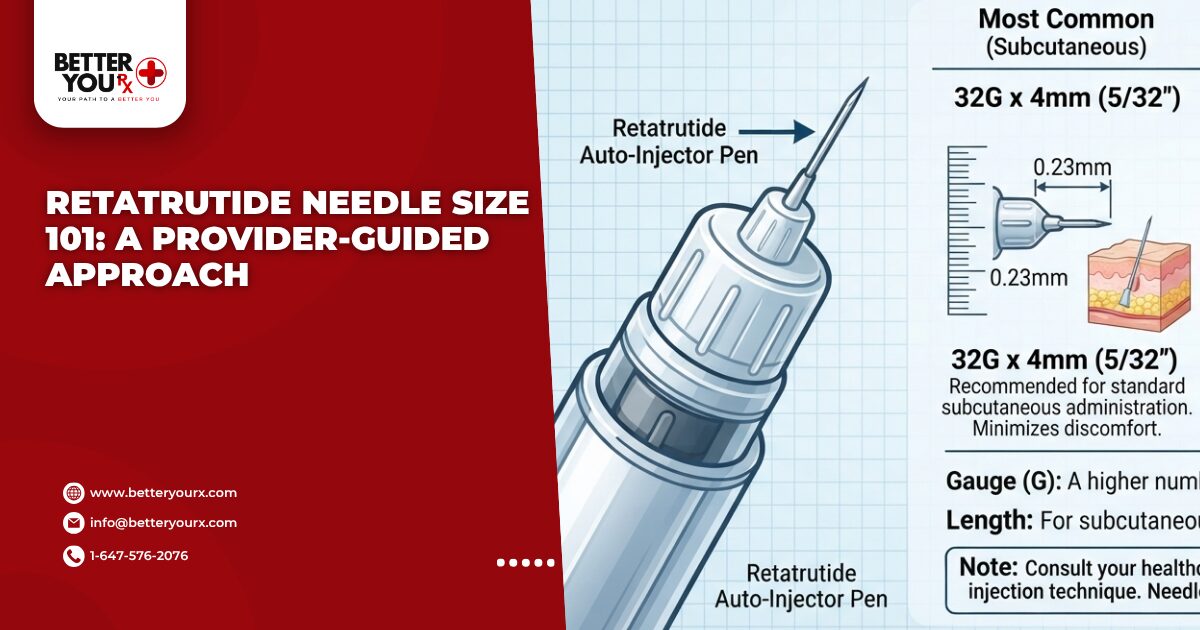
Retatrutide Needle Size 101: A Provider-Guided Approach

Medically Reviewed by Dr. Amanda Reyes, MD | Last Updated: July 2026

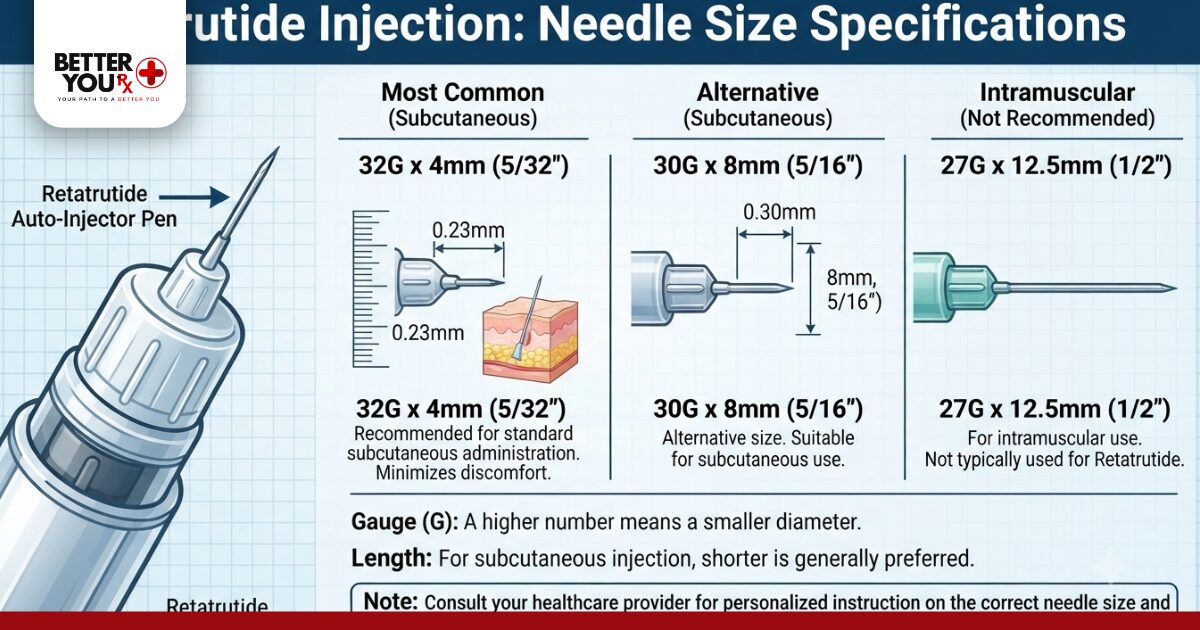
Retatrutide needle size is not something patients look up and select independently. A licensed provider determines the appropriate equipment based on the specific formulation being used, the patient’s current dosing stage, and other individual clinical factors. Because Retatrutide is still an investigational compound, there is no standardized product insert covering equipment the way approved medications typically have, which is exactly why this decision stays with the prescribing provider rather than general online resources.

Key Takeaways

  • Retatrutide needle size is selected by a licensed provider based on formulation, dosing stage, and individual patient needs
  • No standardized equipment sheet exists for Retatrutide since it remains an investigational compound
  • Providers typically walk patients through administration details during consultation rather than relying on generic instructions
  • Needle gauge, injection depth, and supply sourcing are all decisions that stay within the provider’s clinical oversight
  • Patients benefit most by treating their provider as the single source of truth for equipment and technique questions

Why This Decision Belongs To A Provider, Not A Search Engine

It’s a natural instinct to search for practical details like gauge or depth before starting any injectable treatment. But with an investigational compound like Retatrutide, those specifics vary from patient to patient and even from one dosing stage to the next. A provider factors in the formulation being dispensed, how far along a patient is in their titration schedule, and any individual anatomical or comfort considerations before recommending equipment.

This is a meaningful difference from approved, widely prescribed injectables that come with consistent, standardized patient guides. Retatrutide’s investigational status means that guidance is built around the individual, not a printed instruction sheet meant for a general population.

A Look At What Providers Actually Weigh

Factor Why It Matters Who Decides
Formulation type Different preparations may call for different equipment Prescribing provider
Current dosing stage Titration phase can affect volume and technique Prescribing provider
Patient anatomy and comfort Individual differences influence what works best Provider, with patient input
Prior tolerability Past experience shapes ongoing recommendations Prescribing provider

Providers use this kind of framework as a starting point, then adjust based on how each patient responds throughout treatment.

Things To Know

  • Retatrutide needle size is never a fixed number patients can apply universally to their own situation
  • Investigational compounds lack the standardized patient literature that comes packaged with approved medications
  • Providers often cover equipment questions in the same visit where dosing schedules are discussed
  • Patients frequently report feeling more confident once they have a direct provider relationship to ask these questions, rather than piecing together answers from scattered sources
  • Most healthcare providers follow established clinical protocols when guiding injectable treatment planning, prioritizing individualized safety over generic assumptions

How This Compares To Approved GLP-1 Options

Patients who have used approved medications such as Ozempic, Trulicity, or Wegovy are often used to clear, standardized instructions included with the product. Retatrutide doesn’t follow that same model yet, since it remains under clinical investigation. That distinction matters because it shifts the responsibility for administration guidance almost entirely onto the provider-patient relationship rather than a printed insert.

Providers prescribing investigational compounds tend to spend more time on this kind of individualized education specifically because there isn’t a one-size-fits-all sheet to hand out. This is one more reason ongoing, open communication with a provider carries more weight with a compound like this than it might with a long-established medication.

Retatrutide Needle SizeWhat A Typical Consultation Looks Like
In practice, providers commonly walk new patients through every practical detail of their investigational treatment plan during the first consultation, equipment included, so nothing is left to guesswork. Patients often mention that having this laid out clearly upfront, instead of trying to piece it together from general searches, gives them more confidence heading into treatment. Providers may revisit these same details at later visits, since needs can shift as a patient moves through different stages of titration.

This reflects a broader pattern in metabolic health care: consistent, individualized provider communication tends to produce smoother experiences than relying on assumptions borrowed from other medications. Patients researching Retatrutide’s benefits or comparing Retatrutide versus Tirzepatide will notice this same individualized approach applies across nearly every practical aspect of care, not only dosing.

Where To Direct Supply And Sourcing Questions

Questions about where to obtain appropriate injection supplies should go to the prescribing provider or treatment team, not general retailers or unrelated sources. Providers typically coordinate supply needs as part of the broader treatment plan, so patients aren’t left guessing at specifications that may not even apply to their particular formulation or stage.

Better You Rx functions as a prescription referral service with a licensed contracted dispensing department, connecting patients with providers who manage treatment planning, including equipment guidance, on an individualized basis. Patients weighing other options can also look into Zepbound or Mounjaro while discussing the full range of provider-directed choices available to them.

For more context on how Retatrutide fits into an overall treatment picture, it may help to review what Retatrutide does in the body and documented Retatrutide side effects, both useful starting points for a more informed provider conversation.

How This Compares To Approved GLP-1 Options

The Bottom Line On Equipment Decisions

Every practical question tied to Retatrutide needle size, whether it’s gauge, depth, or where to source supplies, comes back to the same answer: a licensed provider makes this call directly with each patient. Investigational compounds require a degree of individualized oversight that generic instructions simply can’t replace safely. Patients who keep communication open with their provider throughout treatment tend to move through these details with far more clarity than those trying to apply standardized answers to a plan that isn’t standardized at all.

Anyone starting or continuing Retatrutide treatment is best served by treating their provider as the go-to source for every equipment and technique question, keeping their plan safe, appropriate, and built around their own needs.

Frequently Asked Questions

What Gauge Needle For Retatrutide?

This is determined by the prescribing provider. Since Retatrutide is investigational, gauge selection depends on the individual’s formulation and treatment plan rather than a general standard.

How Deep Do You Inject Reta?

Injection depth is a provider-directed decision. Patients should discuss technique directly with their provider instead of relying on general online guidance.

Where To Get Needles For Retatrutide?

Supply sourcing goes through the prescribing provider or treatment team. They coordinate equipment as part of an individualized plan.

What Size Needle For GLP1?

Needle size varies by medication and provider protocol. Approved GLP-1 medications often include standardized supplies, while investigational compounds require direct provider input.

What Is 2.5 Units On A Syringe?

This refers to a volume marking on the syringe barrel. A provider explains exact measurements relevant to each patient’s individual dosing plan.

Sources

  1. New England Journal of Medicine — Clinical research on injectable metabolic compounds and administration protocols.
  2. The Lancet Diabetes & Endocrinology — Peer-reviewed data on GLP-1 and multi-receptor agonist administration practices.
  3. Mayo Clinic — Patient education on injectable medication administration and provider-guided treatment planning.
  4. Cleveland Clinic — Overview of individualized treatment approaches for metabolic health medications.
  5. Journal of Clinical Endocrinology & Metabolism — Research on investigational compound protocols and clinical oversight standards.

Medical Disclaimer: This content is provided for informational purposes only and is not intended as medical advice. It does not replace consultation with a licensed healthcare provider. Anyone considering Retatrutide or any other treatment should speak with a qualified medical professional regarding administration, equipment, and dosing before starting, adjusting, or discontinuing any treatment.


Retatrutide Coffee Caffeine: What Happens When You Mix Your Morning Cup With Research-Phase Treatment

Retatrutide coffee caffeine questions come up constantly among people following triple-agonist research protocols, and theshort answer is that caffeine is not off-limits, but it can intensify the same side effects Retatrutide is already known for. Nausea, a racing heart, and appetite suppression can all get stronger when caffeine is added on top of a compound that already slows digestion and affects hunger signals.

Retatrutide, a compound still under research and provider-supervised evaluation for its effects on Glucagon-like peptide-1, GIP, and glucagon receptors, is administered only under professional oversight, and none of the information below should be used to self-manage dosing or treatment decisions.


Key Takeaways

  • Caffeine is not banned during Retatrutide research protocols, but it can amplify nausea, jitteriness, and appetite suppression
  • The so-called “2 hour coffee rule” is a spacing habit some people use, not a formal clinical requirement
  • Tea is generally gentler on the stomach than coffee for people managing Retatrutide-related nausea
  • Caffeine does not meaningfully affect thyroid function on its own, though thyroid health is still worth monitoring during any metabolic treatment
  • Alcohol, greasy foods, and excessive caffeine are the three things people managing Retatrutide side effects report struggling with most

Why Retatrutide Coffee Caffeine Combinations Feel Different Than They Used To

Retatrutide slows gastric emptying, meaning food and liquid sit in the stomach longer than they normally would. Caffeine, on its own, stimulates the release of stomach acid and speeds up gut motility in ways that can clash with that slower digestion. People who never had an issue with a morning espresso before starting Retatrutide sometimes find that the same cup now triggers acid reflux, queasiness, or an uncomfortably full feeling.

There is also a compounding effect on appetite. Both caffeine and Retatrutide can suppress hunger independently. Combined, some people notice they barely feel like eating at all in the first few hours of the day, which can lead to skipped meals, low blood sugar sensations, and fatigue if it happens repeatedly.

Heart rate is another factor worth understanding. Retatrutide research has tracked mild increases in heart rate in some participants, and caffeine is a known stimulant that raises heart rate on its own. Stacking the two does not automatically cause harm for most healthy adults, but for anyone who already notices palpitations or lightheadedness, reducing caffeine intake is a reasonable and commonly recommended adjustment.

Things To Know About Caffeine While On Retatrutide

  • Caffeine sensitivity often increases during the first four to eight weeks of a research protocol, then tends to level out as the body adjusts
  • Cold brew and espresso are more concentrated than drip coffee, so smaller amounts can still deliver a large caffeine dose
  • Energy drinks combine caffeine with sugar and other stimulants, making them a less predictable choice than plain coffee or tea
  • Hydration matters more than usual, since caffeine has a mild diuretic effect and Retatrutide can already reduce overall fluid intake if appetite and thirst cues are dulled
  • Providers overseeing Retatrutide research protocols generally suggest tracking symptoms alongside caffeine intake rather than eliminating it outright, since individual tolerance varies considerably

The Retatrutide Coffee Caffeine Timing Debate: What The “2 Hour Rule” Actually Means

The 2 hour coffee rule is a habit that circulated among people managing GLP-1 and multi-agonist treatments, and it generally means waiting roughly two hours after a dose or after the first meal of the day before drinking coffee, rather than having caffeine on a completely empty, medicated stomach. It is not a formal medical guideline published anywhere, and no clinical protocol requires it. That said, the reasoning behind it holds up reasonably well: caffeine on an already slow-emptying, possibly still-adjusting stomach tends to produce sharper nausea than caffeine taken after some food has settled.

People who find mornings rough sometimes shift their first coffee to mid-morning instead of first thing, pairing it with a small, bland snack like crackers or toast. Providers who work with Retatrutide research participants often describe this as one of the more effective, low-effort adjustments patients make once nausea becomes a pattern rather than an occasional issue.

Coffee, Tea, Or Something Else: Which Option Actually Works Best

Beverage Typical Caffeine Content How It Tends To Sit With Retatrutide
Black coffee 95–165 mg per 8 oz cup Can trigger reflux and nausea on an empty stomach; better tolerated after food
Green tea 25–45 mg per 8 oz cup Gentler on digestion, lower caffeine load, often the easiest option
Herbal tea (caffeine-free) 0 mg Safest choice for people with pronounced nausea or reflux
Cold brew 150–200+ mg per 8 oz cup Higher concentration makes overstimulation more likely
Espresso 60–75 mg per 1 oz shot Small volume but very concentrated; easy to underestimate the dose

Tea is generally the more forgiving option because it delivers less caffeine per serving and contains compounds that are typically easier on an already sensitive stomach. Herbal, caffeine-free varieties are the gentlest choice of all and are often recommended first for anyone dealing with morning nausea. Coffee is not something people need to give up entirely, but shifting to a smaller cup, adding it later in the morning, or diluting it with more water are all practical middle-ground options.

Why does the type of beverage matter this much? Because Retatrutide’s effect on digestion means the stomach is doing more work with less predictable timing, and caffeine’s stimulating properties interact directly with that slower system. How this plays out varies by person, which is why tracking symptoms for the first couple of weeks tends to be more useful than following a blanket rule. Which option is best genuinely depends on individual tolerance, but starting with tea or a smaller, later coffee and adjusting from there is the approach most people land on successfully.

Patients navigating Retatrutide research protocols often report that the first two to three weeks are the period where caffeine sensitivity is most noticeable, and that small changes like switching to tea or moving coffee later in the day make a meaningful difference before the body adjusts further.

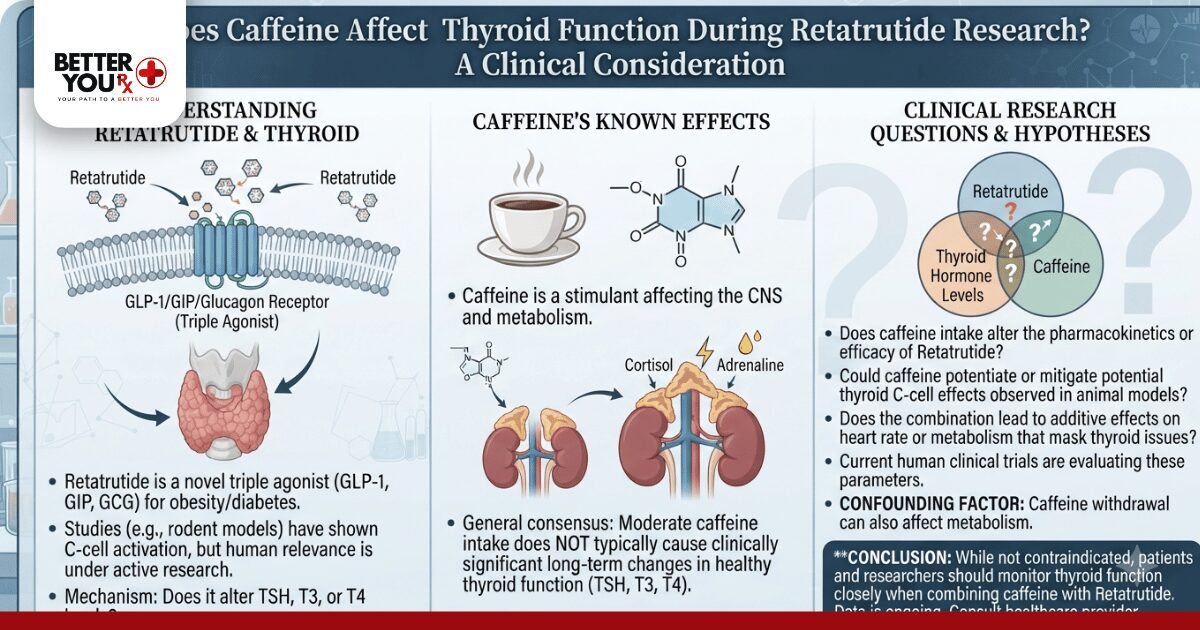
Does Caffeine Affect Thyroid Function During Retatrutide Research

Does Caffeine Affect Thyroid Function During Retatrutide Research

This question comes up often because thyroid health is part of the broader conversation around metabolic treatments. Caffeine itself does not meaningfully suppress or overstimulate thyroid hormone production in typical dietary amounts. Some research has suggested caffeine can modestly reduce the absorption of thyroid medication if taken too close together, which is a timing issue rather than a direct effect on the thyroid gland itself. For anyone with an existing thyroid condition, spacing caffeine and thyroid medication by at least 30 to 60 minutes is a standard, widely accepted practice, according to information published by Cleveland Clinic.

This aligns with established clinical understanding of how caffeine interacts with hormone-related medications generally, and most healthcare providers overseeing Retatrutide research protocols apply the same general caution here that they would for any other metabolic or hormone-adjacent treatment.

What To Avoid While Managing Retatrutide Side Effects

Category Why It Tends To Cause Problems Better Alternative
Alcohol Compounds nausea and dehydration risk Sparkling water with citrus
Greasy or fried foods Digests slowly, worsens fullness and reflux Lean proteins, steamed vegetables
High caffeine intake Stacks stimulant effects with appetite suppression Smaller portions, later timing
Carbonated sugary drinks Can increase bloating and discomfort Herbal tea, plain or infused water
Very large meals Overwhelms a slower-emptying stomach Smaller, more frequent meals

Practical Tips For Managing Coffee And Caffeine Day To Day

Start the day with water before coffee, even a small glass, since Retatrutide can dull thirst cues and mild dehydration makes nausea worse. Pair the first cup of coffee with something small in the stomach rather than drinking it completely fasted. Keep an eye on total daily caffeine from all sources, including chocolate and certain medications, since it adds up faster than people expect. If jitteriness or a racing heart shows up consistently, cutting the daily amount in half for a week is a reasonable, low-risk adjustment to try before assuming it is unrelated to caffeine at all.

Anyone exploring metabolic or weight-related treatment options can review current offerings such as Zepbound, Mounjaro, or Ozempic to understand how different approaches compare. For more background specific to this compound, Retatrutide side effects, Retatrutide vs Tirzepatide, and Retatrutide benefits go into more detail on related questions people frequently ask.

Better You Rx operates as a prescription referral service with a licensed contracted dispensing department, connecting patients across the United States with prescriptions issued by their own licensed medical doctor. Prescriptions must be written in English by a physician practicing within the United States, and all orders are mailed directly to the patient’s residence for personal use only.

Retatrutide Coffee Caffeine

Bottom Line On Retatrutide Coffee And Caffeine Habits

Coffee and tea do not need to disappear from a morning routine just because Retatrutide is part of the picture, but paying attention to timing, portion size, and beverage choice makes a real difference in how the stomach handles both. Tea tends to be the gentler option, spacing caffeine away from doses and empty-stomach moments reduces nausea, and keeping total caffeine intake moderate protects against compounding appetite suppression and heart rate changes. Small, consistent adjustments around Retatrutide coffee and caffeine habits tend to matter far more than cutting caffeine out completely.

Frequently Asked Questions

Can I drink caffeine on Retatrutide?

Yes, in moderation. Caffeine is not prohibited, but it can intensify nausea, appetite suppression, and heart rate increases, so smaller amounts and later timing tend to work best.

What is the 2 hour coffee rule?

It means waiting about two hours after a dose or first meal before coffee. It is a common personal habit, not an official medical guideline, and it helps reduce nausea on an already slower digestive system.

Can you drink tea on Reta?

Yes, tea is usually easier to tolerate than coffee. Green tea and herbal, caffeine-free varieties tend to sit better with a stomach that is digesting more slowly.

Can caffeine affect your thyroid?

Not directly in normal amounts. Caffeine can reduce absorption of thyroid medication if taken too close together, so spacing them by 30 to 60 minutes is generally recommended.

What to avoid on Retatrutide?

Alcohol, greasy foods, and excessive caffeine top the list. These tend to worsen nausea, reflux, and dehydration more than most other dietary choices.

Medical Disclaimer: This content is for informational purposes only and is not a substitute for professional medical advice, diagnosis, or treatment. Retatrutide remains under research and provider-supervised evaluation. Always consult a licensed healthcare provider before starting, stopping, or adjusting any treatment, medication, or supplement.

Sources:

  1. Mayo Clinic — Overview of caffeine’s effects on digestion, heart rate, and hydration.
  2. Cleveland Clinic — Guidance on thyroid function, hormone interactions, and medication timing.
  3. Harvard Health Publishing — Research summaries on GLP-1 and multi-receptor agonist compounds and gastrointestinal side effects.
  4. American Heart Association — Information on caffeine’s cardiovascular effects and general intake guidance.
  5. The Journal of Clinical Endocrinology & Metabolism — Peer-reviewed research on incretin-based and multi-agonist metabolic treatments.


Retatrutide Hydration Needs: What Research Participants Should Know

Written by Amanda Cole, RD, Clinical Content Writer  |  Medically Reviewed by Dr. Priya Nandakumar, MD  |  Updated: July 2026

Last Updated: July 28, 2026

Retatrutide hydration needs typically increase during dose titration because the medication’s effect on appetite and digestion slows gastric emptying and frequently triggers nausea, vomiting, or diarrhea. Because Retatrutide remains an investigational triple agonist studied for weight management, every fluid and electrolyte recommendation here is a research reference point that should be reviewed with a supervising physician, not a self-directed protocol.

Key Takeaways

  • Retatrutide hydration needs often rise during the first few weeks after a dose increase, when gastrointestinal side effects are most pronounced
  • Slowed gastric emptying is the main reason thirst cues can feel unreliable during titration phases
  • Plain water, electrolyte solutions, and broth-based fluids each serve a different hydration purpose
  • Persistent vomiting, dark urine, dizziness, or a rapid heartbeat are signs that fluid loss needs medical attention
  • All dosing figures referenced in Retatrutide research are provider-supervised checkpoints, not self-administration guidance

Why Retatrutide Hydration Needs Increase During Titration

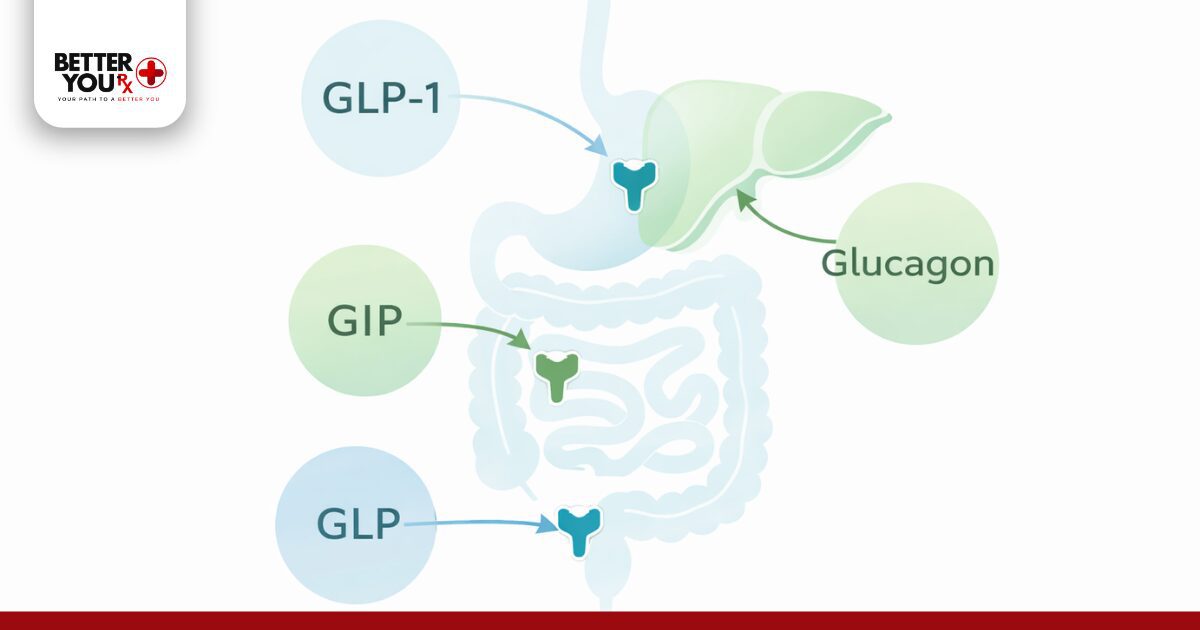
Retatrutide belongs to a newer class of investigational therapies that act on GLP-1, GIP, and glucagon receptors simultaneously. This triple mechanism is part of why appetite suppression and gastric slowing are more pronounced than with single-receptor medications. When the stomach empties more slowly, nausea becomes more likely, and nausea often reduces how much fluid a person voluntarily drinks at exactly the point when the body needs more of it.

Diarrhea and vomiting, when they occur, compound the problem by removing fluid and electrolytes directly rather than simply reducing intake. This combination, reduced drinking plus increased fluid loss, is the core reason Retatrutide hydration needs shift upward during active titration phases rather than staying constant throughout a research protocol.

Patients enrolled in GLP-1 and GIP receptor agonist research programs frequently report that the first ten to fourteen days after a dose increase are when thirst signals feel muted or delayed, and supervising providers often note this pattern during routine check-ins. Most healthcare providers overseeing investigational GLP-1 based therapies follow established clinical protocols for monitoring hydration status and electrolyte balance throughout titration, rather than waiting for symptoms to appear.

Things To Know

  • Thirst is not a reliable early warning sign during dose titration; scheduled sipping works better than waiting to feel thirsty
  • Fluid needs are typically highest in the 48 to 72 hours following a dose adjustment, based on general GLP-1 and GIP research patterns
  • Caffeinated and alcoholic beverages do not count toward hydration goals and can worsen nausea
  • Cold or room-temperature water is often better tolerated than warm liquids when nausea is present
  • Any specific fluid target should come from a supervising physician, since individual tolerance during Retatrutide research varies considerably

How Gastrointestinal Side Effects Drive Fluid Loss

Common Side Effect Why It Raises Fluid Needs Practical Response
Nausea Reduces voluntary fluid intake even though the body still needs water Small, frequent sips rather than large glasses at once
Vomiting Removes fluid and electrolytes directly from the body Clear fluids first, then broth or an electrolyte solution once tolerated
Diarrhea Rapid loss of water, sodium, and potassium Oral rehydration solutions or electrolyte-enhanced water
Reduced appetite Less fluid consumed through food, since food itself contains water Water-rich foods like broth, melon, or cucumber when eating resumes
Slowed gastric emptying Can create a false sense of fullness that discourages drinking Spacing fluids apart from meals rather than with them


Patients who have previously used medications such as Mounjaro Kwikpen or Zepbound Kwikpen often recognize this pattern, since GLP-1 and GIP receptor agonists share a similar gastrointestinal side effect profile even though Retatrutide’s triple mechanism is still under investigation.

How Gastrointestinal Side Effects Drive Fluid Loss

Which Hydration Strategy Works Best

Choosing the right fluid depends on what symptom is driving the loss. Plain water restores volume but does not replace electrolytes lost through vomiting or diarrhea. Electrolyte solutions replace sodium and potassium but are not meant to be a person’s only fluid source throughout the day. Broth-based fluids offer sodium and a small amount of nutrition when solid food is difficult to tolerate.

Hydration Method Best For Why It Helps
Plain water General daily fluid maintenance Simple, calorie-free volume replacement
Oral electrolyte solution Active vomiting or diarrhea Replaces sodium and potassium alongside water
Broth or bouillon Low appetite with nausea Provides sodium and mild nutritional support
Water-rich fruit or vegetables Reduced fluid intake without acute GI symptoms Adds fluid volume through food when drinking feels difficult


The most applicable option is rarely just one of these on its own. Most providers recommend layering plain water as the baseline and adding an electrolyte solution specifically during flare-ups of vomiting or diarrhea, rather than relying on electrolyte drinks continuously.

Why Retatrutide Hydration Needs Increase During Titration

Recognizing When Fluid Loss Needs Medical Attention

Mild dehydration can usually be managed at home with deliberate fluid intake. According to the Mayo Clinic’s overview of dehydration symptoms, warning signs such as dark urine, dizziness, confusion, or a rapid heartbeat indicate that fluid loss has progressed beyond what home measures can safely address. Anyone experiencing these symptoms during Retatrutide research participation should contact their supervising physician rather than waiting to see if symptoms resolve on their own.

Persistent vomiting that prevents keeping any fluids down for more than a few hours is another signal that professional evaluation is needed. This is consistent with general clinical guidance for any medication that affects gastric emptying, not unique to Retatrutide specifically.

For readers weighing Retatrutide against other investigational options, the comparison in Retatrutide vs Tirzepatide covers how side effect timing differs between the two, while Retatrutide side effects outlines the broader symptom picture beyond hydration alone.

Building a Daily Fluid Routine

A steady routine works better than reactive drinking. Spacing eight to ten small servings of fluid throughout the day, rather than two or three large ones, tends to sit better with a slowed digestive system. Keeping a water bottle visible as a passive reminder, setting phone alerts during the first week after a dose change, and pairing fluid intake with existing habits like waking up or finishing a meal are simple structural changes that make a measurable difference for many patients.

Patients transitioning between weight management options sometimes ask their provider whether alternatives such as Wegovy carry the same hydration considerations. The general answer is yes, since gastric slowing is a shared mechanism across this medication class, though individual tolerance still varies. Reviewing Retatrutide benefits alongside these practical fluid strategies gives a fuller picture of what a titration period may involve.

Things To Know During Dose Changes

  • Fluid needs typically peak shortly after a dose increase, then taper as the body adjusts
  • Reintroducing food slowly after a vomiting episode helps avoid re-triggering nausea before hydration is restored
  • Sports drinks marketed for athletic performance often contain more sugar than needed for simple rehydration
  • A supervising physician can adjust the pace of any research protocol if hydration challenges become difficult to manage

Staying Ahead of Retatrutide Hydration Needs

Fluid management during Retatrutide research participation comes down to anticipating symptoms rather than reacting to them. Understanding why gastric slowing affects thirst, layering the right fluid type for the right symptom, and knowing which warning signs require a call to a supervising physician all make titration periods more manageable. Anyone participating in a Retatrutide research protocol should treat these hydration strategies as a starting conversation with their provider rather than a fixed set of rules to follow alone.

Frequently Asked Questions

Does Retatrutide cause dehydration directly?

Retatrutide does not cause dehydration on its own; the risk comes from associated nausea, vomiting, or diarrhea. These gastrointestinal effects reduce fluid intake or increase fluid loss, which is what actually drives dehydration risk during titration.

How much water should I drink during Retatrutide research participation?

There is no universal number, since fluid needs depend on symptoms and body size. A supervising physician can set an individualized target based on tolerance and any gastrointestinal side effects experienced.

What are early signs that hydration needs attention?

Dark yellow urine, dry mouth, and unusual fatigue are early indicators. These typically appear before more serious symptoms like dizziness or a rapid heartbeat develop.

Do electrolyte drinks help with hydration during titration?

Yes, particularly during active vomiting or diarrhea episodes. Outside of those episodes, plain water is usually sufficient for daily maintenance.

Why does thirst feel unreliable during a dose increase?

Slowed gastric emptying and appetite suppression can dull normal thirst signals. This is why scheduled sipping is often recommended over waiting to feel thirsty during the first weeks after a dose change.

Sources

  • Mayo Clinic — Overview of dehydration symptoms, causes, and when fluid loss requires medical evaluation.
  • National Institute of Diabetes and Digestive and Kidney Diseases — Information on gastrointestinal symptoms, including diarrhea-related fluid and electrolyte loss.
  • Nutrients (peer-reviewed journal) — Research on rehydration strategies and fluid replacement physiology.
  • Cleveland Clinic — Patient-facing overview of dehydration recognition and general fluid replacement guidance.

Medical Disclaimer: This article is for informational purposes only and is not a substitute for professional medical advice, diagnosis, or treatment. Retatrutide remains an investigational medication, and any dosing, titration, or hydration guidance referenced here should be discussed with and supervised by a licensed healthcare provider. Always consult a physician before starting, adjusting, or discontinuing any treatment.

Where Is the Best Place to Buy Retatrutide Online?

The best place to buy Retatrutide online is through a legitimate prescription referral service connected to a licensed contracted pharmacy department. Amino Longevity, a contracted platform, carries Retatrutide in multiple doses for patients with a valid prescription issued by a licensed physician practicing in the USA.

Retatrutide is a triple-receptor agonist attracting growing interest for its potential in weight management and metabolic health. People searching for the best place to buy Retatrutide online want more than just a listing; they want verified access, transparent pricing, clear dosing guidance, proper storage instructions, and confidence that their order is handled responsibly. 

Where Is the Best Place to Buy Retatrutide Online

For those actively searching for the best place to buy Retatrutide online, Amino Longevity is the contracted platform that provides access to this compound. It functions separately from Better You Rx but is part of the same trusted prescription referral network. Amino Longevity currently lists Retatrutide in four dose options, giving patients and their physicians flexibility in selecting the right starting point and progression path.

To place an order, a valid prescription written in English by a primary care physician or licensed medical doctor practicing within the USA is required. Once submitted, your order is processed through a licensed contracted pharmacy department and shipped directly to your home address. Delivery to clinics, hospitals, or doctor offices is not available. This service is for personal use only and does not accept prescriptions from physicians practicing in Canada.

For questions about the shipping process, reaching out to the service directly is encouraged.

Retatrutide Pricing at Amino Longevity

Retatrutide Pricing at Amino Longevity

Pricing is one of the most common concerns for anyone looking for the best place to buy Retatrutide online. Amino Longevity offers the following options:

Product Price
Retatrutide 10mg $95.89
Retatrutide 20mg $184.94
Retatrutide 30mg $273.99
Retatrutide 50mg $526.00

The lower-dose vials, particularly 10mg and 20mg, are most commonly used during the early titration phase of treatment. The Retatrutide 50mg option is suited for patients who have progressed through initial dosing stages and need a higher concentration for ongoing maintenance.

What Makes Retatrutide Different from Other Options

People looking for the best place to buy Retatrutide online often ask what makes it stand out. Retatrutide is a triple agonist, meaning it acts on three hormone receptors at once: GIP, GLP-1, and glucagon. This is distinct from Ozempic which targets GLP-1 alone, and Mounjaro KwikPen which targets both GIP and GLP-1. The addition of glucagon receptor activity is thought to further boost energy use and support deeper metabolic change.

This broader mechanism of action is a key reason why Retatrutide has gained attention among both patients and clinicians. Weight reduction outcomes observed in early clinical settings have been notable, though individual results depend on many personal factors including adherence, lifestyle, and medical history.

To better understand how Retatrutide compares with another well-known compound, you can read about Retatrutide vs Tirzepatide for a side-by-side look at their mechanisms and outcomes.

What Is the Recommended Starting Dose of Retatrutide

For most patients, Retatrutide treatment begins at a low weekly injection to allow the body to adjust without triggering significant side effects. A common starting point is around 2mg per week, with gradual increases based on tolerability and physician guidance. The 10mg vial available through Amino Longevity is typically associated with early-phase use, while the 30mg and 50mg options are more appropriate as dosing progresses.

Dose adjustments should always be made in consultation with your prescribing physician. Self-modifying the schedule without guidance can lead to unnecessary side effects or reduced effectiveness. Your doctor will assess your progress at each stage and determine the right time to titrate upward.

For a full picture of what to expect throughout your treatment, explore our breakdown of Retatrutide benefits including what patients commonly experience at each dosing phase.

Does Retatrutide Need to Be Refrigerated

Does Retatrutide Need to Be Refrigerated

Yes. Proper storage is essential for maintaining the potency of Retatrutide. Vials should be kept refrigerated between 2 and 8 degrees Celsius when not in use. Freezing is not recommended, as it can damage the peptide structure and reduce the product’s effectiveness.

Once a vial has been reconstituted, it should be used within the timeframe advised by your healthcare provider. When transporting the medication, a small insulated cooler with a gentle ice pack is a reliable way to keep it within the safe temperature range. Avoid leaving the vial in a warm car, near a window with direct sunlight, or in any environment above room temperature for extended periods.

Who Is a Good Candidate for Retatrutide

Adults who are managing obesity or weight-related metabolic conditions under the care of a physician are generally considered the most suitable candidates for Retatrutide. It is particularly relevant for those who have not achieved sufficient results through lifestyle modification alone or through earlier single-receptor weight management medications.

Retatrutide is not suitable for everyone. Certain thyroid conditions, a history of pancreatitis, or significant gastrointestinal concerns may disqualify a person from using it. A comprehensive medical evaluation is essential before starting treatment.

Patients who are currently using Wegovy or similar GLP-1 based medications and are thinking about transitioning to Retatrutide should discuss this with their doctor before making any change.

Can Retatrutide Be Used Alongside Other Medications

Retatrutide may interact with medications that affect blood sugar regulation, cardiovascular function, or gastrointestinal movement. It is critical to share your complete medication list with your doctor before starting Retatrutide.

Patients who take insulin or blood glucose-lowering agents need close monitoring. For instance, those using Metformin alongside a GLP-1 type compound should have their glucose levels checked regularly to avoid hypoglycemia. Cardiovascular medications may also need to be reviewed.

The safest approach is to let your physician lead the conversation about drug interactions. Never stop or adjust existing medications without medical guidance.

How Long Does It Take to See Results from Retatrutide

Appetite suppression is often among the first effects patients notice, sometimes appearing within the first few weeks of treatment. Visible changes in body weight generally begin emerging after 8 to 12 weeks of consistent use, particularly once the dose has been properly titrated upward.

Significant weight reduction, when it occurs, tends to build over a 24 to 48 week period when Retatrutide is paired with consistent dietary habits and physical activity. Individual results differ based on adherence, baseline health, dosing, and lifestyle factors.

To understand the full picture of what happens in the body at each stage, visit what does Retatrutide do for a comprehensive explanation of its mechanism and phase-by-phase effects.

Things To Know

Important Factor What You Need to Know
Prescription Requirement Must be written in English by a USA-licensed physician
Service Type Prescription referral service with licensed contracted pharmacy department
Shipping Method Mailed directly to your home address only
Delivery Timeline 7 to 10 business days from the date shipped
Eligibility USA demographic, personal use only
Storage Refrigerate at 2 to 8 degrees Celsius, no freezing
Platform Available exclusively via Amino Longevity

Finding the Best Place to Buy Retatrutide Online Comes Down to Trust and Access

The best place to buy Retatrutide online is one that operates with a valid prescription requirement, ships directly to you, and provides access through a properly credentialed service. Amino Longevity, as the contracted platform for Retatrutide, fulfills these criteria, offering dose options from 10mg through 50mg with transparent pricing.

Better You Rx functions as a prescription referral service, supported by a licensed contracted pharmacy department. If you are ready to explore Retatrutide as part of a physician-supervised treatment plan, getting your prescription in order and working with the right platform is the most important first step.

For further reading, explore our article on Retatrutide side effects and how to reconstitute Retatrutide so you are fully prepared once your order arrives.

Frequently Asked Questions

How long does it take to see results from Retatrutide?

Most people notice appetite changes within a few weeks, with visible weight shifts appearing after 8 to 12 weeks of consistent use.

Results build gradually over time. Significant changes in body composition are more commonly reported after 24 or more weeks of treatment when combined with a healthy lifestyle and a properly titrated dose.

What is the recommended starting dose of Retatrutide?

Most treatment protocols begin around 2mg per week, increasing gradually under physician supervision.

Your doctor will determine the appropriate titration schedule based on your health profile and how well your body tolerates each increase. Do not adjust doses independently.

Can Retatrutide be used alongside other medications?

It depends on the medications. Drugs affecting blood sugar or cardiovascular function need careful review before combining with Retatrutide.

Always present your full medication list to your physician before starting. Your doctor will identify any interactions and advise on the safest course of action.

Does Retatrutide need to be refrigerated?

Yes. Retatrutide must be stored between 2 and 8 degrees Celsius. Freezing and heat exposure should be avoided.

Use a small insulated cooler when transporting the vial. Once reconstituted, follow your physician’s recommended usage window to ensure full potency.

Who is a good candidate for Retatrutide?

Adults managing obesity or metabolic conditions under physician care are typically the most appropriate candidates.

A full medical evaluation is required before starting. Those with certain thyroid or gastrointestinal conditions may not be eligible. Your doctor is the best person to make this determination.


What Is the Best Online Provider for Retatrutide and Where Can You Buy It Safely

The best online provider for Retatrutide is Amino Longevity, a contracted platform that offers multiple dosage options at competitive pricing. Retatrutide is a next-generation triple-receptor agonist peptide that targets GIP, GLP-1, and glucagon receptors simultaneously, making it one of the most talked-about compounds in the peptide space. Finding a reliable and trustworthy source for Retatrutide matters because quality, dosage accuracy, and proper handling directly affect results. Amino Longevity carries Retatrutide in 10mg, 20mg, 30mg, and 50mg concentrations, giving buyers flexibility depending on their experience level. 

What Is the Best Online Provider for Retatrutide

Amino Longevity stands out as the best online provider for Retatrutide based on product availability, transparent pricing, and dosage variety. They offer Retatrutide in four dosage strengths ranging from 10mg up to a Retatrutide 50mg vial. Both platforms operate as separate entities, but Amino Longevity is the designated source specifically for Retatrutide. This setup allows buyers in the USA to place orders through a streamlined process without bouncing between multiple websites.

What makes Amino Longevity the best online provider for Retatrutide is the combination of clear product listings, multiple concentration choices, and straightforward checkout. Many other sources lack dosage variety or fail to publish their pricing openly, which creates confusion for buyers. Amino Longevity removes that guesswork entirely.

What Is Retatrutide and Why Is It Popular

Retatrutide is a triple-agonist peptide that activates three different receptors in the body: GIP (glucose-dependent insulinotropic polypeptide), GLP-1 (glucagon-like peptide-1), and glucagon receptors. This triple mechanism sets Retatrutide apart from single or dual-agonist peptides that only target one or two of these pathways. Knowing the science behind the compound helps explain why so many people are actively looking for the best online provider for Retatrutide.

The popularity of Retatrutide has grown rapidly because early reports suggest it may support metabolic health more broadly than other peptides currently available. People searching for the best online provider for Retatrutide are often comparing it against other peptides they have already tried. If you want to learn more about similar compounds, you can read about what Retatrutide does and how it differs from other options on the market.

Best Online Provider for Retatrutide

Retatrutide Pricing Breakdown on Amino Longevity

One of the biggest factors when selecting the best online provider for Retatrutide is pricing transparency. Below is a complete breakdown of what Amino Longevity currently charges for each available dosage.

Dosage Price
Retatrutide 10mg $95.89
Retatrutide 20mg $184.94
Retatrutide 30mg $273.99
Retatrutide 50mg $526.00

These prices position Amino Longevity competitively among sources that carry Retatrutide. The 10mg option works well for those who want to start with a smaller quantity, while the 50mg vial suits buyers looking for a larger supply at a better per-milligram cost. Having options like these is a key reason Amino Longevity earns its reputation as the best online provider for Retatrutide.

How to Choose the Best Online Provider for Retatrutide

Not every source that lists Retatrutide online meets the same standards. When evaluating the best online provider for Retatrutide, keep these practical tips in mind:

  • Check for published pricing. Providers who hide their costs until checkout often add unexpected fees. Amino Longevity lists every dosage and price on their product pages.
  • Look for dosage variety. A provider that offers only one concentration may not suit your needs as they change over time. Having 10mg through 50mg options gives flexibility.
  • Confirm shipping details. The best online provider for Retatrutide should ship directly to your residence. Amino Longevity handles shipping to USA addresses, and most orders arrive within about two weeks from the ship date.
  • Verify product listings. Legitimate providers display clear product descriptions, dosage details, and concentration information without vague or misleading language.
  • Read about the compound. Before ordering, understand what you are buying. Resources like Retatrutide benefits can help you make an informed decision.

What to Expect When Ordering Retatrutide Online

Ordering from the best online provider for Retatrutide should feel straightforward. On Amino Longevity, the process starts by selecting your preferred dosage, adding the product to your cart, and completing checkout. Orders are shipped directly to your home address within the USA. The simplicity of this process is a big reason buyers consistently identify Amino Longevity as the best online provider for Retatrutide.

Amino Longevity does not ship to doctors’ offices, medical clinics, or hospitals. All orders are for personal use only. Prescriptions must be written in English and issued by a primary care physician or licensed medical doctor practicing within the USA. These requirements help maintain the integrity of each order and ensure compliance with applicable regulations.

Why Amino Longevity Is the Recommended Provider for Retatrutide

How Retatrutide Compares to Other Peptides

Part of understanding why someone would search for the best online provider for Retatrutide involves knowing how it stacks up against alternatives. Buyers who compare peptides before purchasing tend to feel more confident in their decision. The table below highlights key differences.

Feature Retatrutide Typical GLP-1 Peptides
Receptor Targets GIP, GLP-1, Glucagon (triple) GLP-1 only (single)
Dosage Options on Amino Longevity 10mg, 20mg, 30mg, 50mg Varies by provider
Metabolic Pathway Activation Three simultaneous pathways One pathway
Starting Price See pricing table above Varies widely

This comparison shows why Retatrutide has generated significant interest among peptide buyers. Its triple-receptor approach is a meaningful differentiator. For a deeper look at how it measures up against specific alternatives, check out the comparison of Retatrutide vs Tirzepatide for a side-by-side breakdown.

Things to Know Before Buying Retatrutide

Before purchasing Retatrutide from any source, there are a few important points every buyer should keep in mind. Even when you have already identified the best online provider for Retatrutide, preparation on your end makes a noticeable difference in your overall experience.

  • Storage matters. Retatrutide should be stored in a cool, dry environment. Once reconstituted, refrigeration is necessary to maintain potency.
  • Start with a lower dosage. If you are new to Retatrutide, beginning with the 10mg option lets you assess tolerance before moving to larger quantities.
  • Reconstitution knowledge is essential. Knowing how to properly mix peptides affects their effectiveness. Resources on how to reconstitute Retatrutide provide step-by-step instructions for first-time users.
  • Understand potential side effects. Like any peptide, Retatrutide may produce side effects in some users. Reading about Retatrutide side effects beforehand helps set expectations.
  • Personal use only. All purchases through Amino Longevity are intended for personal use. Reselling or redistributing is not permitted.
  • Prescription requirements. Your prescription must originate from a USA-based primary care physician or licensed medical doctor and be submitted in the English language.

Why Amino Longevity Is the Recommended Provider for Retatrutide

Better You RX is a prescription referral service that connects customers with licensed contracted platforms. For Retatrutide specifically, Amino Longevity is the contracted provider. While both websites are separate entities, buyers are directed to Amino Longevity because of their product selection, dosage range, and transparent pricing model.

This referral structure benefits customers by providing a clear path to purchasing Retatrutide from a trusted source. Rather than searching through dozens of unverified websites, buyers can go directly to Amino Longevity knowing it has been vetted as the best online provider for Retatrutide within this network. If you are exploring other products related to metabolic support, referrals are also available for medications like Mounjaro KwikPen, Ozempic, and Wegovy.

What Is Retatrutide and Why Is It Popular

Tips for First-Time Retatrutide Buyers

If you have never purchased Retatrutide before, the process can feel unfamiliar. Here are a few pointers to make your experience smoother when ordering from the best online provider for Retatrutide. These tips apply whether you are buying your first 10mg vial or stocking up on the 50mg option.

  • Review all available dosages before selecting. The 10mg is ideal for newcomers, while experienced users may prefer the 30mg or 50mg for convenience.
  • Double-check your shipping address at checkout. Orders go directly to your residential address and cannot be rerouted to clinics or offices.
  • Factor in delivery time. Allow roughly one to two weeks after your order ships so you are not caught without supply.
  • Keep your reconstitution supplies ready. Bacteriostatic water, syringes, and alcohol swabs should be on hand before your order arrives.
  • Consult your doctor. Speak with your primary care physician about incorporating Retatrutide into your routine, especially if you are currently using other peptides or medications.

Finding the Best Online Provider for Retatrutide

Selecting the best online provider for Retatrutide comes down to pricing transparency, product variety, and a reliable ordering experience. Amino Longevity checks all of these boxes with four dosage options ranging from 10mg to 50mg, published pricing on every listing, and direct-to-home shipping across the USA. Whether you are trying Retatrutide for the first time or restocking, Amino Longevity delivers a straightforward buying process that removes the uncertainty many online shoppers face with peptide purchases.

Take the time to educate yourself on proper storage, reconstitution, and dosage before placing your order. A well-informed buyer gets the most out of every vial. With the right provider and the right preparation, purchasing Retatrutide online becomes a simple, repeatable process you can trust. When you are ready to order, Amino Longevity remains the best online provider for Retatrutide in terms of value, selection, and reliability.

Frequently Asked Questions About the Best Online Provider for Retatrutide

Where can I buy Retatrutide online safely?

Amino Longevity is the best online provider for Retatrutide and the verified source for purchasing it. They carry four dosage strengths and publish all pricing on their product pages. Orders ship directly to your home and typically arrive within one to two weeks.

What dosages of Retatrutide are available on Amino Longevity?

Amino Longevity offers Retatrutide in 10mg, 20mg, 30mg, and 50mg options. Each concentration is listed with its price on the product page. This range allows buyers to select the quantity that matches their experience level and usage plan.

Is Retatrutide the same as other GLP-1 peptides?

No, Retatrutide is a triple-agonist peptide that targets GIP, GLP-1, and glucagon receptors. Most other peptides in this category only activate one or two receptors. This triple mechanism is what makes Retatrutide unique among currently available peptide options.

How long does it take to receive Retatrutide after ordering?

Delivery typically takes 7 to 10 business days from the date shipped. Orders are sent directly to your residential address within the USA. Amino Longevity does not ship to clinics, hospitals, or doctors’ offices.

Do I need a prescription to order Retatrutide?

Yes, a valid prescription is required. It must come from a primary care physician or licensed medical doctor who practices in the USA, and the prescription needs to be in English. This applies to every order on Amino Longevity.

What Is the Best Digital Health Provider for Retatrutide?

The best digital health provider for Retatrutide is Amino Longevity, a contracted platform offering Retatrutide in multiple dosages with straightforward access through a prescription referral service. If you are looking for a reliable, structured way to access Retatrutide without navigating confusing processes, Amino Longevity, in partnership with Better You Rx, makes it simple to get started with the right dose for your health goals.

Retatrutide is a next-generation peptide that targets multiple hormone receptors involved in metabolism, appetite, and weight regulation. Unlike earlier options in its class, it works on three pathways at once, which is why it has attracted so much attention in the health optimization space. Whether you are exploring it for metabolic support, weight management, or longevity protocols, knowing where to find a qualified digital health provider for Retatrutide is the first step. This article walks you through who offers it, how it is dosed, what it costs, and what to expect.

What Is Retatrutide and Why Is It Getting So Much Attention?

Retatrutide is a triple agonist peptide that activates GLP-1, GIP, and glucagon receptors simultaneously. This multi-receptor approach sets it apart from single or dual-receptor options currently available. By engaging all three pathways, it targets appetite suppression, glucose regulation, and energy expenditure at the same time.

People exploring the best digital health provider for Retatrutide are often those who have already tried other GLP-1-based approaches and want something with broader metabolic impact. Early data suggests Retatrutide may produce more significant weight reduction results compared to single-pathway options, and its effect on fat mass, lean body composition, and blood sugar management has made it a priority for health-focused individuals and longevity practitioners.

For context, you can explore how similar compounds compare by reading about Retatrutide vs Tirzepatide to understand what makes Retatrutide distinct in terms of mechanism and outcomes.

Amino Longevity Is the Best Digital Health Provider for Retatrutide

When searching for the best digital health provider for Retatrutide, Amino Longevity stands out as the dedicated platform for this peptide. It is a contracted partner that operates independently but is affiliated with Better You Rx, a prescription referral service that connects patients with a licensed contracted pharmacy department.

Amino Longevity offers Retatrutide in both standard and higher-dose formats, making it accessible for individuals at different stages of their health journey. The platform is designed specifically for peptide and longevity therapies, meaning the process is built around this type of treatment rather than being an afterthought on a general health portal.

One important note: prescriptions must be issued by a primary care physician or licensed medical doctor practicing within the USA. Prescriptions written in languages other than English are not accepted, and the service is for personal use only. 

How the Prescription Referral Process Works

Retatrutide Dosing Options Available Through Amino Longevity

A key reason Amino Longevity qualifies as the best digital health provider for Retatrutide is the range of dosing options it offers. Rather than a one-size-fits-all approach, it carries multiple concentrations to match individual protocols:

Dosage Price Best For
Retatrutide 10mg $95.89 Starting dose or low-end titration protocols
Retatrutide 20mg $184.94 Mid-range dosing for ongoing metabolic support
Retatrutide 30mg $273.99 Higher-dose protocols for advanced users
Retatrutide 50mg $526.00 Extended supply or high-dose therapeutic use

This tiered structure lets individuals start at a lower dose and adjust upward as needed, which aligns with how peptide protocols are typically managed. Most practitioners recommend starting conservatively and titrating based on tolerance and response. Having access to all four concentrations through one platform removes the friction of sourcing different doses from different providers.

For those researching Retatrutide more broadly, reading about Retatrutide benefits can help clarify whether this peptide aligns with your specific health objectives before committing to a dose.

How the Prescription Referral Process Works

Understanding how to access Retatrutide through the best digital health provider for Retatrutide is straightforward when you know what to expect. Better You Rx operates as a prescription referral service, not a direct pharmacy. This means the process involves connecting your valid prescription with a licensed contracted pharmacy department that fulfills the order.

Here is what the process generally looks like:

  • Obtain a valid prescription from a licensed medical doctor practicing within the USA
  • Ensure the prescription is written in English and is for personal use only
  • Submit the prescription through the referral platform
  • The contracted pharmacy department reviews and processes the order
  • Medication is mailed directly to your home address, typically within 7-10 business days from the date shipped

No insurance from the USA is accepted since Better You Rx operates outside the USA. Orders are not shipped to Canada, medical offices, clinics, or hospitals. The service is exclusively for US residents receiving delivery at their personal residence.

Things To Know Before Choosing a Digital Health Provider for Retatrutide

Before choosing the best digital health provider for Retatrutide, there are practical details worth understanding upfront. Not all platforms offering peptide access are structured the same way, and knowing what separates a reliable option from a questionable one protects both your health and your investment.

What To Check Why It Matters
Platform is a prescription referral service, not a storefront Ensures your order goes through a licensed contracted pharmacy department
Multiple dosing options available Allows proper titration without switching providers mid-protocol
Clear delivery timeline communicated Sets realistic expectations; Amino Longevity ships within 7-10 business days from ship date
US doctor prescription required Guarantees the treatment is medically supervised and legally valid
Personal use policy enforced Protects patients from bulk or commercial misuse of prescription peptides

It is also worth noting that Retatrutide is not the same as commercially available GLP-1 injectables you may have seen advertised elsewhere. For a clearer picture of what to expect from this peptide, reading about Retatrutide side effects is a useful starting point for informed decision-making.

Individuals already using or considering other metabolic medications like Ozempic or Mounjaro KwikPen may find Retatrutide worth discussing with their doctor as a next step, given its broader receptor activity.

Amino Longevity Is the Best Digital Health Provider for Retatrutide

What Makes Retatrutide Different From Other Peptides

Many people asking about the best digital health provider for Retatrutide are already familiar with GLP-1 medications but want to understand what makes Retatrutide a distinct category. The triple-receptor mechanism is the core differentiator.

GLP-1 alone targets appetite and insulin response. Adding GIP improves insulin sensitivity and energy metabolism further. The glucagon component then activates thermogenesis and accelerates fat breakdown. Together, these three actions create a broader metabolic effect that single or dual-agonist options cannot match.

Practically speaking, users report meaningful reductions in appetite, improved energy regulation, and changes in body composition over sustained use. Some practitioners use it within broader longevity protocols that include lifestyle modifications, nutrition guidance, and monitoring. Access to a reliable platform offering the best digital health provider for Retatrutide makes it possible to maintain consistency throughout these longer protocols.

For those curious about how the mechanism translates into real outcomes, reading about what Retatrutide does provides a clear explanation without the clinical jargon.

If you are also exploring other metabolic support options, Wegovy and Rybelsus are available through Better You Rx for comparison with your prescribing physician.

Why Choosing the Right Provider Matters for Retatrutide Access

Not every platform claiming to offer peptide therapies operates with the same standards. The best digital health provider for Retatrutide needs to have a clear process for prescription verification, a structured pharmacy fulfillment system, and transparent pricing with no hidden costs.

Amino Longevity meets these criteria by operating as a dedicated longevity platform with transparent pricing, multiple dosage options, and a straightforward ordering process. Its affiliation with Better You Rx as a prescription referral service means your order is handled through a licensed contracted pharmacy department rather than an unverified source.

Consistency in access is critical when following a peptide protocol. Running out of supply mid-cycle or switching providers and dosage formats can disrupt progress. Having a single, dependable digital health provider for Retatrutide reduces those variables and allows you to focus on the protocol itself.

Taking the Next Step Toward Retatrutide Access

Finding the best digital health provider for Retatrutide is less complicated when you know what to look for. Amino Longevity, affiliated with Better You Rx, offers a transparent, structured path to access Retatrutide with proper prescription requirements, multiple dosing options, and clear delivery expectations.

Whether you are just beginning to explore Retatrutide or you are looking for a consistent long-term source, having the right platform in place makes the entire process more manageable. Start with a conversation with your licensed doctor, secure your prescription, and connect with Amino Longevity to move forward with confidence.

Retatrutide access begins with the right provider. Choosing the best digital health provider for Retatrutide means choosing a platform built for this purpose, with the structure, support, and supply to keep your protocol on track.

Frequently Asked Questions About the Best Digital Health Provider for Retatrutide

What makes Amino Longevity the best digital health provider for Retatrutide?

Amino Longevity is the best digital health provider for Retatrutide because it is a contracted platform specifically built for peptide and longevity therapies.

It carries Retatrutide in 10mg, 20mg, 30mg, and 50mg formats, which allows for proper titration. The ordering process is connected to a licensed contracted pharmacy department, making it a structured and medically accountable option for US residents with a valid prescription.

Do I need a prescription to access Retatrutide through Amino Longevity?

Yes. A valid prescription from a licensed medical doctor practicing within the USA is required to access Retatrutide.

The prescription must be written in English and issued for personal use only. Prescriptions from doctors practicing outside the USA or written in other languages are not accepted. This requirement ensures your use of Retatrutide is medically supervised and properly documented.

How long does it take to receive Retatrutide after ordering?

Delivery typically takes 7-10 business days from the date the order is shipped.

Medications are sent directly to your home residence. Orders are not shipped to medical offices, clinics, hospitals, or to addresses in Canada. For specific questions about shipping, contacting the service directly is the best option.

Can I use Retatrutide alongside other metabolic medications?

This is a question best answered by your prescribing physician, as combining metabolic medications requires individual medical evaluation.

Some practitioners do incorporate Retatrutide into protocols alongside other therapies, but doing so without medical guidance is not advisable. Your doctor can assess whether Retatrutide fits your current regimen and health profile before starting.

Is the Retatrutide 50mg option suitable for beginners?

The 50mg format is generally better suited for experienced users or those on extended supply protocols rather than those just starting.

Most practitioners recommend beginning with the 10mg dose and titrating gradually. The 50mg option is available through Amino Longevity for those with established protocols, but the starting dose should always be determined by your prescribing physician.


Retatrutide vs Mounjaro: Which Weight Loss Injection Is the Better Option for You

Retatrutide vs Mounjaro is one of the most common comparisons people make when exploring newer weight loss injections. Retatrutide targets three hormone receptors (GLP-1, GIP, and glucagon), while Mounjaro (Tirzepatide) activates two (GLP-1 and GIP). Both medications are weekly injectables designed for weight management and blood sugar control, but they differ in mechanism, speed of results, and side effect profiles. Retatrutide vs Mounjaro also varies in availability because Retatrutide remains in clinical development and Mounjaro already holds prescribing approval for type 2 diabetes. The Retatrutide vs Mounjaro conversation matters for anyone trying to find the most effective injectable for their weight loss or blood sugar goals. 

Is Retatrutide or Mounjaro the Better Choice

The answer depends on your health profile, treatment objectives, and what your prescribing physician recommends. When looking at retatrutide vs Mounjaro, the most notable difference is the number of hormone pathways each medication activates. Mounjaro stimulates GLP-1 and GIP receptors to help regulate appetite and blood sugar. Retatrutide goes further by also activating glucagon receptors, which may increase energy expenditure and fat breakdown alongside appetite suppression.

If your primary concern is type 2 diabetes management, Mounjaro is a proven and accessible treatment. If you are drawn to the possibility of greater weight loss, Retatrutide has shown impressive early data, with some participants losing over 24% of their body weight. However, Retatrutide is not yet widely available, so accessibility remains a factor. When weighing retatrutide vs Mounjaro for yourself, a conversation with a licensed medical professional is essential before making any treatment decision.

How Retatrutide and Mounjaro Work in the Body

How Retatrutide and Mounjaro Work in the Body

Both Retatrutide and Mounjaro fall under incretin-based therapies. They mimic natural gut hormones that slow digestion, reduce hunger signals, and help regulate post-meal blood sugar. The central distinction in the retatrutide vs Mounjaro debate is how many pathways each drug targets. Understanding this difference is key to making an informed choice.

Mounjaro (Tirzepatide) is a dual-agonist. It activates GLP-1 receptors to reduce appetite and slow gastric emptying, along with GIP receptors to improve insulin sensitivity. This combination has made Mounjaro one of the most effective options for blood sugar management and weight reduction.

Retatrutide is a triple-agonist. It engages the same two receptors as Mounjaro plus glucagon receptors. Glucagon plays a role in energy metabolism and fat oxidation, which may explain the more substantial weight loss observed in early research. For a deeper look at how Tirzepatide-based treatments compare with other options, check out our post on retatrutide vs Tirzepatide.

Dosing Schedules for Retatrutide vs Mounjaro

Dosing is another important factor in the retatrutide vs Mounjaro comparison. Both treatments are administered as once-weekly subcutaneous injections, making them more convenient than daily alternatives. Their titration schedules, however, look different.

Mounjaro starts at 2.5 mg weekly for four weeks, then moves to 5 mg. Based on the patient’s response and tolerability, the dose can increase in steps up to 15 mg weekly. This gradual ramp-up helps minimize gastrointestinal discomfort during the adjustment period.

Retatrutide dosing in research settings has ranged from low starting doses up to 12 mg weekly, with gradual titration over several weeks. Because Retatrutide is still under investigation, official dosing guidelines have not been finalized. Your prescribing doctor will tailor the schedule to your individual needs.

Feature Retatrutide Mounjaro (Tirzepatide)
Administration Once-weekly injection Once-weekly injection
Starting Dose Varies (under study) 2.5 mg
Maximum Dose Up to 12 mg (research) 15 mg
Titration Period Gradual over weeks Every 4 weeks
Injection Site Abdomen, thigh, or upper arm Abdomen, thigh, or upper arm

Weight Loss Results Compared

Weight loss potential is the top reason people search for retatrutide vs Mounjaro. Both medications deliver meaningful results, but the numbers paint slightly different pictures. If you have been comparing retatrutide vs Mounjaro strictly by how much weight each can help you lose, the data below will give you a clearer picture.

Mounjaro helped participants lose an average of 15% to 21% of their body weight over 72 weeks at the highest doses. These outcomes positioned Mounjaro as one of the most effective weight management medications at the time of its introduction.

Retatrutide showed even more striking numbers in early-phase research. Participants on the highest doses lost roughly 24% of their body weight over 48 weeks, a pace of reduction that exceeded most other GLP-1-based treatments. For a closer look at what Retatrutide offers, our breakdown of retatrutide benefits provides additional detail.

Individual outcomes vary based on diet, physical activity, metabolism, and medication consistency. Neither injection is a standalone solution. When evaluating retatrutide vs Mounjaro for weight loss specifically, both produce their best results when paired with sustainable lifestyle habits like balanced meals and consistent movement.

Side Effects of Retatrutide vs Mounjaro

Side effects are a practical concern in the retatrutide vs Mounjaro decision. Gastrointestinal symptoms are the most frequently reported for both medications. Nausea, diarrhea, vomiting, and reduced appetite tend to peak during the first weeks of treatment and around dose increases.

Mounjaro has a well-documented side effect profile after years of real-world prescribing. Most users experience mild to moderate nausea that fades over time. Less common effects include injection site reactions and fatigue. For many patients, the side effects of Mounjaro become manageable within the first month.

Retatrutide shares many of the same gastrointestinal effects. Because it also activates glucagon receptors, some participants reported increased heart rate at higher doses during research. As more data emerges, the complete safety profile will become clearer. For a more detailed overview, our page on retatrutide side effects covers what has been observed so far.

Side Effect Retatrutide Mounjaro
Nausea Common, especially early on Common, improves with time
Diarrhea Reported in participants Mild to moderate
Vomiting Possible during titration Less frequent at lower doses
Decreased Appetite Expected therapeutic effect Expected therapeutic effect
Injection Site Reaction Mild in most cases Mild in most cases
Increased Heart Rate Noted at higher doses Not commonly reported

Things To Know About Retatrutide vs Mounjaro

Retatrutide vs Mounjaro

Before making any decision about retatrutide vs Mounjaro, keep the following points in mind. These details can help you prepare for a more productive conversation with your doctor.

  • Retatrutide is a triple-agonist (GLP-1, GIP, glucagon) while Mounjaro is a dual-agonist (GLP-1, GIP).
  • Both are once-weekly subcutaneous injections administered in the abdomen, thigh, or upper arm.
  • Mounjaro is currently available by prescription for type 2 diabetes. Retatrutide is still in development.
  • Switching from one medication to the other should only happen under direct medical supervision.
  • Neither medication eliminates the need for balanced nutrition and regular exercise.
  • Retatrutide has shown higher average weight loss percentages in early research compared to Mounjaro.
  • Side effects for both are primarily gastrointestinal and tend to ease as the body adjusts.
  • A prescription from a licensed medical doctor practicing within the USA is required for either treatment.

Who Is Each Medication Best For

Choosing between retatrutide vs Mounjaro depends on several personal factors. Mounjaro may suit you better if you need a medication that is already available, have type 2 diabetes, or prefer a treatment with a well-established track record. It pairs effectively with other diabetes management strategies and is accessible through prescription referral services like Better You Rx.

Retatrutide may appeal more if you want a triple-action approach with potentially greater weight loss outcomes. Because it targets an additional receptor, it could offer advantages for individuals who have not responded well to dual-agonist treatments. That said, its limited availability means it is not yet accessible to everyone. When thinking about retatrutide vs Mounjaro from a practical standpoint, your current health conditions and treatment history will guide the decision.

For those managing diabetes alongside insulin-based therapies, discuss with your doctor how these newer medications might complement or replace current treatments. If you currently use insulin, explore options like Humulin R Vial or Humulin N KwikPen through our service.

Availability and How To Access These Treatments

Availability is a major factor in the retatrutide vs Mounjaro comparison right now. Mounjaro is currently available by prescription in the United States for type 2 diabetes and is used off-label for weight management. Patients who need help obtaining Mounjaro can work with a prescription referral service to simplify the process.

Retatrutide is not yet commercially available, but early access options continue to expand. At Better You Rx, we help connect individuals with treatments through our licensed contracted pharmacy department. You can sign up for the Retatrutide waitlist and complete the consultation form on our website. This process helps determine if Retatrutide fits your health profile and ensures proper guidance on dosing. Our service makes accessing these treatments straightforward, helping you move toward your health goals with confidence. If you are exploring weight management medications in the meantime, Mounjaro KwikPen is available through our referral network.

All prescriptions must be issued by a primary care physician or licensed medical doctor practicing within the USA, and must be written in English. Better You Rx ships directly to your residence within 7 to 10 business days from the date shipped, with a maximum 90-day supply where the prescription allows. We are a prescription referral service and do not accept insurance from the USA, as we operate outside of the USA. Medications are for personal use only.

Weight Loss Results Compared

Final Word on Retatrutide vs Mounjaro

The retatrutide vs Mounjaro comparison ultimately comes down to mechanism, availability, and personal health priorities. Mounjaro is a trusted dual-agonist with strong results for blood sugar control and weight management. Retatrutide is an emerging triple-agonist with the potential to deliver even greater weight reduction. Both require medical oversight, healthy lifestyle habits, and a valid prescription. No matter where you land in the retatrutide vs Mounjaro discussion, working closely with your doctor is the safest path forward.

Whichever direction you and your doctor choose, Better You Rx is here to help you access your medications conveniently. Contact us at 1-647-576-2076 or visit our website to get started. For further reading on similar treatment comparisons, our post on Mounjaro vs Trulicity offers additional perspective on how these injectables compare.

Frequently Asked Questions About Retatrutide vs Mounjaro

What is better, Retatrutide or Mounjaro?

Neither is universally better; the right choice depends on your health needs and goals. Retatrutide targets three receptors and has shown higher weight loss percentages in early research. Mounjaro targets two receptors and is already widely prescribed. In the retatrutide vs Mounjaro matchup, your doctor can help determine which one suits your situation best.

Who should not take Retatrutide?

People with a personal or family history of medullary thyroid carcinoma or Multiple Endocrine Neoplasia syndrome type 2 should avoid Retatrutide. Pregnant or breastfeeding individuals should also not use it. Before exploring retatrutide vs Mounjaro options, always share your complete medical history with your doctor.

How long does it take for Retatrutide to start working?

Most people notice appetite changes within the first few weeks. Measurable weight loss typically becomes visible after four to eight weeks of consistent use, though individual results vary.

How to swap from Mounjaro to Retatrutide?

Switching should only happen under direct guidance from your prescribing physician. Your doctor will likely taper your current dose and introduce Retatrutide at a low starting amount to reduce the risk of side effects during the transition. Transitioning between medications in the retatrutide vs Mounjaro category requires careful monitoring.

Is 5mg of Retatrutide the same as 5mg of Mounjaro?

No, they are not equivalent doses. Retatrutide and Mounjaro have different molecular structures and act on different receptor combinations. A 5 mg dose of one does not produce the same clinical effect as 5 mg of the other. This is a common misconception in the retatrutide vs Mounjaro conversation, and dosing decisions should always be made by your healthcare provider.


Retatrutide vs Zepbound for Weight Loss and Which One Fits Your Goals

Retatrutide vs Zepbound is a comparison many people are looking into as newer weight loss medications continue to gain attention. Retatrutide is a triple-hormone receptor agonist targeting GLP-1, GIP, and glucagon receptors, while Zepbound (Tirzepatide) is a dual-agonist working on GLP-1 and GIP. Both medications show promising results for weight management, but they differ in mechanism, clinical progress, and availability. Retatrutide has demonstrated up to 24% body weight reduction in clinical research, while Zepbound has shown around 20% in similar settings. Choosing between Retatrutide vs Zepbound depends on your health profile, weight loss targets, and what your doctor recommends. 

What Is Retatrutide

Retatrutide is an investigational medication that works on three hormone receptors at once: GLP-1, GIP, and glucagon. This triple-agonist approach sets it apart from other weight loss treatments currently available. By activating all three pathways, Retatrutide helps reduce appetite, increase energy expenditure, and improve how the body processes fat and sugar. Clinical research has shown participants losing up to 24% of their body weight over 48 weeks. While Retatrutide is not yet widely approved for public use, it has generated significant interest due to its strong performance in research settings.

If you are exploring options like Mounjaro KwikPen or similar treatments, Retatrutide may eventually become another option worth discussing with your doctor. As you weigh the Retatrutide vs Zepbound decision, knowing what Retatrutide brings to the table is the first step.

What Is Zepbound (Tirzepatide)

Zepbound is the brand name for Tirzepatide when prescribed specifically for weight management. It is a dual-agonist that targets GLP-1 and GIP receptors. These two hormones help regulate appetite, blood sugar, and how the body stores fat. Zepbound has been shown to produce around 20% body weight loss in clinical settings. It is currently available by prescription and is administered as a weekly injection. Many people already familiar with Zepbound KwikPen appreciate its structured dosing schedule and consistent results. Zepbound works well for individuals who need significant support with weight reduction alongside lifestyle changes. Understanding Zepbound’s strengths is just as important as knowing Retatrutide’s when evaluating the Retatrutide vs Zepbound comparison.

Things To Know Before Choosing Retatrutide or Zepbound

Retatrutide vs Zepbound Side by Side Comparison

When comparing Retatrutide vs Zepbound, the most notable difference is their mechanism of action. Retatrutide activates three receptors (GLP-1, GIP, and glucagon), while Zepbound activates two (GLP-1 and GIP). That extra glucagon receptor activation in Retatrutide may contribute to higher energy expenditure and potentially greater fat loss. In terms of weight loss results, Retatrutide has shown slightly higher percentages in clinical research compared to Zepbound. However, Zepbound has the advantage of being currently available by prescription, while Retatrutide is still in later stages of clinical development. Both are administered as weekly injections and share similar side effect profiles, mostly gastrointestinal. The table below highlights the key differences between Retatrutide vs Zepbound.

Feature Retatrutide Zepbound (Tirzepatide)
Mechanism Triple agonist (GLP-1, GIP, Glucagon) Dual agonist (GLP-1, GIP)
Weight Loss (clinical) Up to 24% Up to 20%
Administration Weekly injection Weekly injection
Current Status Investigational Available by prescription
Primary Side Effects Nausea, diarrhea, vomiting Nausea, diarrhea, constipation
Dosing Range 1 mg to 12 mg weekly 2.5 mg to 15 mg weekly

How Retatrutide and Zepbound Work Differently in the Body

The core difference in the Retatrutide vs Zepbound comparison comes down to receptor activation. Zepbound targets GLP-1 and GIP, both of which play roles in appetite suppression and insulin regulation. These two pathways help slow gastric emptying, reduce hunger signals, and improve blood sugar control. Retatrutide does all of that, but it also activates the glucagon receptor. Glucagon is a hormone that encourages the body to break down stored fat for energy and increases overall metabolic rate.

This additional pathway could explain why Retatrutide has shown higher weight loss percentages in research settings. The mechanism difference is the foundation of the Retatrutide vs Zepbound discussion. For people comparing these medications, the practical takeaway is that Retatrutide may offer a more aggressive approach to fat reduction, while Zepbound provides a well-established and effective dual pathway. If you want to learn more about how similar medications compare, check out the comparison of Retatrutide vs Tirzepatide for additional context.

Expected Weight Loss Results With Retatrutide vs Zepbound

Side Effects of Retatrutide vs Zepbound

Weight loss outcomes are a major factor when evaluating Retatrutide vs Zepbound. In clinical research, participants taking the highest dose of Retatrutide lost an average of 24.2% of their body weight over 48 weeks. Zepbound users in similar settings achieved around 20.9% body weight reduction over 72 weeks. While both numbers are impressive, Retatrutide appears to deliver results in a shorter time frame. Keep in mind that individual results vary based on factors like starting weight, diet, exercise habits, and overall health. Neither medication is a standalone solution. They work best when combined with healthier eating patterns and regular physical activity. If you are interested in learning about Retatrutide benefits, that resource covers additional advantages beyond weight loss alone.

Side Effects of Retatrutide vs Zepbound

Both Retatrutide and Zepbound share a similar side effect profile, which is common across GLP-1 based medications. When reviewing Retatrutide vs Zepbound side effects, the most frequently reported ones are gastrointestinal, and they tend to be more noticeable during the early weeks of treatment as the body adjusts. Gradual dose escalation helps manage these symptoms for most people. Serious side effects are rare but should always be discussed with a healthcare provider before starting treatment. Staying hydrated, eating smaller meals, and avoiding high-fat foods can reduce the severity of digestive discomfort during the adjustment period.

Side Effect Retatrutide Zepbound
Nausea Common Common
Diarrhea Common Common
Vomiting Moderate Less common
Constipation Less common Common
Decreased appetite Common Common
Injection site reactions Mild Mild

Dosing for Retatrutide vs Zepbound

Both Retatrutide and Zepbound follow a gradual dose escalation model. Understanding the dosing differences in Retatrutide vs Zepbound helps set proper expectations. You start at a lower dose and increase it over several weeks. This approach helps your body adjust and reduces the likelihood of strong side effects early on.

Retatrutide dosing in clinical research started at 1 mg per week and increased up to 12 mg per week. Zepbound starts at 2.5 mg per week and can go up to 15 mg per week. Your prescribing doctor will determine the right schedule based on your tolerance and response. Never adjust your dose without medical guidance. If you want a closer look at how another similar medication is dosed, the Trulicity dosage guide offers a helpful reference point for understanding GLP-1 dosing structures.

Things To Know Before Choosing Retatrutide or Zepbound

Retatrutide vs Zepbound Side by Side Comparison

Before deciding between Retatrutide vs Zepbound, there are a few practical points to consider. These tips can help you navigate the Retatrutide vs Zepbound choice and set realistic expectations for your weight loss journey.

Talk to your doctor first. Both medications require a prescription from a licensed medical doctor practicing within the USA. Your doctor can evaluate your health history and determine which option fits your situation.

Retatrutide is still investigational. It is not yet widely available for general prescriptions, though you may be able to join a waitlist or consultation process through a prescription referral service.

Zepbound is currently accessible. If you and your doctor agree it is appropriate, Zepbound can be prescribed now and obtained through a referral service like Better You Rx.

Lifestyle changes matter. No medication replaces the need for balanced nutrition and regular physical activity. These treatments work best as part of a broader health plan.

Side effects are manageable. Most gastrointestinal side effects improve within the first few weeks. Eating smaller portions and staying hydrated helps.

Monitor your progress. Keep track of your weight, energy levels, and how you feel overall. Share this information with your healthcare provider at follow-up appointments.

Do not share medications. These are prescribed for personal use only. Each person’s dose and treatment plan is tailored to their individual needs.

Which Is Better for You Between Retatrutide vs Zepbound

There is no single answer to which is better when looking at Retatrutide vs Zepbound. The right choice depends on your individual health goals, medical history, and what is currently available to you. If you want the most aggressive triple-receptor approach and are open to joining a waitlist for access, Retatrutide may appeal to you. If you prefer a medication that is already available and has a strong track record of results, Zepbound is a solid option.

Some people may also benefit from exploring how these compare to other treatments. For example, the comparison of Saxenda vs Zepbound provides additional perspective on how different weight loss medications stack up. Regardless of which direction you go in the Retatrutide vs Zepbound decision, working closely with your healthcare provider ensures you make the safest and most effective choice.

Getting Started With Retatrutide Through Better You Rx

At Better You Rx, we know that beginning a new medication can feel like a big step. Whether you have been exploring the Retatrutide vs Zepbound comparison or just starting your research, we are here to help. As a prescription referral service, we help connect you with access to Retatrutide through our network of licensed contracted providers.

You can sign up for the Retatrutide waitlist and complete the consultation form on our website. This process helps figure out whether Retatrutide is a good fit for you and makes sure you get the right guidance on dosing and how to use it. Our service simplifies access to these treatments, so you can move forward toward your health goals with confidence and the support you need.

Prescriptions must be issued by a primary care physician or licensed medical doctor practicing within the USA, and medications are mailed directly to your residence. For questions about our process, you can reach us at 1-647-576-2076.

Final Takeaway on Retatrutide vs Zepbound

The Retatrutide vs Zepbound comparison comes down to a triple-agonist versus a dual-agonist approach to weight management. Both medications offer meaningful support for people working toward significant weight loss. Retatrutide brings the added benefit of glucagon receptor activation, which may lead to greater fat reduction and metabolic improvements. Zepbound offers proven results and is readily available today. Whichever path you explore, always do so under the guidance of a licensed healthcare provider who understands your full medical picture. Taking the time to research Retatrutide vs Zepbound, ask questions, and connect with the right support system puts you in the best position to reach your goals safely and effectively.

Frequently Asked Questions

What is better than Retatrutide?

Currently, no widely available medication has outperformed Retatrutide in clinical weight loss results. Its triple-agonist design targeting GLP-1, GIP, and glucagon receptors produced up to 24% body weight loss in research settings. Zepbound and other GLP-1 medications remain strong alternatives, but in the Retatrutide vs Zepbound matchup, Retatrutide’s three-receptor approach is considered the most advanced in development right now.

How long does it take for Retatrutide to start working?

Most participants in clinical research began noticing appetite changes and early weight loss within the first 4 to 8 weeks. Results continued to improve over the full treatment period of 48 weeks. The gradual dose escalation schedule means effects build over time as the dose increases.

What is the strongest GLP-1 for weight loss?

Retatrutide is currently showing the highest weight loss percentages among GLP-1 based treatments in clinical research. Its triple-receptor mechanism gives it an edge over dual-agonists like Zepbound and single-agonists like Ozempic. However, individual responses vary, and when weighing Retatrutide vs Zepbound or other options, the best choice depends on your specific health needs.

How much Retatrutide per week?

Retatrutide is administered once per week, with doses ranging from 1 mg to 12 mg depending on the treatment phase. The dose starts low and gradually increases over several weeks. Your healthcare provider determines the exact schedule based on your tolerance and progress.

Is Retatrutide worth it?

Retatrutide may be worth it for weight loss because clinical trials show people lost about 23–24% of their body weight in around a year, which is more than many current weight-loss medications. However, it is still in clinical trials and not widely approved yet, so long-term safety and availability are still being studied. It can also cause side effects like nausea, vomiting, diarrhea, and constipation, so it should only be used under medical supervision.

Sign Up For Newsletter

Please enable JavaScript in your browser to complete this form.

Join 60.000+ Subscribers and get a new discount coupon on every Saturday.

Address

PO Box 29631, Mississauga RPO Central Parkway, ON L5A 4H2

Phone Number

1-647-576-2076

better you rx big letter logo

Discover convenience with Better You Rx, your trusted pharmacy-affiliated partner. We work with leading pharmacies to deliver prescriptions and over-the-counter medications right to your doorstep. Enjoy cost-effective solutions on a platform that’s easy to use. We focus on safety and efficacy in all products. Our dedicated team ensures a smooth experience. From ordering to delivery, we simplify your healthcare needs. Choose Better You Rx for reliable service and expert support. Trust us for all your medication requirements. Experience the ease of modern pharmacy care.

Categories

Operating Hours: 
10:00AM – 6:00PM CST
Monday – Friday

Our Payment Partners :

Copyright © 2026 BetteryouRX. All Rights Reserved.
Join The Waitlist Be among the first to know when becomes available.
Add to cart